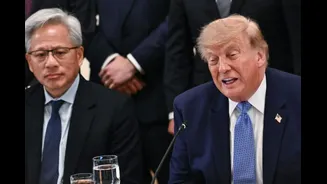






The unthinkable has happened in the world of technology. Jensen Huang, the iconic founder and CEO of Nvidia, is out. For the first time in 33 years, the board is searching for a new leader to steer the world's most important AI chip company.
The End of an Era
For three
decades, Nvidia and Jensen Huang have been synonymous. Co-founding the company in 1993, Huang transformed it from a niche maker of graphics cards for gamers into the undisputed powerhouse of the artificial intelligence revolution. His signature leather jacket, bold predictions, and relentless drive became legendary in Silicon Valley. He was not just a CEO; he was the company's chief strategist, its most fervent evangelist, and its technical visionary. Huang’s leadership was characterized by a unique, hands-on style, with as many as 60 executives reporting directly to him to ensure information flowed freely. His departure leaves a void that seems almost impossible to fill, creating a leadership crisis at a company that has only ever known one person at the top.
Who Are the Top Contenders?
The board has initiated a formal search, looking at both internal and external candidates. The most obvious internal choice is Colette Kress, the long-serving Chief Financial Officer who has been appointed interim CEO. Kress is a steady hand and a familiar face to Wall Street, having appeared alongside Huang on countless earnings calls. Another strong internal contender is Ian Buck, a two-decade Nvidia veteran who leads the critical data center business and was instrumental in creating CUDA, the software platform that gives Nvidia its formidable competitive moat. Externally, names like Arm CEO Rene Haas, who previously worked at Nvidia, and even AMD CEO Lisa Su have been floated by analysts, highlighting the challenge of finding a leader with the right blend of technical expertise and market savvy.
A Founder's Uniquely Large Shoes
Replacing a founder-CEO is one of the most difficult transitions any company can face. Founders are not just managers; they embody the company's vision and culture. Huang's influence was particularly profound. He made courageous, multi-billion dollar bets on markets like AI and data centers years before they were proven, shifting the company's entire focus away from its gaming roots. This strategic foresight is what positioned Nvidia to command over 80% of the AI accelerator market, making its hardware the essential engine for nearly every major AI lab in the world. A new CEO must not only be an exceptional operator but also possess the credibility and vision to command the loyalty of a team built entirely in Huang’s image and continue making bold, long-term bets.
Navigating the AI Factory Future
The next leader inherits a company at the peak of its power but facing immense pressure. Nvidia's strategy in 2026 is no longer just about selling chips; it's about providing the entire 'AI factory'—a full stack of hardware, software, and networking. The company is forecasting staggering revenue growth, driven by a global build-out of AI infrastructure. Maintaining this momentum requires navigating complex supply chains, managing relationships with hyperscale customers who are also designing their own chips, and staying ahead of a rapidly evolving technological landscape. The new CEO will need to ensure Nvidia's next-generation platforms, like the recently launched Vera Rubin, continue to set the industry standard, all while fending off resurgent competition.