



The Seasonal Wisdom of Winter Foods
The tradition of eating specific foods during winter is deeply practical and rooted in centuries of observation. As temperatures drop, the body's metabolism naturally slows, and it needs more energy to stay warm. North Indian winter cuisine answers this
need with ingredients that are inherently 'warming' and energy-dense. Key players include ghee (clarified butter), jaggery (gur), whole grains, and oilseeds like sesame (til). These ingredients are not just chosen for flavour but for their ability to provide sustained energy and internal warmth, a concept that aligns with traditional Ayurvedic principles. This culinary wisdom ensures that winter meals are both comforting and functional, helping the body navigate the cold season.
The Pride of Punjab: Sarson ka Saag
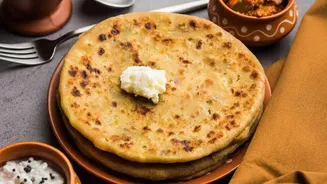
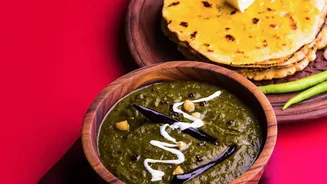
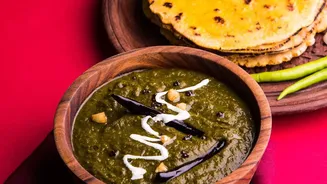
No dish screams North Indian winter quite like Sarson ka Saag with Makki ki Roti. This iconic pairing has its origins in the agricultural heartland of Punjab. Sarson (mustard) is a winter crop, and the fresh, tender greens are harvested during the coldest months. Historically, this was a rustic, hearty meal for farming communities, designed to provide nourishment and strength for manual labour in the fields. The saag, a slow-cooked preparation of mustard greens, often blended with other greens like spinach for balance, gets its creamy texture from hours of simmering. Paired with Makki ki Roti, a flatbread made from maize flour—another winter harvest—the meal is a direct reflection of the region's seasonal bounty. A generous dollop of white butter or ghee on top isn't just for taste; it adds necessary fat to combat the winter dry a.
A Sweet Legacy: The Story of Gajar ka Halwa
Gajar ka Halwa, a rich pudding of grated carrots slow-cooked in milk and ghee, is a beloved winter dessert with roots tracing back to the Mughal era. The word 'halwa' itself has Arabic origins, meaning 'sweet', and the concept was likely introduced to India through Persian and Mughal cultural exchange. While the exact origin is debated, it is strongly associated with Punjab and the northern plains, where sweet, red winter carrots are abundant. The Mughals were known for their rich, elaborate culinary creations, and Gajar ka Halwa, with its luxurious use of milk, sugar, ghee, and nuts, fits perfectly within that tradition. What was once a royal delicacy, enjoyed in imperial courts, gradually became a staple of festivals like Diwali and Eid and a household favourite across the subcontinent.
The Power-Packed Sweets: Pinni and Panjiri
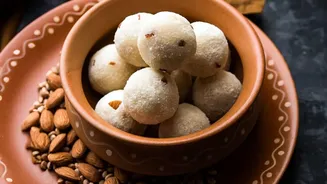
Pinni and Panjiri are more than just sweets; they are traditional nutritional supplements designed for the harshness of winter. Both are primarily made from whole wheat flour roasted in a generous amount of ghee and mixed with sugar, edible gum (gond), and a trove of dried fruits and nuts. These energy-dense preparations are considered 'superfoods' in Punjabi tradition. Panjiri, which has a looser, more powdered texture, is famously given to new mothers to aid postpartum recovery and boost energy. Pinni is essentially a solidified, laddoo-shaped version of the same mixture. The ingredients are chosen for their warming properties and ability to provide a powerful, lasting source of energy, making them the perfect snack to fight off winter lethargy and cold.
The Sacred Duo: Til and Gur
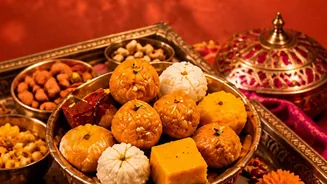
The combination of sesame seeds (til) and jaggery (gur) is fundamental to Indian winter traditions, especially during festivals like Lohri and Makar Sankranti. This pairing is no coincidence. Sesame is harvested in winter, making it a seasonal ingredient. Both til and gur are considered warming foods in traditional Indian medicine, believed to help the body generate heat. Sweets like Til Ladoo, Gajak, and Chikki are not just festive treats but also a delicious way to consume these beneficial ingredients. Sesame seeds are packed with nutrients, including healthy fats, protein, and calcium, while unrefined jaggery provides iron and a quick burst of energy. This centuries-old combination is a perfect example of how cultural traditions are often intertwined with seasonal and nutritional wisdom.