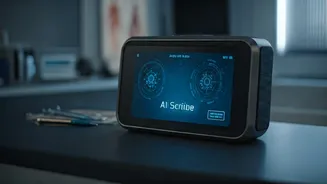










What is a Custom Reading AI?
At its heart, a custom reading AI is a sophisticated software program designed to understand and improve a person's reading ability. Unlike a standard e-book or educational app that offers a one-size-fits-all experience, this technology creates a unique
learning path for each user. It functions like an incredibly patient and observant reading coach, watching over a student's shoulder, identifying their specific strengths and weaknesses, and providing instant, targeted support. The 'custom' part is key: the AI doesn't just present material; it actively adapts the content based on the user's real-time performance, making the learning process deeply personal and efficient.
How It Analyzes a Pupil's Skills
The magic lies in the AI's ability to gather and interpret data as a student reads. It goes far beyond simply tracking which words are read correctly. Advanced systems can use a device's camera to monitor eye movements, noting where a reader's gaze lingers, which words cause them to pause, and when they have to go back and re-read a sentence. It also analyzes the speed and fluency of reading aloud, listens for pronunciation errors, and tracks how a student interacts with the text. By collating these data points, the AI builds a detailed profile of the reader's skills. It can diagnose specific issues, such as difficulty with phonetic decoding, a limited vocabulary, or problems with comprehending complex sentence structures—insights that might take a human teacher weeks to uncover in a busy classroom.
The 'Smart Editing' in Action
Once the AI understands a student's challenges, it begins to 'edit' difficult words and phrases on the fly. This isn't about correcting grammar, but about making the text more accessible. For a student struggling with complex vocabulary, the AI might automatically replace a word like 'magnificent' with a simpler synonym like 'great' or 'wonderful'. For another who has trouble with long words, it could break 'photosynthesis' down into its syllables (pho-to-syn-the-sis) with a single tap. Other smart edits include providing in-context definitions that pop up when a student hovers over a word, or even generating a simple illustration to explain a concept. The goal is to provide just enough support to prevent frustration and keep the student engaged, gradually reducing the assistance as their skills improve.
A Personal Tutor for Every Indian Student
The potential impact of this technology in the Indian educational landscape is immense. In classrooms with high student-to-teacher ratios, providing individual attention is a significant challenge. This AI can act as a tireless assistant, giving each child the one-on-one support they need to progress at their own pace. It holds particular promise for students with learning differences like dyslexia, as the system can be tailored to their specific neurological needs. Furthermore, it can help bridge the quality gap between urban and rural schools, delivering high-quality, personalised reading instruction to any child with access to a basic smartphone or tablet. For a country with such linguistic diversity, AI tools could also be trained to help students transition between their mother tongue and English, a common hurdle in our education system.
Challenges and the Path Forward
Despite the promise, there are hurdles to overcome. Ensuring equitable access to the required devices and internet connectivity is a primary concern. There are also valid questions about data privacy and the amount of screen time appropriate for young children. Experts caution that these tools should be seen as a supplement to, not a replacement for, human teachers. The empathy, encouragement, and holistic understanding that a good teacher provides cannot be replicated by an algorithm. The most effective approach will involve a partnership, where AI handles the repetitive, data-intensive task of skill-building, freeing up teachers to focus on fostering a love for reading, critical thinking, and classroom discussion.