


The Dark Knight of Desserts Arrives
Walk past any trendy ice cream shop in a major metro on a warm evening, and you’re likely to see it: a crowd of people, phones in hand, all waiting for a scoop of something that looks less like a dessert and more like a work of modern art. The star of the
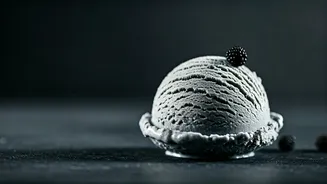
show is a jet-black ice cream, swirled elegantly into a crisp, golden-brown waffle cup. This is charcoal ice cream, the latest food phenomenon to go from a niche trend to a mainstream sensation. [14, 24] Parlors that have introduced this gothic-inspired treat report a significant uptick in foot traffic, with hundreds of customers, primarily millennials and Gen Z, lining up for their turn to taste and, more importantly, photograph this unusual confection. The visual drama is undeniable; the stark contrast of the black cream against the warm-toned waffle cup makes it an instant social media star. [12, 14]
What Exactly Is Charcoal Ice Cream?
Before you imagine spoonfuls of barbecue briquettes, let's be clear: the 'charcoal' in this ice cream is food-grade activated charcoal. [13] This is a fine, black powder typically made from natural sources like coconut shells or bamboo that have been heated to very high temperatures to make them highly porous. [13, 16] This process makes it odorless and largely tasteless. [13, 17] In most recipes, the activated charcoal serves primarily as a natural coloring agent, transforming a standard ice cream base into a striking, inky black dessert without the need for artificial dyes. [14, 17] The actual flavor of the ice cream comes from its base ingredients, which are often coconut milk, cream, and sugar, resulting in a taste that is surprisingly familiar—usually a creamy coconut or a subtle vanilla. [2, 15] So, while it looks adventurous, the taste is often quite gentle and pleasant. [15]
Taste vs. Texture: A Surprising Profile
First-timers are often surprised to find that charcoal ice cream doesn't taste smoky or burnt at all. [15] Because the activated charcoal itself is flavourless, the dominant taste is that of the ice cream base. [13] Many parlors use a coconut cream base, which pairs well with the origin of most food-grade charcoal (coconut shells) and gives the dessert a smooth, refreshing, and mildly sweet profile. [15, 20] Some describe it as a rich vanilla with a hint of coconut. The texture, however, can sometimes be slightly different from regular ice cream. Depending on the amount of charcoal used, some people notice a very subtle, slightly gritty or chalky mouthfeel, though most high-quality versions are churned to be just as smooth and creamy as their colourful counterparts. [9, 13] The accompanying waffle cup, or sometimes even a black charcoal-infused waffle cone, adds a satisfying crunch that complements the creamy scoop. [22]
Driven by the 'Instagram Effect'
There’s no denying the power of social media in catapulting this dessert to fame. In the world of food trends, visual appeal is king, and charcoal ice cream is incredibly photogenic. [12, 26] Its minimalist, monochromatic look stands out in a sea of colourful unicorn and rainbow-themed foods. [17] Food bloggers and influencers across India have been quick to feature the striking dessert, showcasing it as a must-try novelty. [12] This digital buzz creates a real-world feedback loop: people see the ice cream online, seek it out in local parlors, and then post their own pictures, further fueling the trend. [14] For many customers, the experience is as much about capturing the perfect shot for their feed as it is about the taste itself. Restaurants and cafes are leaning into this, understanding that a single viral post can translate into a packed house. [12]
A Note on Health and Safety
While activated charcoal is marketed in some wellness circles for its “detoxifying” properties, its primary use in medicine is to treat certain types of poisoning or overdose in hospital settings. [8, 11] Its porous nature allows it to bind to various substances in the stomach, preventing them from being absorbed into the bloodstream. [16] However, this binding action is not selective; it can also absorb nutrients from food and, more significantly, medications, potentially reducing their effectiveness. [8, 16] Experts advise that while eating a charcoal ice cream occasionally is generally safe for most healthy people, it's wise to be cautious if you are taking any regular medication, including birth control. [8, 10, 11] It's best to consume it a few hours apart from any medication. The amount in a single scoop is typically small, but it's a factor worth being aware of. [11]