



A New Window on the Cosmos
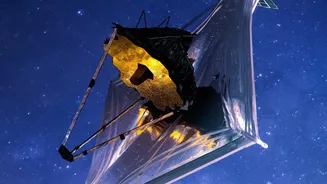
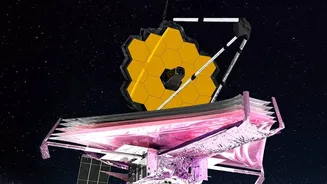
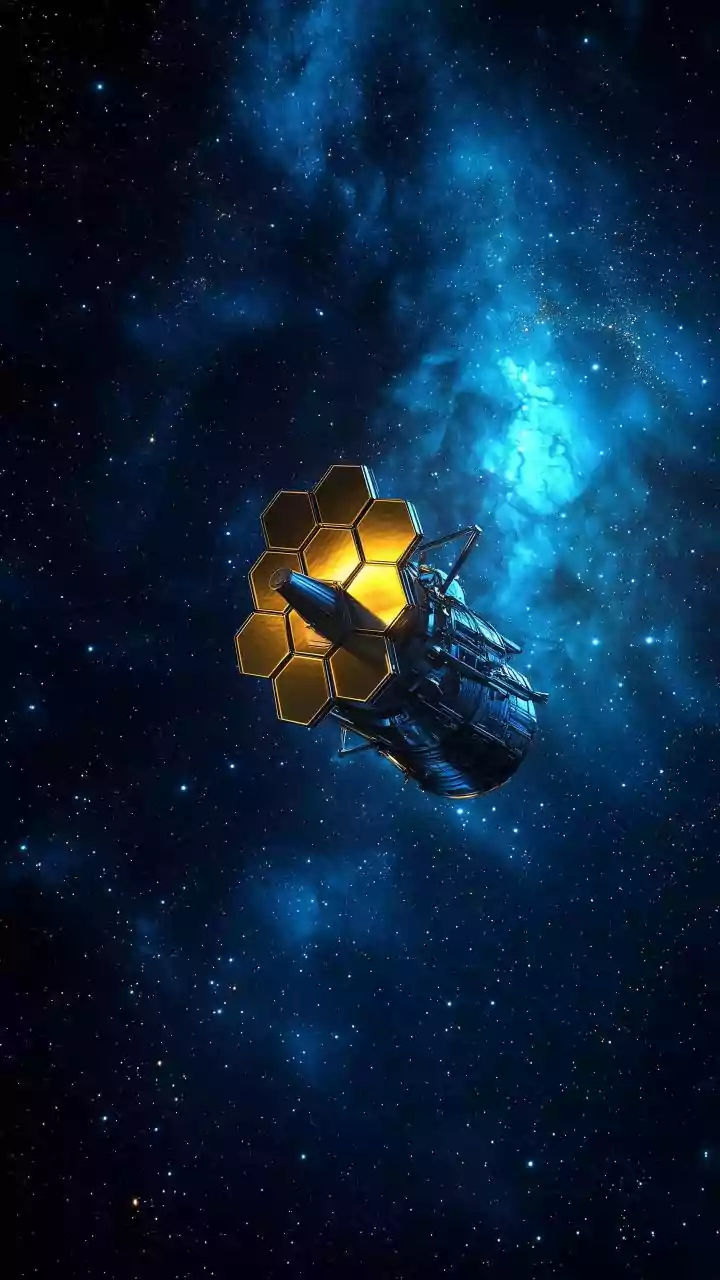
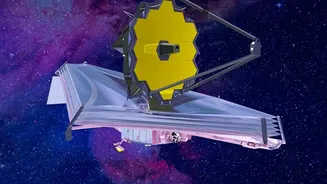
The James Webb Space Telescope (JWST) is not just a telescope; it's a time machine and a chemical lab rolled into one. At a cost of over $10 billion, it represents one of humanity's biggest investments in fundamental knowledge. Its primary mission includes
peering at the first galaxies, but it has truly revolutionised the study of exoplanets—planets orbiting other stars. Using a technique called transmission spectroscopy, JWST can analyse the starlight that filters through a planet's atmosphere. The molecules in that atmosphere absorb specific colours of light, leaving a chemical fingerprint that the telescope can read from 40 light-years away. This capability has moved exoplanet science from simply finding planets to truly characterising them.
The Alluring TRAPPIST-1 System
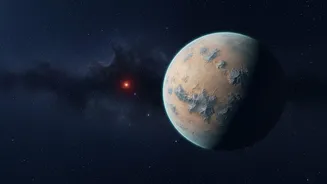
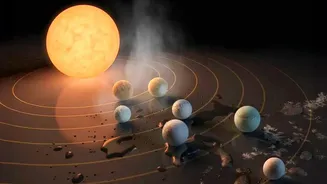
The target of this latest investigation is the TRAPPIST-1 system, a star system that has captivated astronomers since its full discovery in 2017. Located just 40 light-years from Earth, it features a small, cool red dwarf star orbited by seven rocky, Earth-sized planets. Three of these planets orbit within the star's habitable zone, the region where liquid water could theoretically exist on the surface. This makes the system a prime laboratory for studying how terrestrial planets form and evolve. The recent discovery focuses on one of the planets in this system, providing crucial data that helps scientists understand what kind of worlds these are and which ones might be worthy of closer inspection in the ongoing search for habitability.
Decoding the Carbon Signature
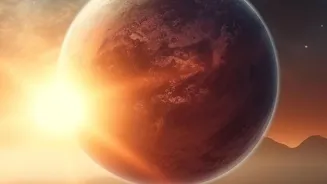
The headline-making discovery is the detection of “heavy carbon signatures,” which in this case refers to a substantial amount of carbon dioxide (CO2). The latest data from JWST has confirmed a dense CO2 atmosphere around TRAPPIST-1g, one of the planets on the outer edge of the system. Scientists had previously ruled out thick, hydrogen-dominated atmospheres for the inner planets like TRAPPIST-1b and 1c. This new finding is significant because it's the first time such a substantial secondary atmosphere—one generated after the planet formed, likely from volcanic activity—has been confirmed on one of the outer TRAPPIST planets. This tells us the planet is not just a bare rock; it has a complex geological history that has pumped gases into its sky.
More Venus Than Earth
While finding an atmosphere is exciting, the composition tells a more complicated story. A thick blanket of carbon dioxide is the hallmark of a runaway greenhouse effect. Here in our own solar system, Venus is the prime example. It’s a world with a surface hot enough to melt lead, all because its dense CO2 atmosphere traps heat. The strong CO2 signal from TRAPPIST-1g strongly suggests it is more of a Venus-twin than an Earth-twin. While it orbits in a region once considered potentially habitable, this atmospheric data paints a picture of a scorching, inhospitable world. This discovery is a reality check, showing that being in the 'habitable zone' is no guarantee of habitability; a planet's atmospheric chemistry is just as important as its location.
Refining the Search for Life
Every discovery like this, even one that points to an inhospitable world, is a win for science. It demonstrates the incredible power of the JWST to dissect the atmospheres of small, rocky planets—a feat that was impossible just a few years ago. By finding a Venus-like world, astronomers can better refine their models for what makes a planet truly Earth-like. The detection of carbon dioxide, but not other potential biosignatures like methane or oxygen in disequilibrium, helps scientists narrow down what to look for next. This result turns the TRAPPIST-1 system into a crucial comparative laboratory: seven planets, born from the same material around the same star, but all with potentially different fates. Understanding why one became a Venus while another might have held onto its water is key to the ultimate search for life.