







The 'All-Day' Pace Explained
So, what exactly is Zone 2? Think of it as your sustainable, conversational pace. It’s a low-to-moderate intensity level where your heart rate is elevated to about 60-70% of its maximum. The easiest way to know you’re in Zone 2 without any fancy gadgets
is the “talk test”: you should be able to hold a full conversation without gasping for breath. If you can sing, you’re likely in Zone 1; if you can only get out a few words at a time, you’ve pushed into Zone 3 or higher. This level of effort feels comfortable and repeatable, which is the key to its effectiveness. It’s the zone where your body becomes incredibly efficient.
The Science of Building Stamina
The real magic of Zone 2 training happens at a cellular level. When you exercise at this low intensity, your body primarily uses fat as its fuel source. More importantly, this type of training stimulates the growth and improves the function of your mitochondria. Mitochondria are the tiny powerhouses within your cells responsible for generating energy. By consistently training in Zone 2, you encourage your body to build more of these powerhouses. More mitochondria mean a greater capacity to produce energy aerobically, which translates to a higher level of endurance. This is what experts refer to as building your “aerobic base.” A strong aerobic base means you can sustain effort for longer and recover faster, not just in exercise but in daily life.
Why Cycling Is the Perfect Tool
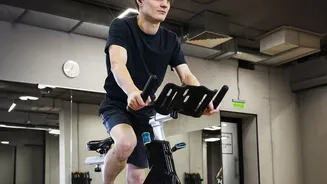
While many activities can get you into Zone 2, cycling—especially on a stationary bike—is an ideal choice for desk workers. Firstly, it’s a low-impact activity, which means it’s gentle on your joints. This is a significant advantage if you're just starting a fitness routine or carrying a bit of extra weight. Secondly, a stationary bike allows you to control your effort precisely. Unlike running outdoors where hills or traffic can cause your heart rate to spike, a bike lets you maintain a steady effort, keeping you squarely in that beneficial Zone 2 for the entire workout. This consistency is crucial for maximising the mitochondrial adaptations that build stamina. Even an under-desk cycle used during work can meaningfully reduce sedentary time.
Reversing the 'Desk-Bound' Effect
For someone who spends eight hours a day sitting, the benefits of building an aerobic base extend far beyond the gym. A sedentary lifestyle can lead to chronic fatigue, metabolic issues, and a general feeling of being unwell. By improving your body's ability to produce energy efficiently, Zone 2 training directly combats this. You’ll start to notice you have more energy at the end of the workday. That 3 p.m. slump may become less severe, and you’ll have more in the tank for family, friends, and hobbies. This isn’t just about being able to exercise for longer; it’s about increasing your overall capacity for life and improving your metabolic health.
Your First Four Weeks to More Energy
The headline promises speed, and while fitness is a long game, you can notice improvements relatively quickly with consistency. Research and anecdotal reports suggest many people start to feel a difference in their energy levels and endurance within four to eight weeks. A great starting point is to aim for three Zone 2 cycling sessions per week, each lasting between 30 and 45 minutes. Focus on maintaining that conversational pace. It might feel frustratingly slow at first, but patience is key. The goal is consistency, not intensity. As your fitness improves, you can gradually increase the duration of your sessions to 60 minutes or more to continue building your stamina.