



The Planet's Hidden Majority
When we picture the ocean floor, we might think of vibrant coral reefs or dramatic volcanic vents. While those exist, the dominant feature is the abyssal plain. Lying at depths between 3,000 and 6,000 metres, these are immense, flat, and sediment-covered
expanses that stretch between continents and mid-ocean ridges. Collectively, they cover over 50% of the Earth's total surface area, making them the most extensive single habitat on the planet. Formed by the slow, steady process of seafloor spreading and blanketed by millennia of fine sediment and the shells of tiny marine organisms, they are incredibly smooth and featureless in many areas. Yet, despite their sheer scale, they remain shrouded in mystery.
A World of Extreme Challenges
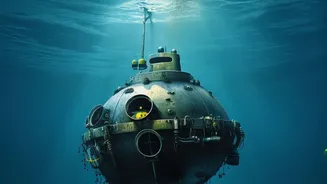
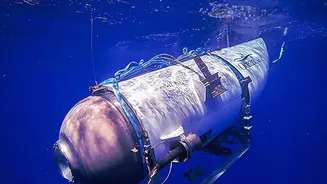
Exploring the abyssal plains is one of the greatest technological challenges humanity faces, arguably even more difficult than space exploration. The reasons are numerous and extreme. First is the crushing pressure, which can be a thousand times greater than at sea level—equivalent to placing 100 elephants on a person's head. This immense force can implode all but the most robustly engineered submersibles. Add to this the complete absence of sunlight, freezing temperatures that hover just above zero, and the corrosive nature of saltwater, and you have an environment that is profoundly hostile to both humans and machines. These factors make direct observation incredibly difficult, expensive, and dangerous.
Charting the Great Unknown
Because of these challenges, our map of the deep ocean is startlingly incomplete. The Seabed 2030 project, a global initiative to create a definitive map of the ocean floor, announced in April 2026 that only 28.7% of the world's oceans have been mapped to modern standards. The remaining vast, unmapped areas are filled in with low-resolution estimates from satellite data. Progress is being made, with nearly five million square kilometres of new data added in the past year alone, but the task is monumental. Mapping is primarily done using sonar from ships or, for higher resolution, with Autonomous Underwater Vehicles (AUVs) and Remotely Operated Vehicles (ROVs). However, these methods are slow and costly, and ship time is a scarce resource, limiting how much of this enormous area can be surveyed.
Surprising Life in the Darkness
For a long time, the abyssal plains were thought to be barren wastelands. We now know they harbour a surprising amount of biodiversity. With no sunlight for photosynthesis, life here depends on 'marine snow'—a slow, continuous shower of organic material, dead algae, and animal waste sinking from the sunlit waters far above. This scarce food source means life is slow and sparse. Animals like sea cucumbers, brittle stars, and various worms sift through the mud for nutrients. However, a whale fall—the carcass of a whale sinking to the bottom—can create a massive, temporary feast, supporting a unique ecosystem for decades. Scientists have found that despite the harsh conditions, these plains are major reservoirs of biodiversity, with many species still unknown to science.
The New Frontier for Resources and Conservation
The mystery of the abyssal plains is not just a scientific curiosity; it has profound economic and environmental implications. These plains are home to vast fields of polymetallic nodules—potato-sized lumps of manganese, nickel, cobalt, and copper that have formed over millions of years. These metals are critical for green technologies like batteries and wind turbines, sparking growing interest in deep-sea mining. However, scientists warn that we know very little about the potential impact of mining. Studies have shown that ecosystems on the plains are extremely slow to recover from disturbance, with tracks left by experimental equipment still visible decades later. This makes understanding these uncharted territories a race against time, balancing the demand for resources with the need to protect one of Earth's largest and most fragile biomes.