
What Makes Venus So Bright This Month?
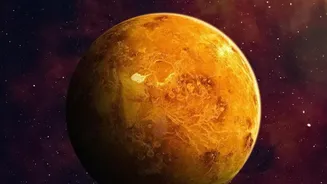
Venus is often called the 'Evening Star' or 'Morning Star' for a reason—it’s the brightest object in our night sky after the Moon. This September, it will reach what astronomers call its 'greatest brilliancy'. Around September 18 to 22, Venus will shine
at a magnitude of -4.8, its most luminous for all of 2026. This peak brightness is a perfect combination of two factors: Venus is getting closer to Earth in its orbit, making it appear larger, while still showing a significant portion of its sunlit face to us. Interestingly, through a telescope, Venus would appear not as a full disc but as a stunning, slender crescent, much like our Moon. But no special equipment is needed; its incredible brightness will be obvious to the naked eye.
When and Where to Look
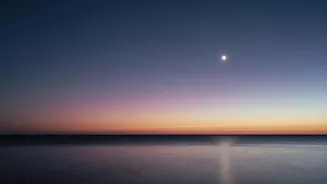
The best time to view Venus throughout September will be shortly after sunset. Look low in the western or west-southwestern sky during twilight, about 30 to 60 minutes after the sun has dipped below the horizon. At the beginning of the month, the planet sets about an hour and a half after the sun, but by the end of September, this window shortens, so don't delay your viewing plans. Mark your calendars for two special dates. On September 14, a beautiful, thin crescent Moon will appear very close to Venus, creating a photogenic pairing in the evening sky. Then, from around September 18 to September 22, the planet will be at its absolute brightest.
A Viewing Guide for Indian Cities
The good news for urban dwellers across India—from Delhi and Mumbai to Bengaluru and Chennai—is that Venus is so bright it can easily cut through city light pollution. You won't need to escape to the countryside to witness this spectacle. The main challenge will be finding an unobstructed view of the western horizon, as the planet will be relatively low in the sky. Residents in high-rise buildings will have a distinct advantage. If you're at ground level, try finding a local park, a sports field, or any open space that offers a clear sightline free from tall buildings or trees in the direction of the sunset. For those in coastal cities like Mumbai or Chennai, a view from a beach facing west will be ideal.
Tips for the Best Stargazing Experience
While Venus is easy to spot, a few simple tips can make your viewing experience even better. First, give your eyes time to adjust to the dark. Spend about 15 to 20 minutes away from bright screens or artificial lights; this will help you see more subtle details in the sky. If you're viewing from a balcony or backyard, turn off any nearby lights to reduce immediate glare. While no telescope is needed, a simple pair of binoculars can enhance the view, especially on September 14 when the Moon is nearby. Binoculars might even reveal Venus's crescent shape. Finally, check the weather. A clear, haze-free evening, especially after a spell of rain has washed pollutants from the air, will offer the sharpest view.
More Celestial Events This Month
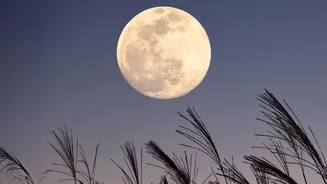
Venus isn't the only planet gracing our skies in September. While you're looking west for Venus, you might also be able to spot Mercury early in the month. For early risers, the pre-dawn eastern sky will feature Mars and the brilliant gas giant Jupiter. On the morning of September 8, the crescent Moon will have a close encounter with Jupiter. Later in the month, on September 26, the full 'Harvest Moon' will rise around sunset, accompanied by the ringed planet Saturn. September truly offers a celestial buffet for anyone curious enough to look up and explore the movements of our solar system neighbours.