





A Policy Shift Opens the Stars
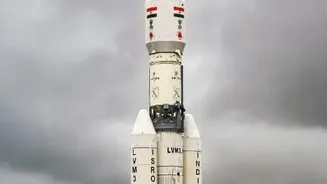
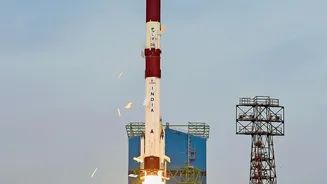
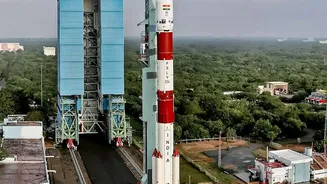
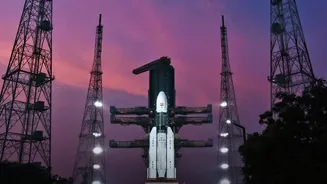
The landscape of India's space ambitions has fundamentally changed. Historically, the Indian Space Research Organisation (ISRO) was the sole custodian of the nation's space program, earning global respect with cost-effective missions like Chandrayaan
and Mangalyaan. While ISRO remains the backbone of India's space efforts, its role is evolving. The government's landmark Indian Space Policy 2023 was designed to unlock the sector for private enterprise. This policy established clear roles, allowing Non-Governmental Entities (NGEs) to undertake end-to-end space activities—from building and launching rockets and satellites to even planning for the commercial recovery of asteroid resources. To oversee this new era, the Indian National Space Promotion and Authorisation Centre (IN-SPACe) was created. It acts as a single-window agency to authorise, promote, and guide private players, ensuring they have access to ISRO's world-class facilities and expertise. This shift allows ISRO to focus more on advanced research and development and deep space exploration, while private firms drive commercialisation.
The Rise of the 'NewSpace' Startups
This policy liberalisation has triggered a boom in homegrown space-tech startups. As of mid-2026, India has more than 400 private space startups, a number that has grown exponentially since the sector was opened up. These companies are not just vendors to ISRO; they are building an independent, integrated commercial ecosystem. The field is diverse. Companies like Skyroot Aerospace and Agnikul Cosmos are developing their own launch vehicles, with Skyroot achieving a major milestone with its Vikram-1 rocket, India’s first privately developed orbital launch vehicle. Agnikul has pioneered 3D-printed rocket engines. Others, like Pixxel, are deploying constellations of advanced hyperspectral Earth-observation satellites, providing crucial data for agriculture, climate monitoring, and energy sectors. Meanwhile, companies such as Dhruva Space focus on full-stack satellite manufacturing, and Digantara is working on space situational awareness to track orbital debris.
Fueling Innovation with Fresh Capital
The surge in private space activity has been matched by a significant influx of investment. As of July 2026, Indian space-tech startups have attracted over $871 million in funding. Investor confidence is growing, with funding rounds increasing from just $43 million in 2021 to a record $200 million in 2025. This momentum is creating unicorns, with Skyroot Aerospace becoming the first Indian space-tech startup to be valued at over $1 billion. To further boost this ecosystem, the government has supported initiatives like a dedicated venture capital fund to target investments in promising space startups. This flow of capital is critical, enabling companies to move from experimental projects to full-scale commercial operations, expand manufacturing, and compete on the global stage. The government has also liberalised Foreign Direct Investment (FDI) rules, allowing up to 74% FDI in satellite manufacturing and 49% in launch vehicles, attracting further global interest.
More Than Rockets: New Careers Take Flight
The expanding space economy is creating a wide array of high-skilled jobs that go far beyond the traditional roles of rocket scientists and astronauts. The demand for talent now spans aerospace engineering, data science, AI and machine learning, materials science, robotics, and software development. Private companies like Dhruva Space and Space Zone India list openings for everything from avionics engineers and project managers to digital marketing specialists. The downstream applications of space technology are a particularly large area of growth. Companies like SatSure use satellite data to provide 'decision intelligence' for various industries. This creates demand for geospatial data analysts who can turn raw satellite imagery into actionable insights for sectors like agriculture, disaster management, and urban planning. As the industry matures, it is becoming a major engine for skilled employment, attracting a new generation of talent inspired by the country's recent space successes.