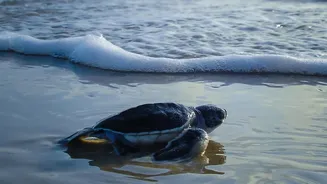






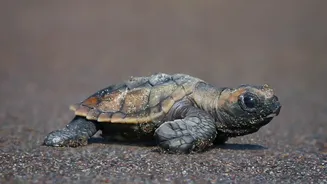


The Heart of the Matter: Why Turtles Need Protection
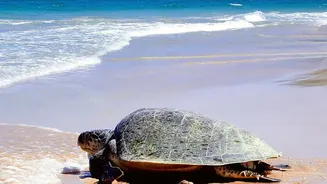
Every year, between November and March, female Olive Ridley turtles return to the beaches where they were born to lay their eggs. This ancient ritual, however, coincides with Goa's peak tourist season. The very things that draw visitors—bright lights,
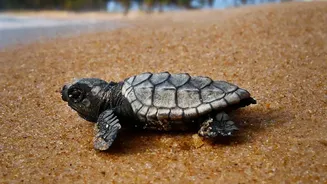
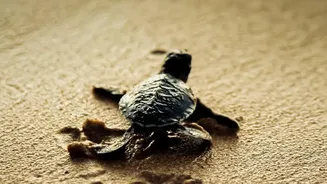
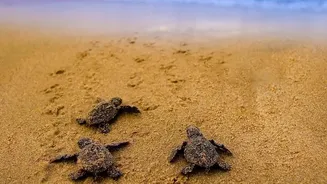
beach shacks, and evening activities—can be disastrous for turtles. Artificial lighting and loud noises can disorient nesting females, causing them to abandon their efforts. For the hatchlings, who emerge weeks later, the journey is even more perilous. They are naturally drawn to the brightest horizon, which should be the moonlit sea. Instead, the lights from shacks and resorts can lead them inland towards roads and predators, drastically reducing their chances of survival. This is why conservation measures are crucial.
Goa's New Proposal: A Sweeping Conservation Plan
Goa's Forest Department has recently proposed a significant expansion of protected areas. In a letter to the Department of Environment and Climate Change, it has recommended that 24 beaches—10 in North Goa and 14 in South Goa—be officially designated as turtle nesting sites under the Coastal Regulation Zone (CRZ) Notification. This proposal was reportedly triggered by a decline in nesting numbers compared to previous years. If approved, this designation would grant authorities the power to implement stricter controls on activities during the nesting season. While four beaches are already notified nesting sites, this plan would dramatically increase the coastline covered by these protective measures.
What Are the Potential Restrictions?
The proposed designation as a turtle nesting site under the CRZ framework could lead to a range of new regulations aimed at minimising human disturbance. These are likely to include tighter controls on artificial lighting and noise levels after dark. Restrictions could also be placed on the operation of beach shacks, beach weddings, vehicle movement on the sand, and other nighttime events. While the exact rules are yet to be finalised, the goal is to create a safer and more natural environment for the turtles to nest and for hatchlings to make their way to the ocean. These measures would build upon existing efforts by the Forest Department, which already patrols key beaches and relocates vulnerable nests to protected hatcheries.
Which Beaches Are on the List?
The proposal covers some of Goa's most popular and commercially active beaches. In North Goa, the list includes Morjim, Mandrem, Ashvem, Arambol, Vagator, Baga, and Calangute, among others. In the South, the proposed sites include Agonda, Galgibag, Palolem, Patnem, Cavelossim, and Varca. The inclusion of major tourist hubs like Calangute and Baga is particularly noteworthy, as it signals a major shift in conservation policy that could affect a wide range of businesses. Currently, Morjim and Agonda are well-known for their community-supported conservation efforts.
A Brewing Conflict: Conservation vs. Livelihoods
The proposal has sparked significant concern among those whose livelihoods depend on beach tourism. The Shack Owners Welfare Society has voiced strong opposition, arguing that declaring so many beaches as nesting sites is impractical and could devastate the local economy. Stakeholders in Canacona, where eight beaches are on the list, warned that over 5,000 families could be impacted by the restrictions. They are not against protecting turtles but are asking for clarity and a balanced approach that doesn't 'kill tourism'. They argue that many of the newly listed beaches, like Palolem and Patnem, have no significant history of turtle nesting and that blanket restrictions are unfair. The memory of past legal battles and protests over similar regulations looms large, with business owners fearing a repeat of previous disruptions.