




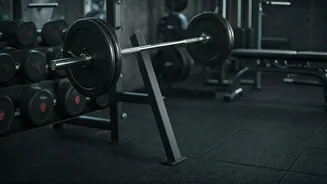


The Philosophy: Efficiency Is Key
The secret for time-strapped professionals isn't spending more hours in the gym; it's making those hours count. [9] The most effective strategy is to focus on compound exercises—movements that work multiple muscle groups and joints simultaneously. [15]
Think squats, deadlifts, push-ups, and rows. These exercises are incredibly time-efficient, burning more calories and building more overall strength compared to isolation exercises like bicep curls. [5, 20] By focusing on these big movements, you can get a full-body workout in just two or three sessions per week. [5, 12] This approach not only builds muscle and boosts metabolism but also improves coordination and functional strength for everyday life. [9, 15]
The Essential Warm-Up (5-10 Minutes)
Skipping a warm-up is a common mistake that can lead to injury and hinder performance. [3] A proper warm-up prepares your body for the work ahead by increasing blood flow to your muscles, raising your body temperature, and activating your nervous system. [2, 7] It doesn't need to be complicated. Start with 5 minutes of light cardio, like brisk walking on the treadmill or using an elliptical. [2] Follow this with dynamic stretches that mimic the movements you're about to perform. Good options include leg swings, arm circles, torso twists, and bodyweight squats. [2] This prepares your joints and muscles for the demands of strength training, ensuring you're ready to perform safely and effectively. [8]
The Workout Plan: Two Full-Body Days
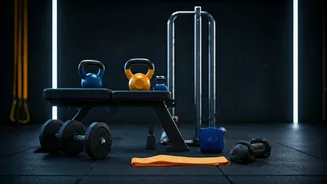
This routine is built around two distinct full-body workouts, which we'll call Workout A and Workout B. The goal is to perform each workout once per week on non-consecutive days (for example, Monday and Thursday). [18] This gives your muscles ample time to recover and rebuild. For each exercise, aim for 3-4 sets of 8-12 repetitions. The weight should be challenging enough that the last couple of reps in each set are difficult but can be completed with good form. **Workout A: Focus on Push & Squat** * **Barbell Squats:** Targets the entire lower body and core. * **Bench Press:** Works the chest, shoulders, and triceps. [6] * **Dumbbell Rows:** Strengthens the back and biceps. * **Overhead Press:** Builds shoulder strength and stability. [13] **Workout B: Focus on Pull & Hinge** * **Deadlifts:** A full-body movement engaging the back, glutes, and hamstrings. [13] * **Pull-Ups or Lat Pulldowns:** The primary builder for upper back width. [6] * **Dumbbell Lunges:** A great exercise for leg strength and balance. * **Push-Ups:** A classic bodyweight exercise for chest and core.
Progressing Your Workouts
To continue making progress, you can't do the same thing forever. The principle of progressive overload means you must continually challenge your muscles. Once you can comfortably complete all your sets and reps for a given exercise, it's time to increase the difficulty. You can do this by adding a small amount of weight, aiming for one or two more repetitions per set, or reducing your rest time between sets. Don't be afraid to mix up the exercises every few weeks to prevent boredom and challenge your body in new ways. [5]
The Crucial Cool-Down (5-10 Minutes)
Just as important as the warm-up, a cool-down helps your body transition back to a resting state. [7] It aids in recovery and can help reduce muscle soreness. [8] Spend 5 minutes doing some light cardio, like walking, to gradually bring your heart rate down. [3] Follow this with static stretching, holding each stretch for 20-30 seconds. Focus on the major muscle groups you just worked, such as your chest, back, hamstrings, and quads. This process helps relax tight muscles and improves long-term flexibility. [3, 10]