

Cosmic Climate Laboratories
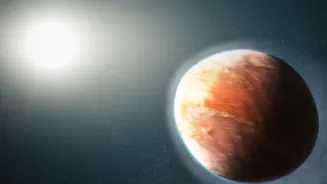
To understand Earth's climate, we have one primary data point: Earth itself. This makes it difficult to test the limits of our climate models. Exoplanets, however, offer a cosmic treasure trove of natural experiments. These worlds orbit other stars and feature
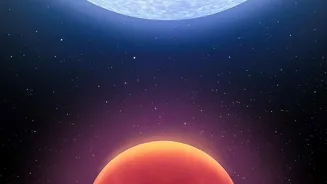
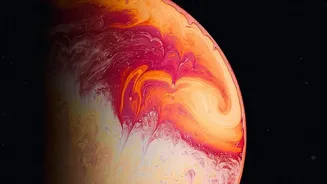
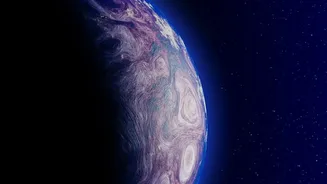
a vast diversity of sizes, compositions, and climates—from scorching 'lava worlds' to frozen ice giants. By studying how atmospheres behave under extreme conditions that don't exist in our solar system, scientists can pressure-test and refine the very models they use to predict Earth’s future. Each exoplanet serves as a case study, showing how factors like distance from a star, atmospheric composition, and planetary size interact to create a climate, helping us understand the fundamental physics that govern all atmospheres, including our own.
The Cautionary Tale of Venus
Often called Earth's 'evil twin', Venus offers the most dramatic climate lesson in our solar system. It's similar in size to Earth, but its surface is a hellscape with temperatures hot enough to melt lead. The reason is a runaway greenhouse effect. Its atmosphere, composed almost entirely of carbon dioxide, trapped so much heat that any oceans it might have had boiled away, releasing even more heat-trapping gases in a catastrophic feedback loop. While Earth is not in danger of becoming exactly like Venus, our neighbour serves as a stark warning. It demonstrates what happens when a planet's carbon balance is irrevocably broken, showing that a world's climate can shift from potentially habitable to completely hostile.
A Window into Earth's Deep Past
Studying other worlds doesn't just tell us about the future; it opens a window into our own planet's distant past. Earth's atmosphere has changed dramatically over billions of years, from an oxygen-free, methane-rich haze to the nitrogen-oxygen mix we breathe today. When scientists look for 'biosignatures'—signs of life—on exoplanets, they aren't just looking for Earth-twins. They are also looking for planets that might resemble Archean Earth (4 to 2.5 billion years ago), where methane could have been a sign of life. The simultaneous presence of certain gases, like methane and carbon dioxide, could indicate a biological 'disequilibrium' that wouldn't exist without life. By studying these potential 'pale blue dots', we learn to better recognize the fingerprints of life in its various forms and understand the long, complex evolution of our own biosphere.
New Tools, Sharper Insights
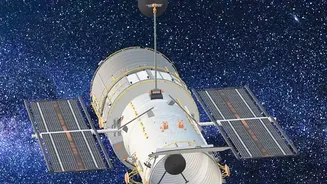
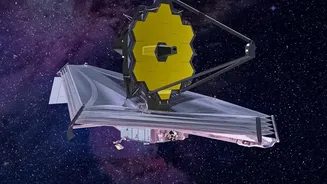
This new era of comparative planetology is being powered by revolutionary tools, most notably the James Webb Space Telescope (JWST). With its incredible sensitivity, JWST can analyze the light passing through an exoplanet's atmosphere, providing a chemical fingerprint of its skies. Scientists have already used it to detect carbon dioxide, sulphur dioxide, and water vapour on distant worlds, revealing clues about active chemistry and clouds. A recent discovery even found evidence of an atmosphere on a rocky 'lava world' that orbits its star in just one day, a surprising finding that could help explain how planets hold onto their atmospheres under extreme conditions—and perhaps what a young, molten Earth was like. These observations are no longer theoretical; they are providing real data that feeds back into our climate science.