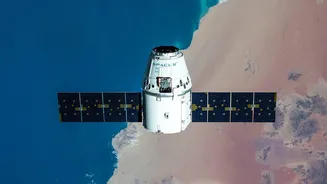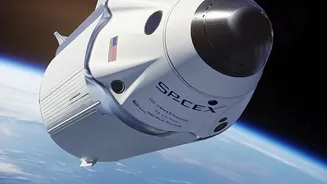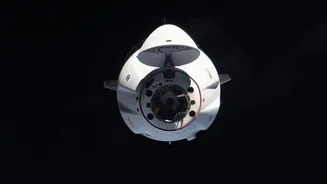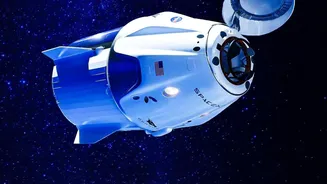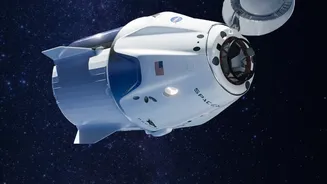

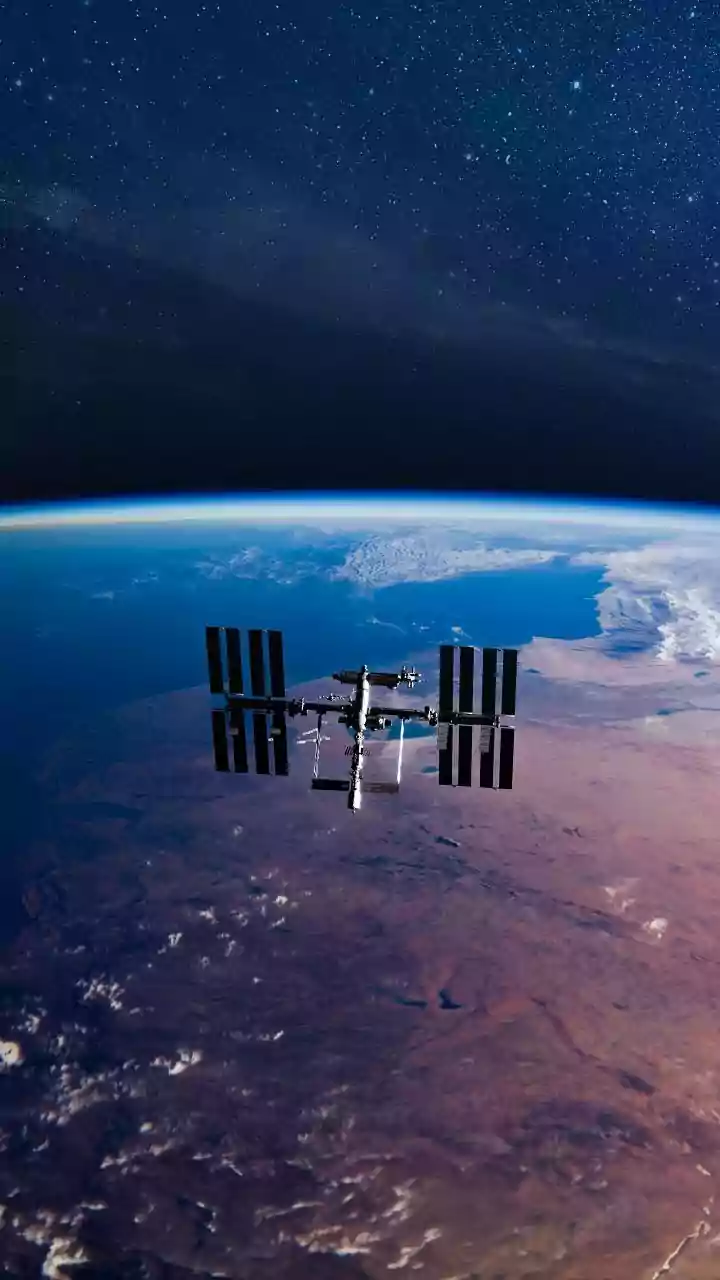
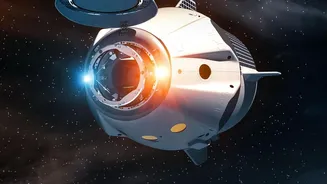
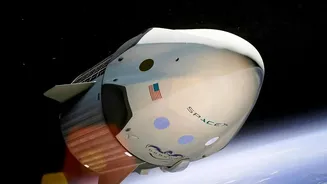
A splashdown in the Pacific Ocean on November 21 marked the end of another critical space mission. Now, the real work begins as scientists on Earth analyse the precious cargo returned by SpaceX's Dragon capsule after its trip to the ISS.
A Fiery Return and a Gentle Splash
SpaceX’s 35th
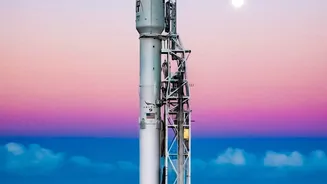
Commercial Resupply Services (CRS) mission for NASA concluded successfully when its Dragon spacecraft parachuted into the Pacific Ocean off the coast of California. The capsule undocked from the International Space Station (ISS) on November 20, completing a journey that began with its launch from Florida back on October 13. After spending over a month attached to the orbiting laboratory, the uncrewed freighter endured a fiery reentry through Earth's atmosphere before its gentle splashdown, a moment eagerly awaited by recovery teams and scientists alike. Unlike other cargo vehicles that burn up on reentry, the Dragon is designed for this return trip, making it uniquely capable of bringing valuable materials back home.
More Than Just a Delivery Service
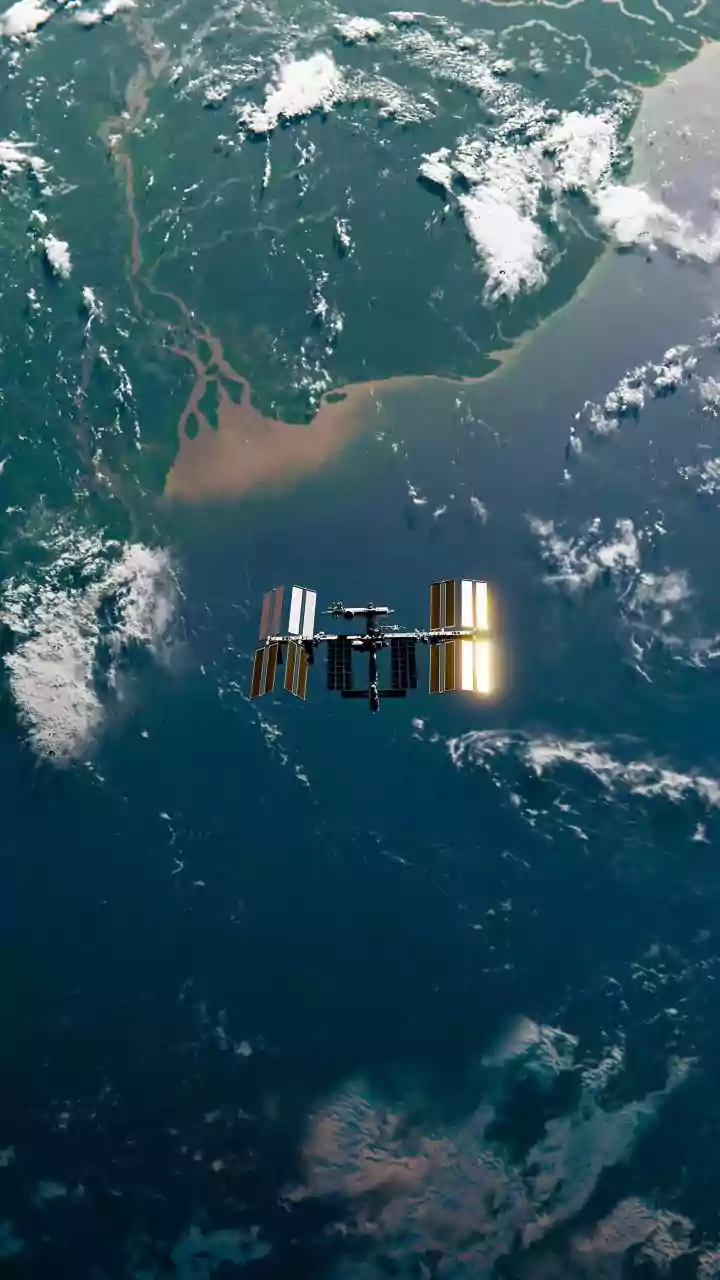
These CRS missions are the lifeblood of the International Space Station. They are essentially cosmic delivery trucks, hauling thousands of pounds of vital supplies, fresh food, equipment, and new scientific experiments to the astronauts living and working 250 miles above Earth. This particular mission, CRS-35, delivered over 6,300 pounds of cargo on its way up. But its most crucial role is arguably the return journey. By bringing back research samples, the Dragon spacecraft allows scientists to conduct experiments in the unique microgravity environment of space and then analyse the results in their own labs on the ground. This two-way traffic is fundamental to the scientific purpose of the ISS.
A Treasure Trove of Science
The cargo hold of the returning CRS-35 Dragon was packed with a remarkable array of scientific investigations. Among the most anticipated are frozen tumor organoids—tiny, lab-grown models of human tissue that were exposed to cancer treatments while in orbit. Scientists hope that studying how cancer cells behave in microgravity could lead to more effective and personalized cancer treatments on Earth. Another groundbreaking experiment involves a 3D-bioprinted blood vessel, created on the ISS to study cardiovascular disease and the aging process. By removing the influence of gravity, researchers can get a clearer picture of how these vessels develop and degrade.
From the Ocean to the Lab
The clock starts ticking the moment the capsule hits the water. A specialized recovery ship, which was waiting near the splashdown zone, quickly moves in to hoist the Dragon capsule aboard. For time-sensitive experiments, speed is everything. Some samples are immediately packed into a helicopter on the recovery ship and flown back to land to get them to NASA's labs as quickly as possible. This rapid retrieval ensures the integrity of the biological samples—like the frozen organoids and microbial cultures—is preserved, maximizing the scientific value of the data collected from their time in space. The entire process, from splashdown to lab, is a finely tuned logistical operation.
Earthly Benefits From Space Research
The research returning from CRS-35 has implications far beyond the confines of a laboratory. Also on board were frozen samples of antibiotic-resistant bacteria. Understanding how these 'superbugs' adapt and evolve in the harsh environment of space could provide critical insights for tackling the growing problem of antibiotic resistance on Earth. In addition, the mission returned a specialized lighting system that was tested for over three years on the ISS. The system was designed to improve astronauts' sleep and well-being, a crucial factor for long-duration missions to the Moon and Mars. The findings could also lead to better lighting solutions here on Earth to help regulate our own sleep cycles.