







Why AI is Your New Best Practice Partner
Traditional language practice often relies on finding a patient friend or a costly tutor. Voice AI changes the game entirely. Think of it as a tireless, non-judgemental conversation partner. These tools offer a safe space to make mistakes without embarrassment,
a key factor in building speaking confidence. Unlike a human partner, AI is available on your schedule, whether it's for a quick five-minute drill between classes or a late-night cram session. Many AI tools also provide instant, data-driven feedback on your pronunciation, something even a human tutor can struggle to do with perfect objectivity. This combination of constant availability and targeted feedback makes AI an incredibly efficient tool for honing your speaking skills before the big day.
Choosing Your AI Toolkit
The term 'voice AI' covers a broad range of tools, from dedicated language learning apps to general-purpose virtual assistants. Popular apps like Duolingo, Babbel, and Memrise have integrated sophisticated speech recognition exercises that grade your pronunciation on the spot. Other platforms like ELSA Speak are specifically designed to help non-native speakers perfect their English accent, and similar tools are emerging for other languages. Don't overlook the powerful voice capabilities of general AI like ChatGPT or Google's Gemini. By activating their voice modes, you can engage in free-flowing conversations on any topic, asking the AI to act as an examiner, a native speaker in a café, or any other persona that helps you practise.
Simulate Real Exam Scenarios
The key to acing an oral exam is not just knowing the language, but also being prepared for the format. Use voice AI to replicate the exam environment. Prepare a list of potential questions your examiner might ask, such as “Introduce yourself,” “Describe your hobbies,” or “Discuss a recent news event.” Feed these prompts to a conversational AI and practise answering them out loud. You can even give the AI specific instructions, like: “Pretend you are a French examiner. Ask me five questions about my future plans, and then give me feedback on my use of the futur simple tense.” This level of customized practice helps build muscle memory and reduces the chance of freezing up under pressure.
Mastering Pronunciation and Intonation
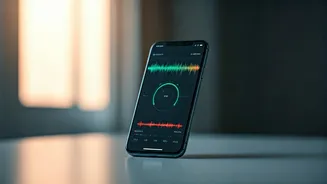
Getting the pronunciation right is often a major component of your grade. This is where AI truly shines. Many language apps will play a phrase spoken by a native speaker and then ask you to repeat it. The AI analyses your speech waveform and compares it to the original, often highlighting specific words or phonemes you struggled with. Some advanced tools even provide visual feedback on your tongue placement. For a more low-tech AI approach, simply record yourself answering a question and then use a text-to-speech function to listen to the correct pronunciation of the same text. Comparing your version to the AI's perfect rendering is a powerful way to self-correct your accent and intonation.
Building Fluency with Conversation
Fluency is about more than just correct grammar; it’s about the natural flow of speech. Use conversational AI to move beyond rehearsed answers. Start a conversation on a random topic and try to sustain it for five, ten, or even fifteen minutes. The goal is to train your brain to think on its feet in the foreign language. Don't be afraid to ask the AI questions, to disagree with it, or to change the subject. This dynamic back-and-forth mimics real conversation far better than reciting from a script. It forces you to access vocabulary and grammar structures quickly, building the spontaneous speaking skills that examiners are always looking for.