


The Grand Vision for India's Rivers
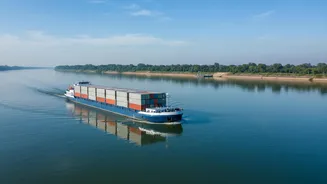
For years, India’s logistics sector has been heavily dependent on road and rail, which face challenges of congestion and higher costs. The government is now pushing to make its vast network of rivers and canals a mainstream option for cargo transport.
The goal is to increase the share of inland water transport (IWT) from its current low of about 2% to 5% by 2030. This shift is driven by significant advantages: IWT is substantially cheaper and more fuel-efficient than its land-based counterparts. For example, one litre of fuel can move significantly more cargo by water than by road, making it an attractive option for bulk goods like coal, cement, and food grains. Projects like the Jal Marg Vikas Project (JMVP) on National Waterway-1 (Ganga) are at the heart of this vision, aiming to create the infrastructure needed for large vessels to navigate major river routes.
Why Reliability Has Been a Hurdle
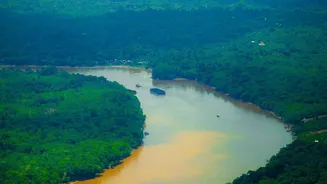
Historically, using India's waterways for consistent, year-round transport has been difficult. A key reason is the seasonal nature of many rivers. Water levels can drop dramatically during dry seasons, making it impossible for large vessels to pass. Siltation, or the buildup of sediment, constantly changes the depth of river channels, creating unpredictable navigation conditions. Furthermore, a lack of night navigation facilities and modern terminals has meant that cargo movement is often slow and restricted to daytime hours. This uncertainty makes it hard for businesses to plan their supply chains, forcing them to rely on the more predictable, albeit more expensive, road and rail networks. For waterways to become a viable third pillar of logistics, they must be able to offer dependable, clockwork-like schedules.
Building the Foundation for Dependable Schedules
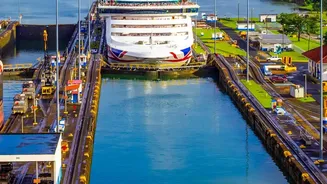
To tackle these challenges head-on, the Inland Waterways Authority of India (IWAI) is implementing a multi-pronged strategy. A major focus is on fairway development, which involves regular dredging to maintain a minimum required depth and width in navigation channels, allowing for year-round passage. The JMVP, for instance, aims to maintain an assured depth on the Varanasi-Haldia stretch of the Ganga. In addition, state-of-the-art multimodal terminals are being built at key locations like Varanasi, Sahibganj, and Haldia. These terminals integrate water transport with road and rail, enabling seamless transfer of goods and solving the critical last-mile connectivity problem. By creating robust physical infrastructure, the plan lays the groundwork for more predictable cargo movement.
Technology as the Key Enabler
Modern technology is the secret ingredient intended to bring true reliability to the waterways. River Information Systems (RIS) are being deployed to provide real-time data on everything from water levels and channel depth to vessel traffic. This allows vessel operators to plan their journeys with much greater accuracy and safety. Digital platforms like the PANI portal and various vessel tracking applications are streamlining operations, reducing delays, and improving transparency. The introduction of night navigation facilities, powered by advanced aids, is another game-changer, effectively doubling the operational window for cargo vessels. A centralised digital portal for vessel registration and crew management is also being developed to enhance efficiency and governance.
The Impact on Trade and the Economy
If successful, the move towards reliable waterway schedules could have a transformative impact. Lower logistics costs would make Indian goods more competitive both domestically and internationally. It would also ease the burden on India's congested highways and railways, reducing traffic and pollution. For industries dealing in bulk commodities, the ability to plan large shipments with confidence could unlock significant savings and efficiency gains. The development of this infrastructure is also expected to boost economic activity and create jobs in the hinterland regions along the riverbanks, as part of the 'Arth Ganga' concept. By providing a secure, cost-effective, and sustainable logistics network, the waterways expansion plan aims to become a crucial engine for India's economic growth.