

The Permit Puzzle Simplified
Navigating the permit requirements for Spiti can be confusing. Here’s a clear breakdown. For Indian citizens, no Inner Line Permit (ILP) or special permission is needed for the majority of the tourist circuit, including Kaza, Tabo, and Dhankar. You should
always carry a valid government-issued photo ID like an Aadhaar card or passport, as you'll need to register at police checkposts like Sumdo. For foreign nationals, a Protected Area Permit (PAP), often called an ILP, is mandatory for entering Spiti Valley. This permit can be obtained from the District Magistrate's offices in Shimla or Reckong Peo. It's advisable to get this sorted in Reckong Peo, as the process is often faster. Foreign tourists typically need to apply in groups of two or more, and having copies of your passport, visa, and passport-sized photos is crucial.
Choosing Your Monsoon Route
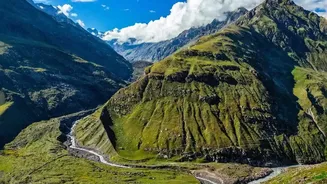
There are two main arteries into Spiti: from Shimla via Kinnaur, and from Manali via the Atal Tunnel and Kunzum Pass. During the monsoon months of July and August, the Shimla-Kaza highway (NH-5) is widely considered the more reliable and safer option. This route experiences a more gradual ascent, which significantly helps with acclimatization and reduces the risk of Acute Mountain Sickness. However, it is not without its own monsoon risks; the highway is prone to landslides, especially on the stretches through Kinnaur near Wangtu and Malling Nallah. The Manali-Kaza route, while shorter, is far more treacherous during the monsoon. It involves crossing the high-altitude Kunzum Pass and numerous water crossings (nallahs) that can become raging torrents after rainfall, making it suitable only for experienced drivers in high-clearance 4x4 vehicles.
Crafting an Emergency Strategy
An 'emergency route map' for Spiti in monsoon is less about secret alternative roads and more about a strategic mindset. The primary rule is to build buffer days into your itinerary—at least two to three. Landslides are common, and roads can be blocked for hours or even days. Your emergency plan should involve knowing the last major town you can retreat to for a safe halt, such as Reckong Peo or Rampur on the Shimla side. If a road is blocked, the only action is to wait for the Border Roads Organisation (BRO) to clear it. Do not attempt risky manoeuvres. Always carry extra food, water, a power bank, and a comprehensive first-aid kit. Before starting your journey each day, try to get the latest road status from local taxi drivers or your hotel, as they have the most current information.
Vehicle and Rider Readiness
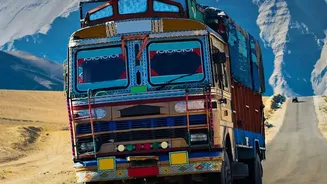
Your vehicle is your lifeline in Spiti. If you are self-driving, ensure your car has high ground clearance. Sedans are not recommended, especially for the Manali side. A 4x4 is ideal. Before the trip, get your vehicle fully serviced, paying special attention to brakes, tyres, and suspension. For motorcyclists, the challenge is greater. You need not only a well-serviced bike but also high-quality, fully waterproof riding gear and experience with off-road and slushy conditions. Whether you are driving or riding, it is crucial to carry a basic toolkit, a puncture repair kit, and know how to use them. If hiring a vehicle, insist on an experienced local driver who is familiar with monsoon conditions in Spiti. Their expertise in judging a water crossing or a landslide-prone patch is invaluable.
Essential Contacts and Connectivity
Mobile connectivity is sparse in Spiti Valley. BSNL and Jio offer the most extensive coverage, but even these are mostly limited to Kaza and other major towns. Expect to have no signal for large parts of your journey. It's wise to download offline maps before you go. Inform your family of your itinerary and establish check-in points for when you expect to be back in network areas. Save important emergency numbers on your phone and also on a physical piece of paper. Key numbers include the district police for Kaza (01906-222253), Keylong (01900-222223), and the general emergency number for ambulance services (108).