








A New Strategy for the Red Planet
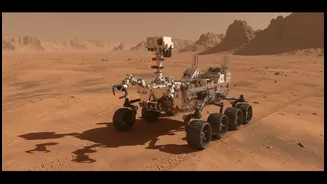
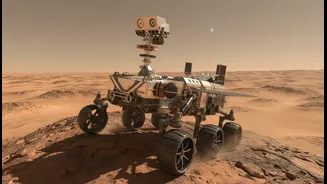
NASA's approach to exploring Mars is undergoing a strategic evolution. For decades, the agency has relied on large, incredibly successful rovers like Curiosity and Perseverance to conduct science on the Martian surface. While these car-sized laboratories
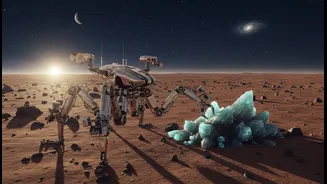
have been invaluable, they are complex and costly to build and operate. The new initiative, named Science Transport and Robotic Innovation for Deployment and Exploration (STRIDE), aims to supplement these missions by fostering a diverse ecosystem of smaller, more agile, and potentially more autonomous robots. By awarding a total of $17 million in contracts, NASA is investing in public-private partnerships to leverage commercial innovation. The goal is to develop robotic systems that can travel greater distances and navigate treacherous terrain, like steep crater walls, that are currently unreachable. This model not only accelerates technological development but also helps build a robust commercial space economy.
1. AeroVironment
If you've heard of the little helicopter that could on Mars, then you know AeroVironment's work. The Virginia-based company was a key partner in developing the groundbreaking Ingenuity helicopter, which proved powered, controlled flight was possible in the thin Martian atmosphere. Their inclusion in STRIDE leverages this unique expertise in aerial mobility. Future Mars missions could involve more advanced aerial platforms capable of scouting terrain for rovers, exploring canyons, or carrying small scientific payloads to areas of interest, building on Ingenuity's historic success.
2. Astrobotic
Hailing from Pittsburgh, Astrobotic has become a major player in the commercial space scene, particularly in lunar logistics. The company is known for developing lunar landers and small, shoebox-sized rovers called CubeRovers. This experience in creating lightweight, modular, and mobile robotic systems is directly applicable to Mars. Their work for STRIDE will likely involve adapting their rover technologies for the harsh Martian environment, focusing on creating nimble scouts that could work alone or in swarms.
3. Venturi Astrolab
Venturi Astrolab is focused on creating a new generation of planetary rovers designed for both robotic and human crewed missions. The Hawthorne, California company is developing the Flexible Logistics and Exploration (FLEX) rover, a versatile vehicle capable of transporting cargo and eventually astronauts. Their selection for the STRIDE initiative suggests NASA is interested in mobility platforms that are not only scientifically capable but also scalable for future human exploration efforts on Mars.
4. Ground Control Robotics
A newer face in the space industry, Atlanta's Ground Control Robotics is focused on developing highly mobile and autonomous robotic systems for challenging environments. While less is publicly known about their specific designs compared to some of the other awardees, their inclusion points to NASA's interest in fresh ideas and specialized expertise in robotic mobility. The STRIDE initiative is designed to encourage participation from a diverse range of companies, including robotics firms that can apply their terrestrial expertise to planetary exploration.
5. Honeybee Robotics
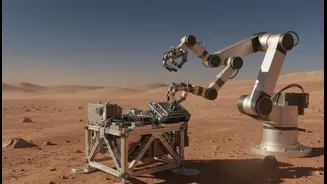
Honeybee Robotics is a veteran of Mars exploration with a long and successful history of providing critical systems for NASA missions. The Colorado-based company, now part of Blue Origin, has developed drills, sample collection systems, and other robotic tools that have flown on multiple Mars landers and rovers, including Curiosity and Perseverance. Their expertise in creating hardy mechanisms that can dig, scoop, and manipulate Martian soil and rock is crucial for any future scientific mission.
6. Intuitive Machines
Like Astrobotic, Houston's Intuitive Machines is a key contractor for NASA's Commercial Lunar Payload Services (CLPS) program, proving its ability to design, build, and land spacecraft on another world. This experience in developing end-to-end mission solutions, from launch to landing and surface operations, is invaluable. Their role in STRIDE will likely involve designing integrated systems where the rover and lander are developed in tandem, ensuring a cohesive and efficient mission architecture.
7. MEI Technologies (Aegis Aerospace)
MEI Technologies, which now operates as part of Aegis Aerospace, has a long history of providing engineering services and technical support for NASA and the Department of Defense. Their expertise lies in systems integration, testing, and ensuring that complex technologies work together seamlessly in harsh environments. Their role in the STRIDE initiative will likely focus on the design and conceptualization phase, ensuring that the proposed mobility systems are robust, reliable, and well-suited for the realities of a Mars mission.