
The 'Evening Star' Explained
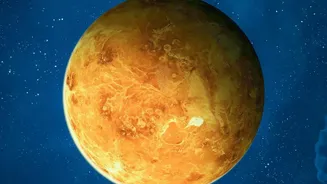
Venus is often called the 'Evening Star' or 'Morning Star' because its orbit is inside Earth's, meaning it's always relatively close to the sun in our sky. It never appears in the middle of the night but instead graces our skies shortly after sunset or before
sunrise. In late August 2026, it is dominating the evening twilight. What makes Venus so incredibly bright? It's the third-brightest object in our sky, after only the Sun and the Moon. This brilliance comes from its thick, highly reflective clouds of sulfuric acid that envelop the entire planet, scattering sunlight back at us. Its relative closeness to Earth also helps it outshine every true star in the night sky.
When and Where to Look
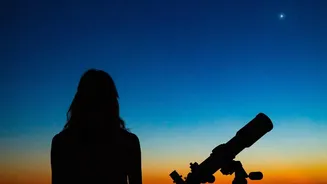
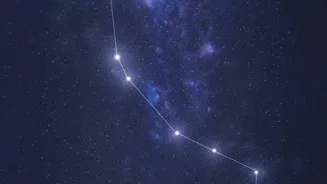
The best time to spot Venus is in the hour just after sunset. As the sky darkens, look towards the west, the same direction the sun just set. You won't be able to miss it; it's an exceptionally bright, steady, white light that will appear before most other stars become visible. Unlike stars, which twinkle, planets like Venus tend to shine with a more constant light. For skywatchers in India throughout August 2026, Venus will be clearly visible in the west-southwest as it moves through the constellation Virgo. It will remain a prominent evening fixture until it dips back into the sun's glare in October.
Do I Need a Telescope?
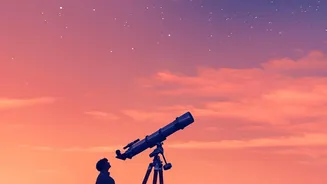
Absolutely not. The beauty of observing Venus is its accessibility. You don’t need any special equipment to see it. Its brightness is so intense that it can easily be seen with the naked eye, even from light-polluted cities. However, if you have a pair of binoculars, you can enhance your experience. Through binoculars, you won't see surface details due to its dense cloud cover, but you might be able to discern that Venus has phases, just like our Moon. In late August 2026, it appears as a small, half-lit disk, but as it gets closer to Earth in the coming weeks, it will appear as a larger, thinner crescent before it reaches its peak brightness in September.
Knowing What You're Seeing
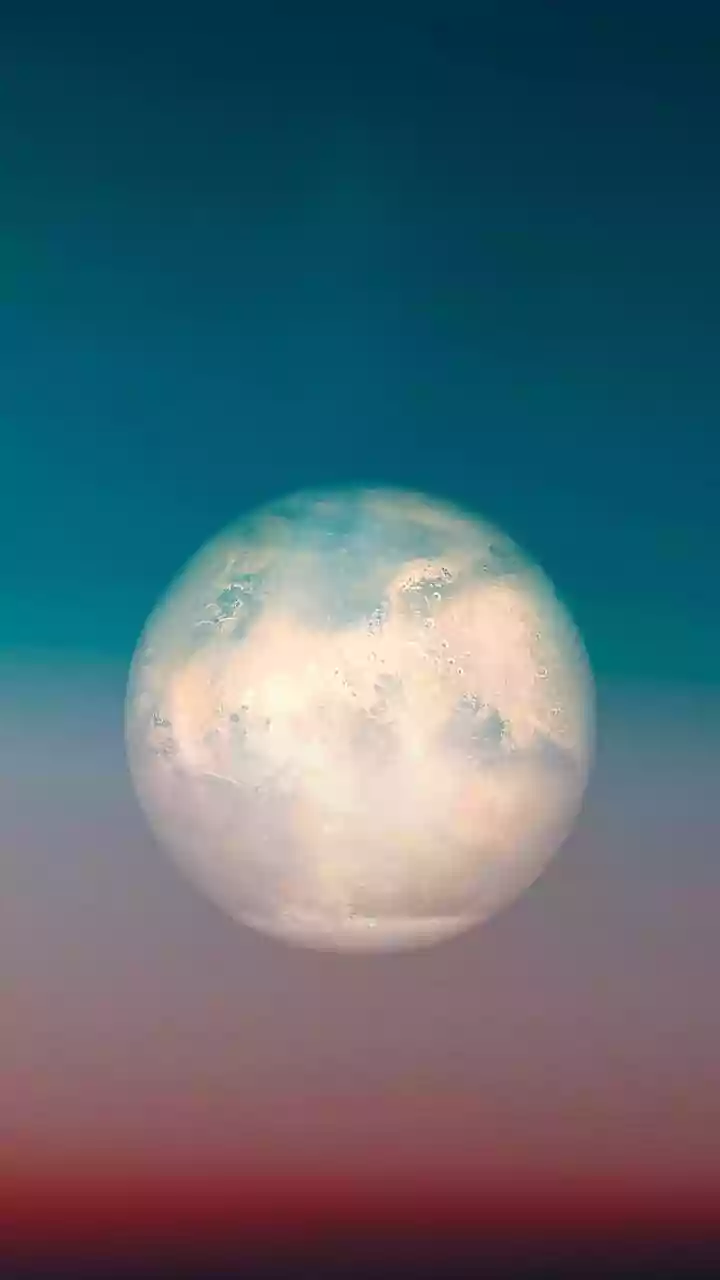
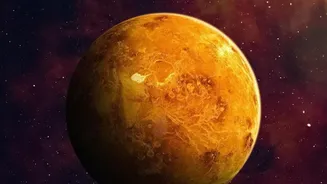
When you gaze at that bright point of light, you are looking at a world often called Earth's 'twin' because of its similar size and structure. But it’s an 'evil twin'. Venus is the hottest planet in our solar system, with surface temperatures high enough to melt lead, averaging around 464 degrees Celsius. Its atmosphere is incredibly dense, with a surface pressure over 90 times that of Earth's—equivalent to being nearly a kilometre deep in our ocean. This crushing atmosphere is made mostly of carbon dioxide, which creates a runaway greenhouse effect. Uniquely, a day on Venus (243 Earth days) is longer than its year (225 Earth days), and it spins backwards compared to most other planets in our solar system.
Enhance Your Stargazing With Apps
For those who want to deepen their knowledge, several free and paid mobile apps can turn your phone into a portable planetarium. Apps like SkyView, Star Walk 2, or Sky Map can help you identify Venus and other celestial objects in real-time. You simply point your phone at the sky, and the app will show you what you're looking at, from planets and stars to constellations. Some apps like 'Bhagol: Indian Sky Map' are even tailored for observers in India, offering information on nakshatras and rashis. These tools can be a fantastic way for beginners to feel more connected to the cosmos and learn to navigate the night sky with confidence.