
A Cosmic Surprise
Scientists using the James Webb Space Telescope (JWST) are peering back to the dawn of time and finding something unexpected. In the cosmic dark, just a few hundred million years after the Big Bang, they are spotting galaxies that are far more mature
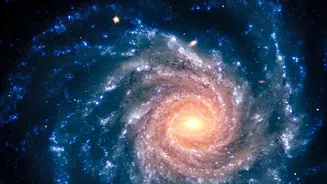
and developed than anyone thought possible. Current theories suggested these first galaxies should be small, chaotic, and just starting to piece themselves together. Instead, Webb's powerful infrared eyes are revealing systems that are surprisingly massive, structured, and in some cases, have already stopped forming stars. It’s like finding a fully-built city in a land that was supposed to be wilderness. This has become one of the most exciting questions in modern cosmology, prompting a major rethink of how the first chapters of our universe were written.
Meet the 'Dead' Galaxies
Among the most startling discoveries are 'quiescent' or 'dead' galaxies. One such galaxy, spotted when the universe was only 700 million years old, is the oldest of its kind ever observed. It appears to have lived fast and died young, burning through a furious period of star formation before shutting down production. Astronomers are still debating what causes a galaxy to die so early. Theories range from a supermassive black hole at its centre blowing away the gas needed for new stars, to the galaxy simply using up its star-forming fuel too quickly. The discovery of a surprisingly large population of these dead galaxies within an early cosmic megastructure, nicknamed the 'Cosmic Vine', further challenges expectations about how quickly galaxies could evolve and settle down.
The Power of Webb
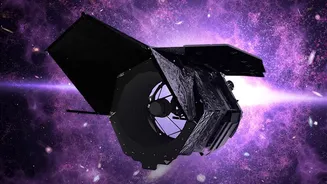
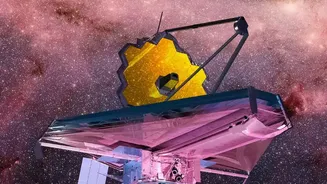
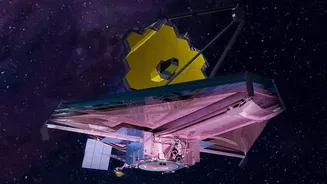
These discoveries would be impossible without the James Webb Space Telescope. Unlike its predecessor, the Hubble Space Telescope, Webb is designed to see the universe in infrared light. This is crucial because, as the universe expands, the light from the most distant objects gets stretched out into longer, redder wavelengths. Webb’s giant mirror and incredible sensitivity allow it to capture this faint, ancient light, effectively acting as a time machine. It’s giving astronomers their first clear view of the 'Cosmic Dawn', the period when the very first stars and galaxies lit up the universe.
Rewriting the Textbooks
So, what does this all mean? It doesn't necessarily break our understanding of the universe, but it certainly complicates it. The standard 13.8-billion-year age of the cosmos isn't in question, but the timeline within that age is. The early universe appears to have been far more efficient at building large, complex structures than our models predicted. Galaxies may have started forming earlier, grown faster, or assembled themselves in a different way than previously thought. Scientists are now scrambling to adjust their theories to account for this accelerated evolution, exploring how everything from the behaviour of supermassive black holes to the mysterious nature of dark matter might have played a role.
A Universe of New Questions
Every stunning image from the JWST brings both answers and a host of new questions. For every surprisingly mature galaxy found, scientists wonder how many more are out there and what they can tell us. Finding a galaxy with an organised, spinning disc of stars from when the universe was just a third of its current age pushes the era of orderly galaxy-building much further back in time. The telescope is not just providing snapshots; it's revealing the processes that shaped the cosmos we live in today. These early images show galaxies merging and interacting far earlier than predicted, enriching their surroundings with the heavy elements necessary for planets and life. It’s a dynamic and rapidly changing picture.