

A New Star Ignites the Heavens
In early October 1604, observers across Italy first noted a startling new point of light in the constellation Ophiuchus, the serpent-bearer. This 'guest star' was impossibly bright. Within days, it was reported by astronomers across Europe, as well as in China
and Korea, creating a global stir. At its peak, it outshone every star in the night sky and was visible even in daylight for over three weeks. In a world that believed the heavens were a realm of perfect, unchanging permanence, the sudden appearance of such a brilliant object was a profound and unsettling mystery. It was the last supernova to be witnessed in our own Milky Way galaxy with the naked eye.
Kepler's Meticulous Watch
Though he wasn't the first to see it due to cloudy weather, the event would become inextricably linked with the German astronomer Johannes Kepler. As the Imperial Mathematician in Prague, Kepler began his detailed observations on October 17. For over a year, he meticulously tracked the star's position and its gradual dimming. His precise, naked-eye measurements were remarkable, proving the object showed no parallax—the apparent shift in position against a distant background. This was crucial evidence that the 'stella nova' (new star) was not a phenomenon within Earth's atmosphere but was located far away, among the supposedly fixed stars. Kepler compiled his extensive findings in a book titled 'De Stella Nova in Pede Serpentarii' ('On the New Star in the Foot of the Serpent Handler').
Shattering an Ancient Worldview
The appearance of SN 1604, just 32 years after another supernova seen by Tycho Brahe in 1572, delivered a powerful blow to the long-held Aristotelian view of the cosmos. This ancient Greek model, which had dominated Western thought for nearly two millennia, held that the celestial sphere beyond the Moon was perfect and immutable. The arrival of not one, but two 'new stars' in a single generation suggested the heavens were dynamic and subject to change. Astronomers like Kepler and Galileo Galilei used these events to argue against the old models and support the emerging Sun-centered system proposed by Copernicus. The supernova became a focal point in a great scientific and philosophical debate about the nature of the universe.
The Science Behind the Spectacle
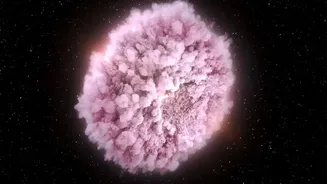
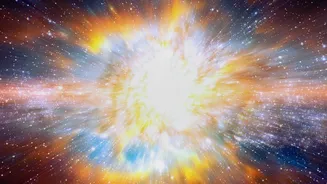
What the 17th-century observers witnessed was the cataclysmic death of a star. Modern astronomers have identified SN 1604 as a Type Ia supernova. This specific type of stellar explosion happens in a binary star system where a dense, compact star called a white dwarf siphons off material from its companion. When the white dwarf accumulates too much mass, it reaches a critical point, triggering a runaway thermonuclear explosion that obliterates the star. The energy released is so immense that for a short time, the supernova can outshine an entire galaxy. What Kepler and his contemporaries saw was not the birth of a star, but a spectacular, violent death some 20,000 light-years away.
The Ghost of a Star
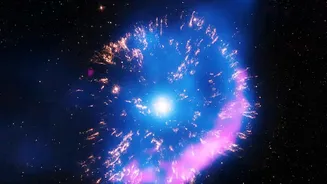
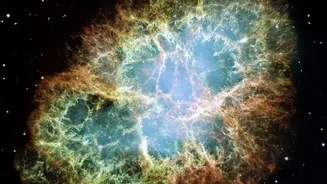
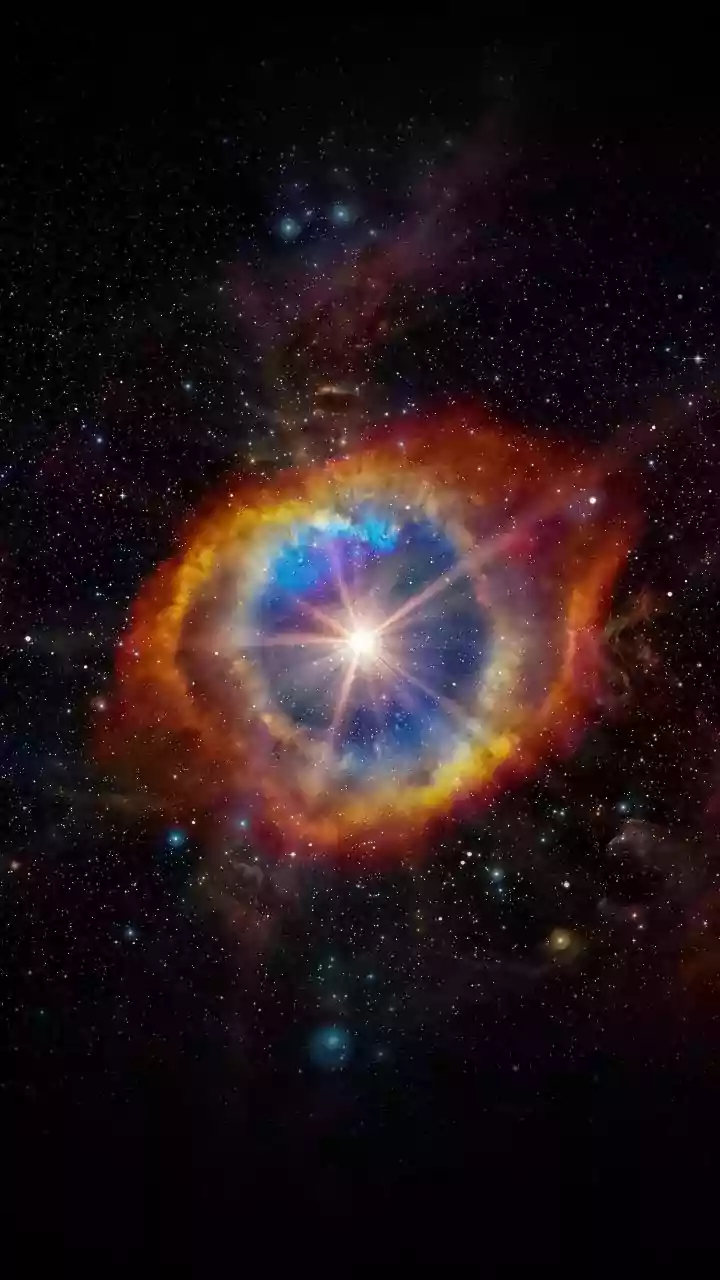
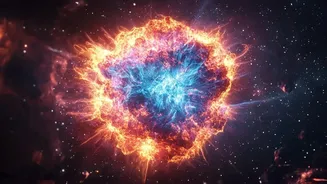
The light from Kepler's Supernova faded from naked-eye view after about a year, but the story didn't end there. Today, powerful modern instruments like NASA's Chandra X-ray Observatory and the Hubble Space Telescope can study its aftermath: a beautiful, expanding cloud of gas and dust known as Kepler's Supernova Remnant. By observing this remnant in different wavelengths of light, astronomers can study the elements forged in the explosion and measure the speed of the ejected material, with some knots of debris clocked at over 20 million miles per hour. These observations help scientists piece together the details of the explosion and refine their understanding of the lifecycle of stars and the expansion of the universe.