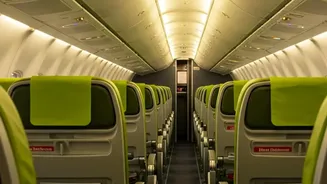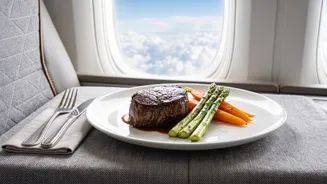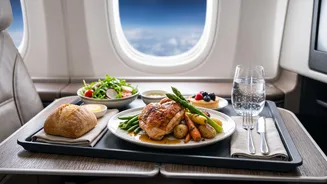






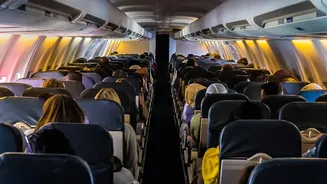

If you've ever found your in-flight meal disappointingly bland, you're not imagining things. But it might not be the chef's fault. The unique environment inside an aircraft cabin at 35,000 feet actively changes how we perceive flavour.
The Triple Threat to Your Taste Buds
The reason airline
food often has a reputation for being underwhelming has less to do with the cooking and more to do with a trio of environmental factors: low cabin pressure, low humidity, and constant background noise. At cruising altitude, these conditions conspire to dull our senses, making it harder to appreciate the nuances of a meal. In fact, studies have shown that our perception of key tastes like saltiness and sweetness can drop by as much as 30 percent. Your taste buds aren't failing; they're simply operating in an environment that works against them.
The Pressure and Dryness Dilemma
First, let's talk about pressure and humidity. Aircraft cabins are pressurised to the equivalent of being at an altitude of 6,000 to 8,000 feet. This lower pressure, combined with humidity levels that can dip below 12%—drier than most deserts—has a significant physiological effect. The dry air immediately begins to dry out your nasal passages. Since about 80% of what we perceive as 'flavour' actually comes from our sense of smell, this is a major problem. When your olfactory receptors can't function properly, the aroma of food is muted, making it taste much blander. At the same time, the combination of low pressure and dehydration reduces saliva, which is essential for taste molecules to be detected by your tongue.
The Surprising Role of Engine Noise
It might seem strange, but what you hear also affects what you taste. The constant drone of an airplane's engines, which hovers around 85 decibels, is loud enough to interfere with our perception of flavour. Research from institutions like Cornell University has shown that loud background noise can suppress the ability to taste sweetness. This is why desserts and sweet drinks might seem less satisfying in the air. However, the same noise appears to have the opposite effect on our fifth basic taste: umami. The savoury, rich flavour found in foods like tomatoes, mushrooms, and aged cheese seems to be enhanced by the engine's hum. This helps explain why so many travellers inexplicably crave tomato juice or a Bloody Mary once they're airborne.
How Airlines Adapt Their Menus
Airlines and their caterers are well aware of this science and have spent decades designing menus that can stand up to the challenging cabin environment. This isn't just about shrinking restaurant recipes onto a tray; it's a specialised form of culinary science. To compensate for the dulling of sweet and salty tastes, chefs deliberately use more seasoning than they would on the ground. They also lean heavily on ingredients that are naturally rich in umami, which remains stable or is even enhanced at altitude. That's why you'll often find dishes featuring tomato-based sauces, mushrooms, parmesan cheese, and soy glazes. Spicy and sour flavours are also relatively unaffected by the altitude, so curries and dishes with acidic dressings tend to perform well.