
The Immensity of the Cosmic Haystack
The primary reason for patience is the sheer scale of the universe. Our galaxy, the Milky Way, contains an estimated 100 to 400 billion stars, and there are billions of galaxies in the observable universe. Even if life is common, the distances are almost
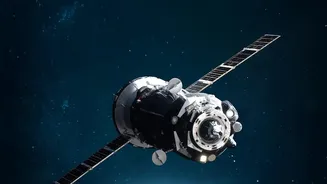
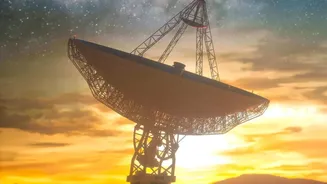
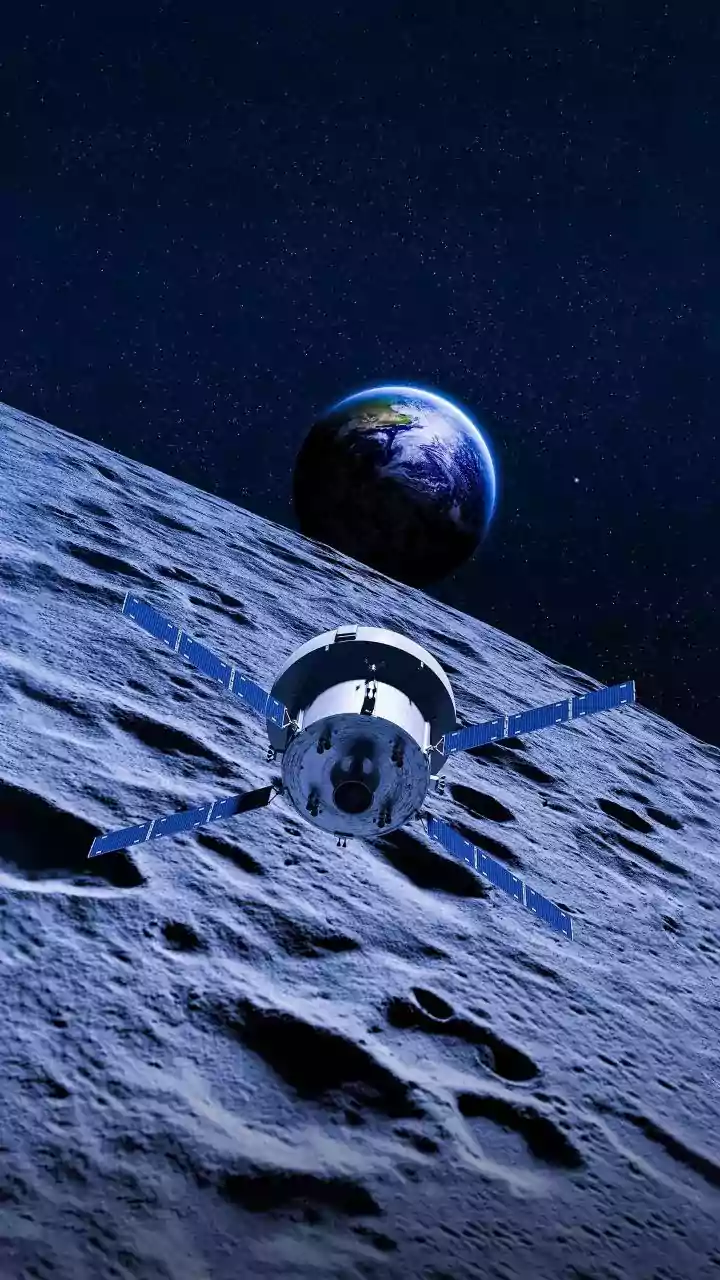
incomprehensibly vast. Sending a probe to the nearest star system, Proxima Centauri, would take current spacecraft tens of thousands of years. This 'tyranny of distance' means we rely on observing from afar, trying to decipher faint signals that have travelled for light-years. This is the central puzzle of the Fermi Paradox: if the galaxy is so vast and old, why haven't we seen any clear evidence of other civilizations? The answer might be that we simply haven't looked long enough or in the right places.
What Counts as Evidence?
Finding life isn't as simple as spotting a 'little green man'. Scientists are looking for biosignatures—any substance, feature, or phenomenon that provides evidence of past or present life. This could be complex organic molecules, certain gases in a planet's atmosphere, or even fossilized microbes in a Martian rock. A key challenge is that for a sign to be considered a true biosignature, it must be something that non-biological processes are highly unlikely to create. For example, the presence of oxygen and methane together in an atmosphere is a potential biosignature because these gases would normally destroy each other; life on Earth constantly replenishes them. But even then, scientists must rule out all possible geological or chemical explanations first.
The 'Extraordinary Claims' Standard
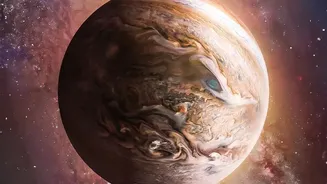
Announcing the discovery of alien life would be one of the most significant events in human history. Because of this, the scientific community adheres to the principle famously articulated by astronomer Carl Sagan: 'Extraordinary claims require extraordinary evidence'. A single, ambiguous signal is not enough. The evidence must be strong, verifiable by independent teams, and withstand intense scrutiny. There have been tantalizing hints before, like the potential detection of dimethyl sulphide on the exoplanet K2-18b—a gas produced by life on Earth—but even these exciting finds are met with healthy skepticism until more data can be gathered. This caution is not about dismissing possibilities; it's about ensuring that when a discovery is announced, it is built on an unshakeable foundation of proof.
Our Ever-Improving Tools
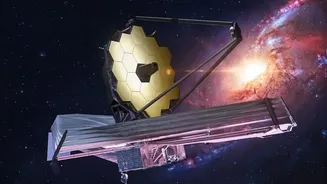
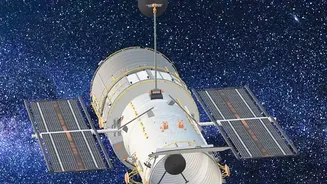
Our ability to search is rapidly advancing. The James Webb Space Telescope (JWST) is a game-changer, capable of analyzing the atmospheres of distant exoplanets with unprecedented detail. It has already detected key molecules like carbon dioxide and methane, and even found evidence for an atmosphere on a scorching 'lava world'. These findings help scientists understand how planets form and which ones might be capable of supporting life. However, even with powerful tools like JWST, detecting the faint signature of a habitable world is at the very edge of our technological limits. Future missions and new search techniques, some using AI to sift through data, are being developed to improve our odds and refine what we're looking for.
The Risk of Missing What's There
One of the most profound challenges is the possibility of 'false negatives'—cases where life exists, but we fail to recognize it. This could happen if life on another world has a completely different biochemistry than ours, producing signals we aren't looking for. It could also happen if signs of life are too faint or are masked by other atmospheric processes. Scientists are now exploring 'agnostic' biosignatures, which look for broader patterns of complexity or organization that might indicate biology, rather than specific Earth-like chemicals. This acknowledges that our definition of life might be too narrow and that we need to keep an open mind to find something truly alien.