






The Challenge of Urban Drainage
Many Indian cities rely on aging drainage and sewer infrastructure. Often, these are combined systems, meaning they are designed to carry both household sewage and stormwater runoff from streets in the same pipe. During dry weather, this works fine. But
when intense rainfall hits, the volume of water can quickly exceed the system's capacity. The result is a combined sewer overflow (CSO), where a mix of untreated sewage and polluted stormwater is discharged directly into rivers, lakes, and streets. This not only causes immediate flooding but also poses significant environmental and health hazards, contaminating water sources and spreading disease. The problem is compounded by rapid urbanisation, which replaces absorbent natural ground with impermeable concrete surfaces, increasing the volume and speed of runoff.
Enter the Smart Sentinels
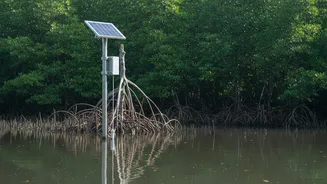
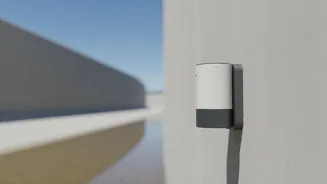
This is where the Internet of Things (IoT) comes in. Smart IoT sensors are small, rugged devices placed at critical points throughout a city's water management network—inside sewer lines, at overflow outlets, and in stormwater drains. These sensors act as round-the-clock sentinels, continuously collecting crucial data in real time. They can measure water levels, flow rates, pressure, and even key water quality parameters like turbidity and chemical content. This information is then transmitted wirelessly to a central dashboard, giving municipal authorities a live, comprehensive view of what’s happening underground, a feat that was previously impossible.
From Reactive to Predictive Management
Traditionally, managing stormwater has been a reactive process. Authorities could only respond to a flood or an overflow event after it had already occurred, focusing on damage control. Smart sensors fundamentally change this paradigm by enabling proactive and even predictive management. By feeding real-time data into Artificial Intelligence (AI) and Machine Learning (ML) models, authorities can forecast potential problems before they happen. These systems can analyse data from the sensor network alongside weather forecasts and historical rainfall patterns to predict which parts of the drainage system are likely to become overwhelmed, and when. This allows for a shift from emergency response to calculated, preventive action, potentially reducing water losses and improving response times significantly.
Smarter Decisions During a Storm
With this predictive capability, urban authorities gain the ability to make critical operational decisions in the midst of a storm. For instance, if sensors indicate that one part of the network is approaching capacity, automated systems or human operators can divert the flow to other sections that have spare capacity. They can strategically activate pumps to move water faster or use automated gates and valves to hold water in storage tanks or less critical pipes until the peak of the storm has passed. This dynamic control helps to balance the load across the entire system, maximizing its existing capacity and preventing overflows at known weak points. In addition, early warnings can be sent to the public in areas with a high risk of imminent flooding, giving them vital time to prepare.
Beyond Flood Prevention
The benefits of a sensor-equipped water network extend far beyond just managing storm events. The continuous monitoring of water quality helps in the rapid detection of contamination or illegal discharge, protecting public health and the environment. The data on flow and pressure can also help pinpoint leaks and blockages in the system, reducing water loss and allowing for more efficient, targeted maintenance rather than costly guesswork. Over the long term, the vast amount of data collected provides invaluable insights for city planners. It helps identify recurring bottlenecks and areas of high stress, guiding informed decisions on where to invest in infrastructure upgrades and ensuring that new developments are designed with resilient water management in mind.