






A Nation's Economic Lifeline
The Southwest Monsoon is more than just a weather phenomenon in India; it is the lifeblood of the nation's economy. It provides over 75% of the country's annual rainfall, and with nearly half of India's workforce employed in agriculture, its timely arrival
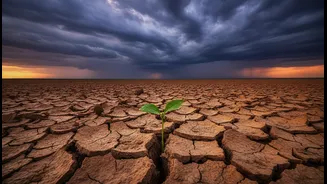
and distribution are critical. A good monsoon can boost crop yields, replenish reservoirs, and cool the summer-scorched land. A delayed or erratic monsoon, however, can lead to drought, crop failure, and immense financial distress for the country's 146 million agricultural households, the majority of whom are small and marginal farmers. This high-stakes dependency has made accurate monsoon forecasting one of the most critical scientific challenges for the nation for over a century.
The Limits of Traditional Forecasting
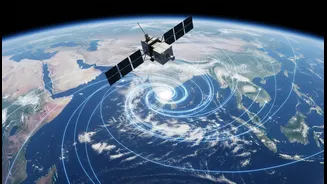
Traditionally, weather prediction has relied on Numerical Weather Prediction (NWP) models. These are incredibly complex systems that use mathematical equations based on the laws of physics to simulate the Earth's atmosphere. They run on massive supercomputers, dividing the globe into a grid and calculating how conditions like temperature, pressure, and wind will evolve. While these models have improved significantly over the years, they are computationally expensive and have limitations, particularly in providing the kind of long-range, hyper-local forecasts that farmers desperately need. For a farmer deciding when to sow seeds, a five-day forecast for a large region is helpful, but a month-long forecast for their specific block or district is transformative.
How AI Changes the Game
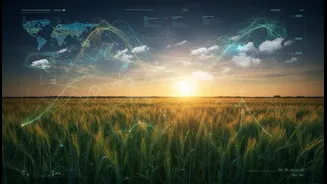
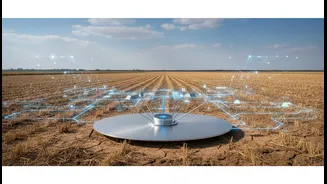
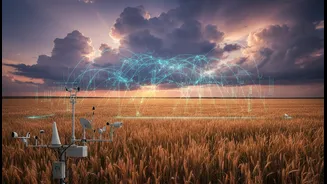
Artificial intelligence models approach forecasting from a completely different angle. Instead of solving complex physics equations from scratch, AI models like Google's GraphCast or NeuralGCM learn from decades of historical weather data. By analysing vast datasets, they identify intricate patterns and relationships that traditional models might miss. The result is a system that is not only incredibly fast—capable of running on a laptop instead of a supercomputer—but also increasingly accurate. Recent collaborations have shown that these AI models can predict the monsoon's onset up to a month in advance, even capturing unusual events like mid-season dry spells with remarkable precision.
From Forecast to Farm
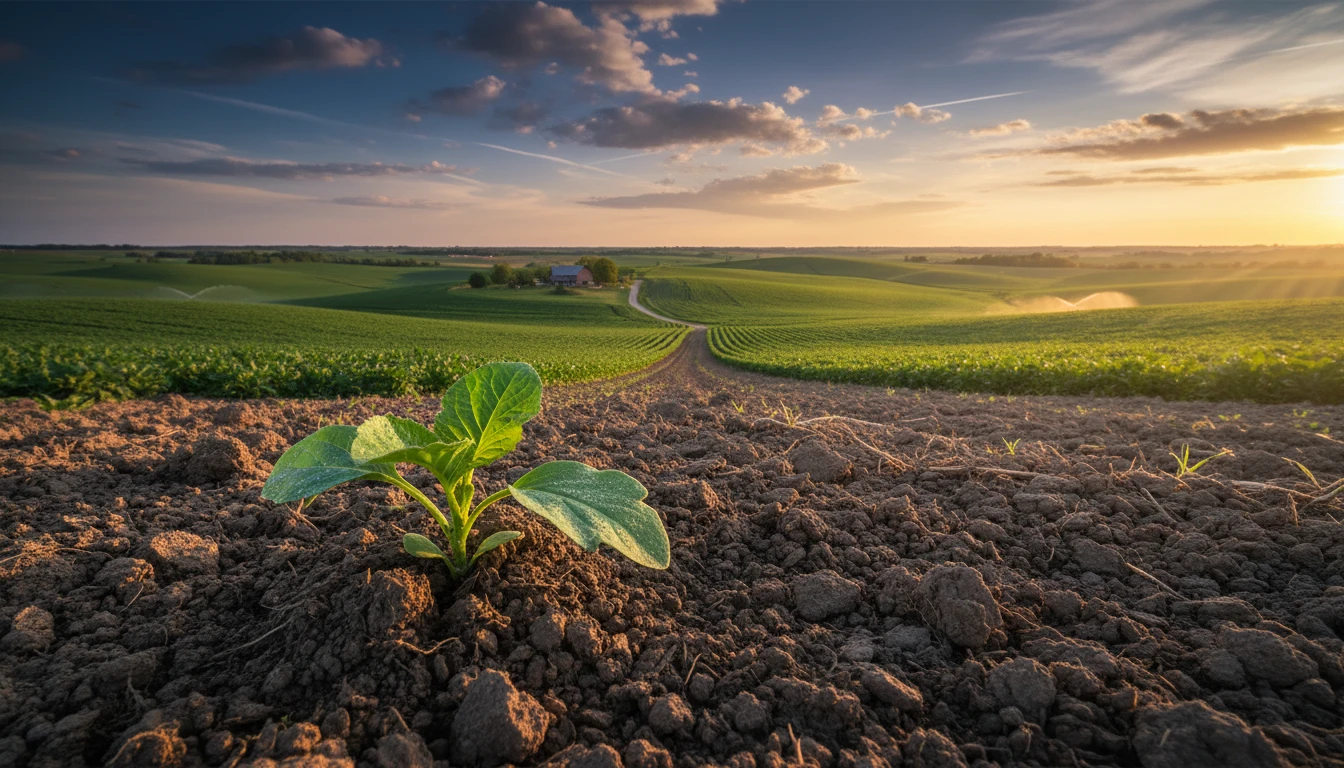
The potential impact on the ground is enormous. A forecast delivered weeks in advance allows farmers to make crucial decisions with greater confidence. They can better plan when to sow their seeds, how much fertilizer to buy, and whether to switch to different crops better suited to the predicted conditions. In a pioneering initiative, the Indian Ministry of Agriculture and Farmers' Welfare partnered with the University of Chicago to deliver AI-powered forecasts via SMS to 38 million farmers. This provided them with advance notice of a delayed monsoon, allowing them to adapt their strategies and mitigate risk. Studies suggest that access to such accurate, long-lead-time forecasts can nearly double a farmer's annual income, showcasing a massive potential return on investment.
The Road Ahead
The technology is promising, but its widespread adoption faces challenges. The India Meteorological Department (IMD) has started launching its own AI-based forecasting systems, aiming for hyper-local predictions at the block level. However, the success of these models depends heavily on the quality and quantity of data they are trained on, and there are still significant data gaps, especially in complex terrains like the Himalayas. Furthermore, the most sophisticated forecast is useless if it doesn't reach the farmer in an understandable and actionable format. Overcoming challenges like digital literacy and patchy rural connectivity will be just as important as refining the AI models themselves. Building trust among farmers and ensuring the last-mile delivery of this information is the next critical step.