







What is a Caretaker Government?
In Israel's parliamentary system, a caretaker or transitional government takes charge in several scenarios: after a no-confidence vote, the resignation of a prime minister, or when elections don't result in a clear majority to form a new coalition. Its
primary function is to ensure the continuity of governance and prevent a power vacuum until a new, fully mandated government can be sworn in. According to Israel's 'Basic Law: The Government', the outgoing administration simply continues to perform its functions. This period of transitional rule, which has occurred frequently amid Israel's recent political instability, places the incumbent leader in a powerful but precarious position.
The Powers That Remain
Legally speaking, a caretaker government retains almost all the powers of a regular government. It can run ministries, conduct foreign policy, and, crucially, make decisions on national security. The law does not explicitly bar a caretaker government from launching military operations or even going to war. Section 40 of the Basic Law stipulates that initiating a war requires a government decision, which can be delegated to the smaller, more agile security cabinet. Historical precedents exist, including Operation Cast Lead in 2008 and Operation Guardian of the Walls in 2021, both launched under caretaker administrations, demonstrating that a transitional government's authority in security matters is substantial.
The 'Duty of Restraint': Legal Limits
While the letter of the law is broad, a significant set of constraints has been established by Israel's Supreme Court. Rulings have imposed a 'duty of restraint' on caretaker governments, acknowledging their diminished democratic legitimacy since they no longer enjoy the confidence of the Knesset, Israel's parliament. This principle means that while they can act, they should avoid making far-reaching decisions with long-term consequences unless there is a 'vital public need'. This applies particularly to major policy shifts, large-scale financial commitments, and the appointment of senior officials to full-term positions, where courts have sometimes intervened to block appointments deemed non-essential.
The Attorney General: A Key Check
A crucial check on a caretaker government's power is the Attorney General. This independent figure serves as the government's chief legal counsel and is tasked with safeguarding the public interest. The Attorney General's legal opinions are considered binding on the government, providing a powerful guardrail against executive overreach. During a transitional period, their office vets government decisions for legality, applying a stricter standard of reasonableness. If the Attorney General deems an action by the caretaker government to be an unreasonable exercise of power—for instance, a politically motivated appointment—they can block it. Political opponents frequently appeal to the Attorney General to scrutinize the caretaker government's actions.
Political Realities and Constraints
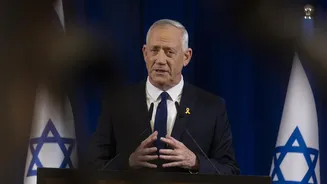
Beyond formal legal checks, a caretaker prime minister faces immense political pressure. Having lost a majority in the Knesset, the government cannot pass new, controversial legislation. Opposition parties, meanwhile, are emboldened to challenge every move. Gadi Eisenkot, tasked with forming the next government, has publicly warned Netanyahu against non-urgent security actions and complained about being denied security briefings, highlighting the deep mistrust. This political gridlock means that while Netanyahu retains executive authority, especially in security, his ability to govern effectively on domestic policy is severely hampered by a parliament he no longer controls. Every decision is viewed through a political lens, with opponents ready to accuse the caretaker leader of using their position for political gain.