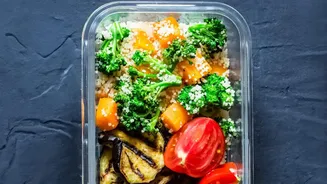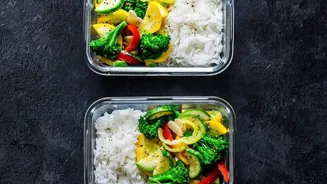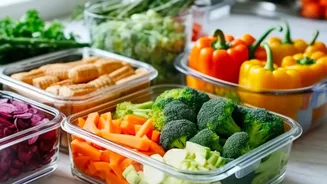


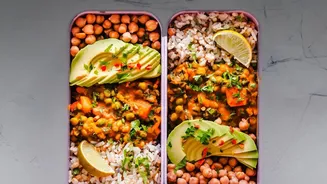
Batch cooking saves time and stress, but the final step—portioning and storing—can feel chaotic. Mastering this process is the key to meals that stay fresh and delicious, turning your hard work into easy, ready-to-eat lunches and dinners.
The Golden Rule: Cool Food Fast
Before a single
container is filled, your cooked food needs to cool down. Putting hot food directly into the fridge can raise the appliance's internal temperature, putting other foods at risk of bacterial growth. More importantly, sealing a hot meal traps steam, creating condensation that leads to soggy grains and mushy vegetables. The goal is to get food out of the 'danger zone' (between 41°F and 135°F) as quickly as possible. Food safety authorities recommend cooling food and refrigerating it within two hours. To do this efficiently, divide large batches from a single pot into several shallow pans or containers. This increases the surface area, allowing heat to escape much faster than it would in a deep pot. Stirring soups or stews occasionally during this process also helps release trapped heat.
Choose Your Containers Wisely
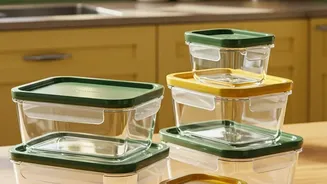
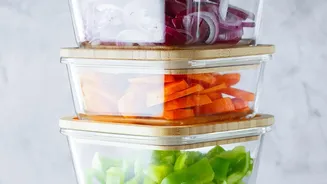
The great debate in meal prep often comes down to glass versus plastic. Glass containers are a favorite for many because they don't stain or absorb odors, making them perfect for dishes with tomato sauce or curry. They are also highly versatile, moving safely from the freezer to the microwave and often the oven. Their main drawbacks are weight and breakability, making them less ideal for a long commute. High-quality, BPA-free plastic containers are a lightweight and affordable alternative. They are great for salads, sandwiches, and anyone who carries their lunch in a backpack. However, plastic can warp over time with repeated microwaving and may absorb smells and stains. For a balanced approach, consider using glass containers for meals you'll eat at home and plastic for those you take on the go.
A Smart Portioning Strategy
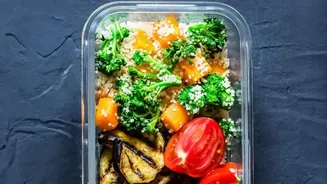
Portioning isn't just about dividing food evenly; it's about preserving texture and flavor. The most effective strategy is to store components separately when possible. Keep sauces and dressings in small, separate pots to prevent everything from becoming soggy. For salads, this is crucial: layer ingredients with the dressing at the very bottom, followed by hard vegetables, grains or proteins, and finally, leafy greens on top. When portioning a complete meal into one container, think about how ingredients interact. Slightly undercooking vegetables means they will finish cooking to a perfect crisp-tender texture upon reheating, rather than turning to mush. If a recipe is difficult to divide by eye, a kitchen scale is the most accurate way to create consistent serving sizes. This is especially helpful for tracking nutrition and ensuring your portions are balanced.
Stack, Label, and Store
An organized fridge makes mealtime effortless. The 'First-In, First-Out' (FIFO) system is a simple rule to ensure you're always eating the oldest meals first, which helps reduce food waste. Always label your containers with the name of the dish and the date it was made. This simple step removes the guesswork from a fridge full of containers. When storing, allow cool air to circulate. Avoid stacking warm containers on top of each other, as this creates a heat column and slows the cooling process. Instead, spread them out on a shelf until they are completely cold. Using clear containers and organizing them by meal type or day can also save you time searching for what you need.
Twice - Weekly Cooking and Freezing
The headline 's 'twice - weekly ' approach is perfect for maintaining freshness , as most refrigerated leftovers are best consumed within three to four days . A Sunday cook - up can cover meals until Wednesday , and a smaller mid - week session can handle the rest of the week . This method also prevents meal fatigue . For meals you won 't eat within that window , the freezer is your best friend . Ensure food is completely cool before freezing to prevent ice crystals and freezer burn . For soups , stews , and sauces , leave a little space at the top of the container to allow for expansion . Soups and grains can be frozen flat in freezer bags to save space ; once solid , you can stack them like files . Just remember to transfer frozen meals to the fridge the night before you plan to eat them for safe and easy thawing .