





An Age-Old Observation
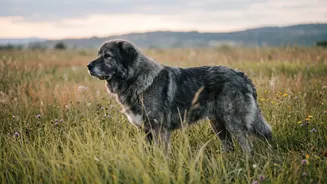
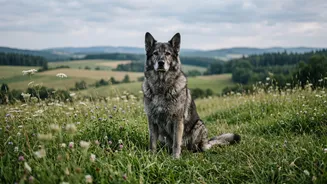
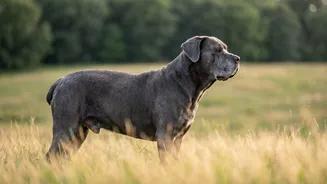
Anyone who has loved a Great Dane or an Irish Wolfhound knows the bittersweet reality. While a tiny Chihuahua might live for 15 to 20 years, many giant breeds are considered seniors by age five and may not see their tenth birthday. For decades, this inverse
relationship between size and lifespan has been a sad but accepted fact among veterinarians and owners. The prevailing wisdom was that their bodies simply 'wear out' faster. But what does that really mean? Researchers have long sought a more precise, molecular explanation for this phenomenon, moving beyond observation to understand the biological mechanism at play.
The Ticking 'Epigenetic Clock'
Groundbreaking research, much of it from the Dog Aging Project, has revealed that the answer is written in their DNA—or more accurately, on top of it. The field of epigenetics studies chemical marks on DNA that control which genes are turned on or off. These patterns change predictably as we age, creating what scientists call an 'epigenetic clock'. By reading these marks, researchers can determine an organism's 'biological age', which can be very different from its chronological age (the number on a birthday card). Studies have found that while all dogs age faster than humans in their early years, the epigenetic clock in large dogs ticks at a significantly faster rate throughout their lives.
Unstable 'Jumping Genes'
A recent study published in the journal Science points to a specific culprit: transposable elements, or 'jumping genes'. One type, called LINE-1, can copy and paste itself throughout the genome. This process can cause damage and genetic instability. In a young, healthy dog, these jumping genes are kept in check by epigenetic tags, specifically a process called DNA methylation. However, as a dog ages, this regulation weakens, and the LINE-1 elements become more active, contributing to cellular aging and disease. The crucial discovery is that this loss of control happens much more quickly in large dogs. On average, giant breeds lose methylation at a rate 35% faster than small breeds, suggesting their cells are experiencing accelerated wear and tear.
The Trade-Off of Rapid Growth
Why would this happen? The evidence suggests it is an unintended consequence of selective breeding. For centuries, humans have bred dogs for specific traits, especially size. This intense selection for rapid growth appears to have created a biological trade-off. The cellular resources and genetic pathways that fuel fast and massive growth may come at the expense of those dedicated to longevity and maintenance, such as DNA repair and cancer suppression. As a result, large dogs not only reach physical maturity faster, but their entire life course is compressed. This accelerated timeline also means they are more susceptible to age-related diseases, like cancer and orthopedic issues, at an earlier chronological age.
Biological vs. Calendar Age
This brings us back to the core concept: a dog’s biological age is what truly matters for its health. A five-year-old Great Dane may have the same number of candles on its cake as a five-year-old Pomeranian, but biologically, its body might be more comparable to that of a much older dog. Its cells have accumulated more damage, and its biological clock simply reads 'older'. This doesn't just recalibrate the old 'one dog year equals seven human years' myth, which science has thoroughly debunked; it changes how we should think about caring for our pets. Health screenings, dietary changes, and exercise modifications that you might consider for a ten-year-old small dog may be appropriate for a five- or six-year-old large dog.