





The Moon’s Frozen Treasure
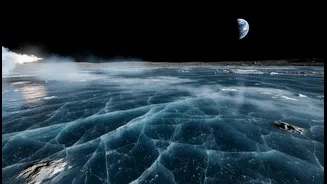
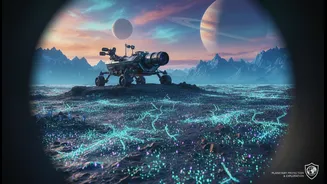
For decades, scientists have theorized about water on the Moon. In recent years, missions have confirmed its existence, not as flowing rivers, but as ice crystals mixed into the lunar soil, primarily within Permanently Shadowed Regions (PSRs). These are
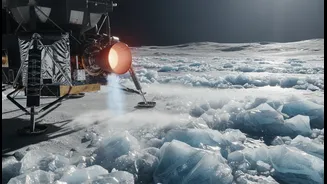
craters near the lunar poles where the sun never shines, creating some of the coldest spots in our solar system. This ice is immensely valuable for two reasons. First, it’s a vital resource for future astronauts; it can be melted for drinking water, split into oxygen for breathing, and its components—hydrogen and oxygen—can be used to make rocket fuel. Second, this ice is a scientific time capsule. Frozen for potentially billions of years, it could contain clues about the early solar system, the delivery of water to Earth, and even prebiotic molecules that might explain how life began.
An Unintended Consequence of Landing
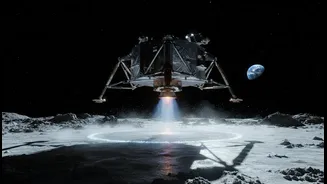
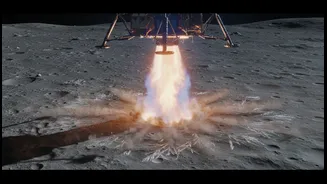
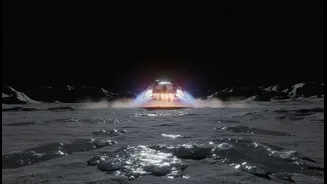
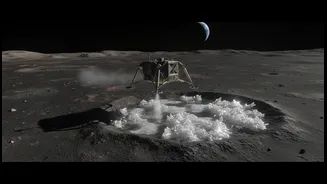
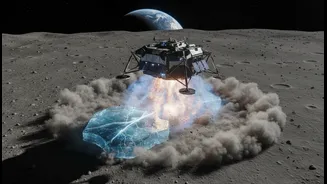
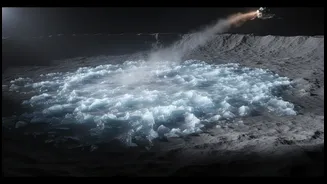
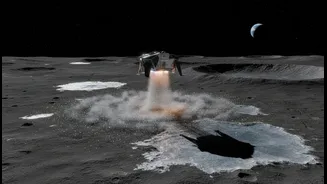
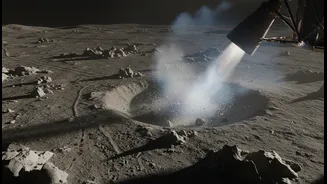
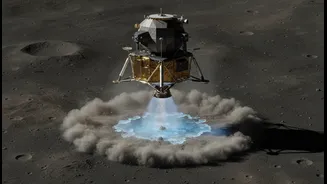
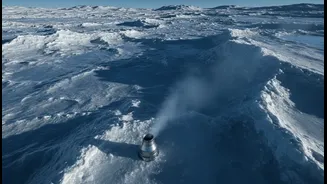
The problem arises from the physics of landing on an airless world. To slow their descent, lunar landers fire powerful engines. This process kicks up clouds of lunar dust and releases significant amounts of exhaust. A primary component of this exhaust is water vapor, along with other chemicals like methane depending on the propellant used. In the Moon's near-vacuum, this exhaust cloud expands rapidly and globally. Computer simulations have shown that exhaust from a single mid-sized lander near the south pole can spread around the entire Moon in just a few hours. Within months, a substantial percentage of this artificial water vapor and methane can settle and freeze in the same cold traps that hold the ancient, native ice.
The Science of Spoilage
This contamination poses a critical threat to lunar science. Scientists hope to study the composition of native lunar ice to read its historical record. Introducing water and other chemicals from Earth-made rockets can irretrievably muddy the waters, so to speak. It becomes difficult, if not impossible, to distinguish between the pristine, billion-year-old ice and the freshly deposited exhaust frost. This could compromise our ability to answer fundamental questions about our solar system's history. The issue isn't hypothetical; analysis of lander plumes is already part of modern missions like Intuitive Machines' Odysseus lander, which carried instruments specifically to study the interaction between its exhaust and the lunar surface. The concern is that our exploration activities could inadvertently destroy the scientific value of these unique locations before we even get a chance to study them properly.
A Race for New Lunar Rules
This growing awareness has sparked an urgent conversation among scientists and space agencies about the need for new planetary protection protocols. For years, the Moon was considered low-risk for biological contamination. However, the scientific importance of polar ice has changed the calculation. Researchers are now calling for the designation of certain pristine areas as “Special Scientific Regions” or Scientifically Sensitive Sites, which would be afforded greater protection from contamination. This could mean establishing no-fly zones, requiring landers to touch down hundreds of miles away from sensitive craters, or developing new landing technologies that minimize exhaust plumes. The Outer Space Treaty of 1967 calls for avoiding harmful contamination of celestial bodies, but its guidelines need updating for the new era of commercial and state-led lunar activity.
The Future of Lunar Exploration
Navigating this challenge requires balancing the competing interests of science, resource utilization, and commercial enterprise. With dozens of missions planned by various countries and private companies, the Moon is about to get much busier. Some researchers are proposing solutions like landing at warmer sites to better contain exhaust molecules, or ensuring that initial missions thoroughly model and monitor the spread of contaminants to validate their simulations. Ultimately, the decisions made in the next few years will be critical. The international community must decide how to manage lunar exploration sustainably, ensuring that the rush to establish a presence and exploit resources doesn't come at the cost of erasing the very history we are trying to uncover. Protecting these fragile scientific sites may be crucial for humanity's first steps toward becoming a multi-planetary species.