





Jump rope is a cardio powerhouse, but it is easy to hit a plateau, stuck jumping for only a minute or two at a time. Breaking past that barrier requires more than just willpower; it demands a smart, structured approach to progression.
Solidify Your Foundation First
Before you think
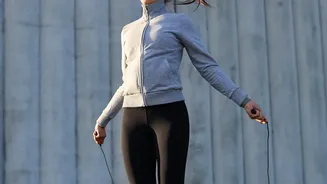
about jumping for longer, ensure your basic form is perfect. Progress isn't just about endurance; it's about efficiency. A common mistake is jumping too high or using your arms and shoulders instead of your wrists. Keep your jumps low, just an inch or two off the ground, landing softly on the balls of your feet. Your elbows should be tucked in close to your body, with the rotation coming almost entirely from your wrists. Film yourself or use a mirror to check your posture. Are you upright with your core engaged? Fixing these small details will conserve energy, reduce your risk of injury, and make longer sessions feel much more manageable.
The Structure of Progression
The key to building endurance is progressive overload. Don't just try to jump for as long as you can until you fail. Instead, use intervals. A great starting point is 30 seconds of jumping followed by 60 seconds of rest. Repeat this for 8-10 rounds. Once that feels comfortable, start adjusting the variables. You can increase the jump time to 45 seconds or decrease the rest time to 45 seconds. A structured plan could look like this: Week 1, focus on consistent 30-second intervals. Week 2, increase to 45-second intervals. This systematic approach trains your cardiovascular system to adapt and recover more efficiently without burning out.
Introduce New Footwork
Jumping with the same 'basic bounce' for minutes on end can be mentally taxing and lead to repetitive stress on the same muscles and joints. The solution is variety. Once you've mastered the basic two-foot jump, start incorporating the alternate-foot step, which is like running in place. This shift distributes the impact and engages different muscles. From there, you can explore other variations like the boxer step (shifting weight from foot to foot), high knees, or side-to-side jumps. Introducing new skills not only prevents boredom but also improves your coordination, agility, and overall athleticism, making the time pass much faster.
Vary Your Tools
Not all jump ropes are created equal, and using different types can be a form of progression. Many beginners start with a very light speed rope, which can be difficult because it provides little feedback. A slightly heavier PVC or weighted rope is often easier to learn with because the added weight slows the rotation and allows you to feel the rope's position. As you advance, you can incorporate different ropes into your training. A heavy rope, for example, provides more upper body and core resistance, building strength and power. A speed rope is ideal for working on quickness and advanced skills like doublenders. Alternating between rope types can challenge your body in new ways.
Level Up With Advanced Skills
Once you can comfortably jump for several minutes while mixing in different footwork, you are ready for the next level: advanced techniques. The two most common goals are the crisscross (or crossover) and the doubleunder. For the crisscross, you cross your arms in front of your body and jump through the loop. For the doubleunder, the rope passes under your feet twice for every single jump. This requires a more powerful, higher jump and a much faster wrist flick. Don't get discouraged; these skills take significant practice. Start by trying to do just one, then stringing two or three together. These power moves dramatically increase workout intensity and are a true measure of jump rope mastery.
Listen to Your Body and Recover
With increased training volume and intensity comes a higher risk of injury, with shin splints being one of the most common complaints. It is crucial to listen to your body. Do not jump every single day, especially when you are pushing your limits. Incorporate rest days and active recovery like stretching or foam rolling, paying special attention to your calves, ankles, and feet. The surface you jump on also matters. Avoid hard concrete when possible; a gym floor, a piece of plywood, or a jump rope mat will provide better cushioning and protect your joints. Progression is a marathon, not a sprint, and sustainable progress is only possible when you prioritise your health and recovery.