




The Science Behind the Spectacle
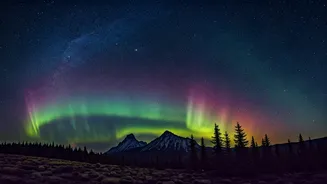
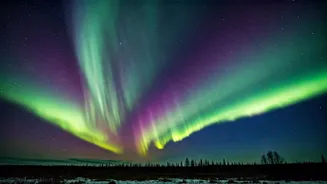
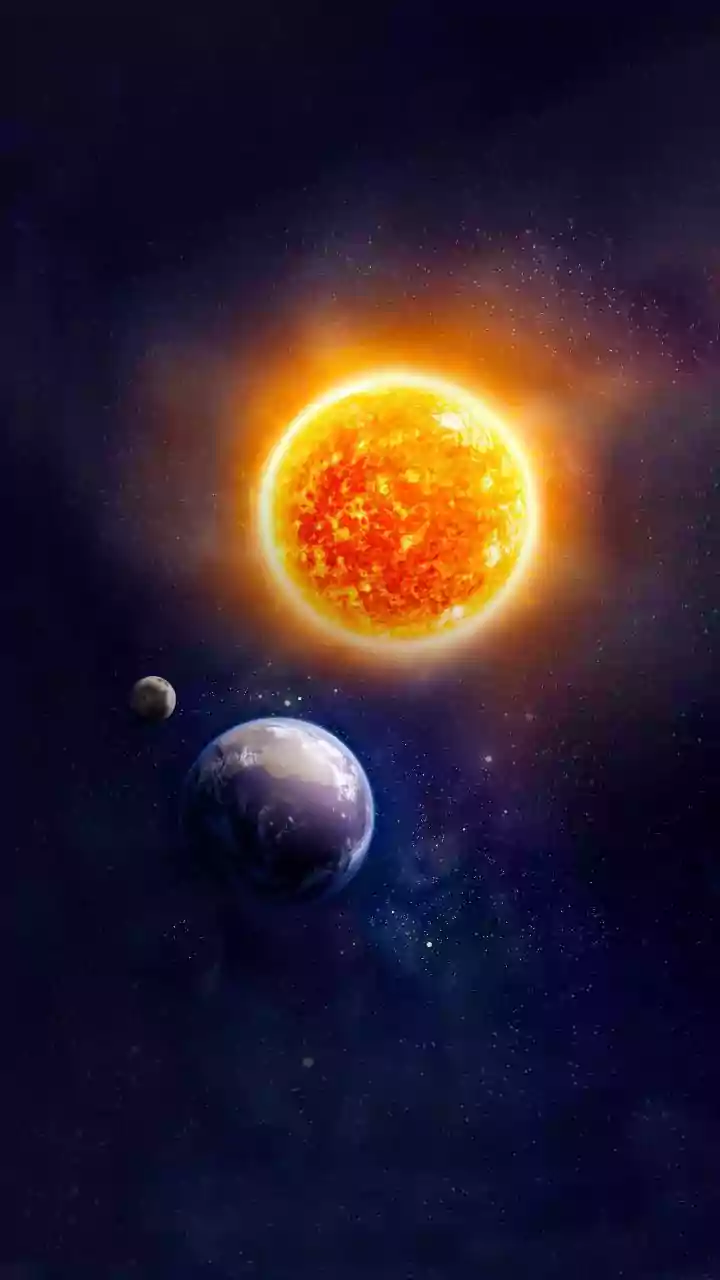
So what is this celestial ballet? The Northern Lights, or aurora borealis, are the breathtaking result of a cosmic collaboration nearly 100 million miles in the making. It all starts with the sun, which constantly sends out a stream of charged particles
called the solar wind. When this solar wind, supercharged by events like solar flares, reaches Earth, our planet’s magnetic field acts like a shield, funneling these energetic particles toward the North and South Poles. As they zoom into our upper atmosphere, they collide with atoms of oxygen and nitrogen. These collisions are like a cosmic energy transfer, causing the atmospheric gases to light up. The color depends on the gas and the altitude of the collision: oxygen typically glows green and sometimes red, while nitrogen can produce hints of blue or purple. It’s a light show powered by solar physics, a silent, beautiful storm happening 60 to 200 miles above our heads.
America's Surprise Aurora Hotspots
When Americans think of the aurora, they usually picture Alaska or a pricey trip to Iceland. While Alaska is indeed a premier viewing location, the show frequently comes much further south than people realize. Thanks to the shape of Earth's magnetic field, a 'viewer's oval' of aurora activity often dips down into the northern contiguous United States. States along the Canadian border are prime territory. Think of the Upper Peninsula of Michigan, the vast wilderness of northern Minnesota (like Voyageurs National Park, an official Dark Sky Park), the remote corners of Maine, and the open plains of North Dakota and Montana. Even parts of Washington, Idaho, and Wisconsin get regular chances to see the glow. During strong geomagnetic storms, the aurora has been spotted as far south as Alabama and Arizona, a rare but electrifying reminder that this spectacle is always closer than we think.
Your Guide to Aurora Hunting
Seeing the aurora isn't just about luck; it's about preparation. First, you need darkness. Get as far away from city light pollution as possible. A new moon phase is ideal, as a bright moon can wash out the display. Second, you need a clear sky. Check the weather forecast as diligently as the aurora forecast. Third, you need a good forecast for the lights themselves. The NOAA Space Weather Prediction Center is your best friend here. It provides short-term forecasts, rating the potential geomagnetic activity on a Kp-index scale from 0 to 9. A Kp of 5 is considered a minor geomagnetic storm, and it’s often enough to bring the lights to the northern U.S. border. Finally, be patient. The aurora can be fickle. Find a spot with an unobstructed view to the north, bring a chair, a blanket, a thermos of something warm, and be prepared to wait. The show doesn't run on a human schedule.
A Show Worth Waiting For
Beyond the science and logistics lies the pure, unadulterated wonder. To stand under a sky alive with ethereal light is a profoundly moving experience. It’s a visceral connection to the cosmos, a reminder of the immense and beautiful forces that shape our universe. There is no sound, only the silent, impossible movement of light that can shift from a gentle, pulsing glow to rapid, dancing ribbons that fill the entire sky. It’s a moment that resists being captured by a phone camera, demanding instead to be simply witnessed. In a world saturated with digital noise and manufactured entertainment, the aurora is a powerful, humbling, and deeply real spectacle. It’s a performance that asks for nothing but your attention and rewards it with a memory that will last a lifetime. This is nature’s ovation, a standing-O written in light against the canvas of the night.