




Why Your Brain Craves the Sun
Natural light isn't just about aesthetics; it's a biological necessity. Exposure to daylight helps regulate our circadian rhythms, which control sleep-wake cycles. A well-lit space can improve mood, boost energy levels, and increase focus. Studies have
shown that workers with access to natural light report feeling more alert and productive. The goal isn't just to light up your room, but to do so in a way that supports your well-being. By thoughtfully incorporating daylight, you create an environment where you can do your best work, day in and day out, without relying entirely on artificial lighting.
The Problem with Screen Glare
The downside of a sunny room is glare—the harsh, bright light that reflects off your monitor. When your screen turns into a mirror, your eyes are forced to work harder to distinguish the text and images. This can lead to what's known as Computer Vision Syndrome, with symptoms like eye strain, blurred vision, dryness, and headaches. Beyond visual discomfort, glare often causes you to adopt awkward postures as you crane your neck or hunch over to get a clearer view, leading to neck and shoulder pain. Effectively managing glare is a critical step in creating a truly ergonomic and comfortable workspace.
The Gold Standard: Perpendicular Placement
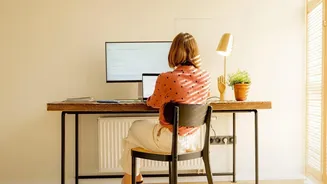
The single most effective change you can make is your desk's position. The ideal setup is to place your desk perpendicular (at a 90-degree angle) to the window. This orientation allows natural light to illuminate your workspace from the side, rather than from directly in front of or behind you. Placing a window behind you creates a strong reflection on your screen. Facing a window forces your eyes to constantly adjust between the bright view outside and your dimmer screen, causing fatigue. Side-lighting provides balanced illumination without the direct glare, making it the undisputed best practice for office layouts.
Master Your Windows with Smart Treatments
Your next line of defense is what you put on your windows. The goal is to filter light, not just block it. Sheer curtains or light-filtering blinds can diffuse harsh sunlight, spreading it evenly throughout the room and reducing intense glare while keeping the space bright. Solar shades are an excellent option, specifically designed to cut glare and block UV rays while preserving your view outside. For maximum flexibility, consider a layered approach: combine light-filtering shades for daytime use with blackout blinds for times you need total darkness. Adjustable blinds also allow you to tilt the slats to redirect sunlight away from your screen as the day progresses.
Tech Fixes and Final Adjustments
Once your physical space is optimized, a few tech adjustments can seal the deal. If glare is still an issue, an anti-glare screen protector can make a noticeable difference by creating a matte surface that diffuses reflections. Also, check your monitor's settings. Your screen should be positioned about an arm's length away, with the top of the monitor at or just below eye level. Tilting the screen back by 10 to 20 degrees can also help minimise reflections from overhead lights or windows. Finally, remember the 20-20-20 rule to give your eyes a regular break: every 20 minutes, look at something 20 feet away for 20 seconds.