






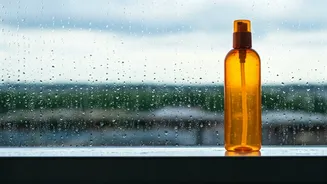


The Great Cloud Cover-Up: A Flawed Shield
The most pervasive myth about cloudy days is that the clouds themselves provide adequate protection from the sun. While a thick, dark storm cloud can block a significant amount of ultraviolet (UV) radiation, lighter cloud cover is far less effective.
[15] According to the Skin Cancer Foundation, up to 80% of the sun's UV rays can penetrate through clouds and reach your skin. [18, 4, 9] In some cases, a phenomenon known as the “broken-cloud effect” can actually enhance UV levels. [1] Scattered clouds can reflect and scatter the rays, increasing the intensity of the radiation reaching the ground, sometimes even more so than on a clear, sunny day. [1, 10, 12] So, while you may feel cooler and not see direct sunlight, your skin is still being exposed to potentially damaging radiation. [6]
Meet the Invisible Rays: UVA vs. UVB
To understand why clouds aren't a reliable shield, it's crucial to know the difference between the two main types of UV rays that reach us: UVA and UVB. Think of it this way: UVB rays are the "burning" rays. They have a shorter wavelength, affect the outermost layers of the skin, and are the primary cause of sunburn. [3, 7] Clouds are fairly effective at blocking some UVB rays, which is why you're less likely to get a painful, red sunburn on an overcast day. [8] However, UVA rays are the "aging" rays. [8] They have a longer wavelength that penetrates deeper into the skin, damaging collagen and elastin, which leads to wrinkles and premature aging. [5, 7, 13] UVA rays make up about 95% of the UV radiation that reaches the Earth's surface and, critically, they can pass through both clouds and glass with ease. [3, 5, 8] This means even when it's cloudy, or you're inside near a window, these skin-aging rays are still reaching you. [7, 9]
The Numbers Don't Lie
The type of cloud cover makes a significant difference in UV exposure. While a very heavy, thick overcast sky might block up to 70% of UV radiation, that still leaves 30% getting through. [10, 17] More common scattered or broken clouds are far less protective, allowing anywhere from 73% to 89% of UV rays to pass. [10] Thin, wispy clouds barely make a difference at all. [2] Furthermore, some studies have noted that partly cloudy skies can increase UV-B rays by 25% due to reflection. [17] The bottom line is that relying on a visual assessment of the sky is a poor strategy for sun protection. A change in skin color, including a tan, is a sign that UV radiation has already damaged your skin. [14]
Your Year-Round Sunscreen Strategy
The evidence is clear: skin protection is a daily, year-round necessity, not just a concern for sunny beach days. [1, 20] Dermatologists and skin cancer experts recommend making sunscreen application a non-negotiable part of your daily routine. For everyday protection, such as walking to the car or sitting near a window at work, choose a broad-spectrum sunscreen with an SPF of 30 or higher. [18, 24] "Broad-spectrum" is the key term here, as it ensures you are protected from both UVA and UVB rays. [11] If you plan on being outdoors for an extended period, even on a cloudy day, opt for an SPF of 50 or higher and remember to reapply it every two hours, or more frequently if you're sweating or swimming. [18] To get the full benefit, most adults need to apply about one ounce—or a shot glass full—to cover their entire body. [6, 18]