



More Than Just a Balloon
When you picture a spacecraft re-entering the atmosphere, you likely imagine the rigid, tile-covered underbelly of the Space Shuttle or the solid capsules of the Apollo era. These traditional heat shields are heavy, expensive, and limited by the size
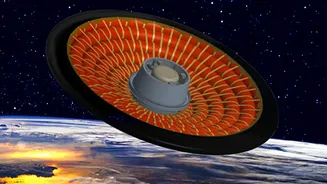
of the rocket they launch in. Inflatable heat shields, officially known as Hypersonic Inflatable Aerodynamic Decelerators (HIADs), flip that script. Instead of a rigid structure, a HIAD is a lightweight, foldable device that can be packed into a small space. Just before re-entry, it inflates like a giant, ultra-strong life raft, expanding to a diameter much larger than any rigid shield could manage. This massive surface area acts like a powerful air brake, using the planet's own atmosphere to dramatically slow the spacecraft down.
Surviving the Inferno
The obvious question is how a flexible, inflatable object can withstand temperatures that can reach nearly 3,000 degrees Fahrenheit. The secret lies in advanced materials science. The inflatable structure itself is made of stacked rings, or tori, woven from a synthetic polymer that is, pound for pound, many times stronger than steel. This provides the rigid shape needed for deceleration. This structure is then protected by a flexible Thermal Protection System (TPS). The outer layer is a ceramic fiber cloth capable of withstanding the immense heat of re-entry. Beneath this are layers of high-tech insulation that keep the intense temperatures from reaching and melting the inflatable rings. This combination of a strong inflatable core and a flexible, heat-resistant skin allows the shield to function.
A Successful Plunge from Orbit
This technology is not just theoretical; it has been successfully tested in the most demanding environment possible. In November 2022, NASA's Low-Earth Orbit Flight Test of an Inflatable Decelerator (LOFTID) mission proved the concept's viability. Launched as a secondary payload, the LOFTID aeroshell inflated to its full 20-foot (6-meter) diameter in space. It was then directed to re-enter the atmosphere at hypersonic speeds, exceeding 18,000 miles per hour. The inflatable shield performed exactly as hoped, surviving the extreme heat and pressure while slowing the vehicle to less than 80 miles per hour, allowing for a successful parachute deployment and splashdown in the Pacific Ocean. The recovered vehicle showed that the technology worked, protecting its internal systems and proving that an inflatable shield can handle the rigors of orbital re-entry.
Unlocking the Solar System
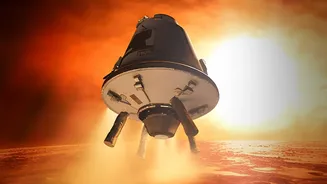
The success of LOFTID is a watershed moment for the future of space exploration and business. One of the biggest challenges in planetary science is landing large payloads on other worlds, particularly Mars. The Martian atmosphere is much thinner than Earth's, making it harder to slow down. A larger decelerator means you can land heavier things, like the habitats and supplies needed for a human mission. Inflatable shields that can be packed small and deployed large are the perfect solution. This technology could also revolutionize sample return missions from Mars, Venus, or Saturn's moon Titan, making them more affordable and feasible. Furthermore, it has commercial applications here on Earth, such as recovering reusable rocket stages or returning cargo from space stations, driving down the overall cost of accessing space.