






The Erosion of Digital Trust
We live in a world built on digital paper. From contracts and invoices to academic certificates and legal filings, our most important information now exists as bits and bytes. But the very technology that makes digital documents convenient also makes them
vulnerable. With the rise of generative AI, creating convincing forgeries is no longer a complex task requiring specialized skills. Bad actors can now alter amounts on a check, fake an identity document, or manipulate evidence with alarming ease, leading to a surge in synthetic identity fraud. This escalating threat of sophisticated, AI-driven document fraud undermines the very foundation of digital trust, creating significant financial and reputational risks for businesses and individuals alike.
A New Guardian: The Integrity Checker
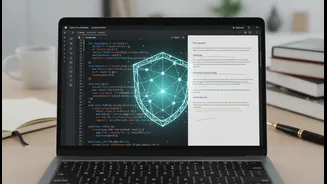
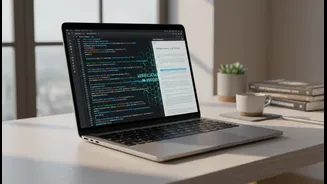
To combat this, we need more than just a sharper eye; we need smarter tools. The headline proposes a specific solution: offline, local, open-source AI integrity checkers. This isn't just a string of buzzwords. Each component is a deliberate choice designed to create a secure and trustworthy verification process. The core idea is to use an application that lives on your own computer or device, using artificial intelligence to forensically analyze a document for signs of tampering without needing to send it to an external server. This combination of features provides a powerful defense against modern forgery.
Why 'Offline and Local' Is Non-Negotiable
The most significant security risks in cloud computing often involve data breaches, unauthorized access, and a lack of transparency. When you upload a sensitive document to a cloud-based verification service, you introduce potential points of failure. The data could be intercepted in transit, accessed by unauthorized employees of the service provider, or compromised in a large-scale breach of the provider's servers. By running an integrity checker locally and offline, the document never leaves your device. This eliminates the risk of third-party data leaks and ensures that you retain complete control over your sensitive information, offering a level of privacy that cloud services cannot structurally guarantee.
The Power of 'Open-Source'
Trust is paramount in security. The term 'open-source' means the software's underlying code is publicly available for anyone to inspect, audit, and improve. This transparency is a critical advantage over proprietary, or 'black box', systems where you cannot see how the verification process works. With open-source tools, a global community of developers and security experts can vet the code for vulnerabilities or hidden backdoors, ensuring the tool does exactly what it claims to do. This collaborative model fosters greater trust and often leads to more robust and secure software. Major initiatives like the Coalition for Content Provenance and Authenticity (C2PA) are built on open standards to create a common, verifiable language for content integrity.
The 'AI' Advantage in Detection
Modern forgeries, especially those made with AI, often contain subtle flaws that are invisible to the human eye. This is where artificial intelligence excels. AI-powered integrity checkers don't just look at a document; they perform a deep forensic analysis. They can detect pixel-level manipulations, inconsistencies in compression, metadata anomalies, and subtle patterns in font rendering that indicate a digital alteration. Advanced AI can combine computer vision with natural language processing to cross-validate information within a document, flagging inconsistencies that a manual review would almost certainly miss. This allows for a far more accurate and efficient defense against sophisticated fakes.