


A Cosmic Powerhouse Awakens
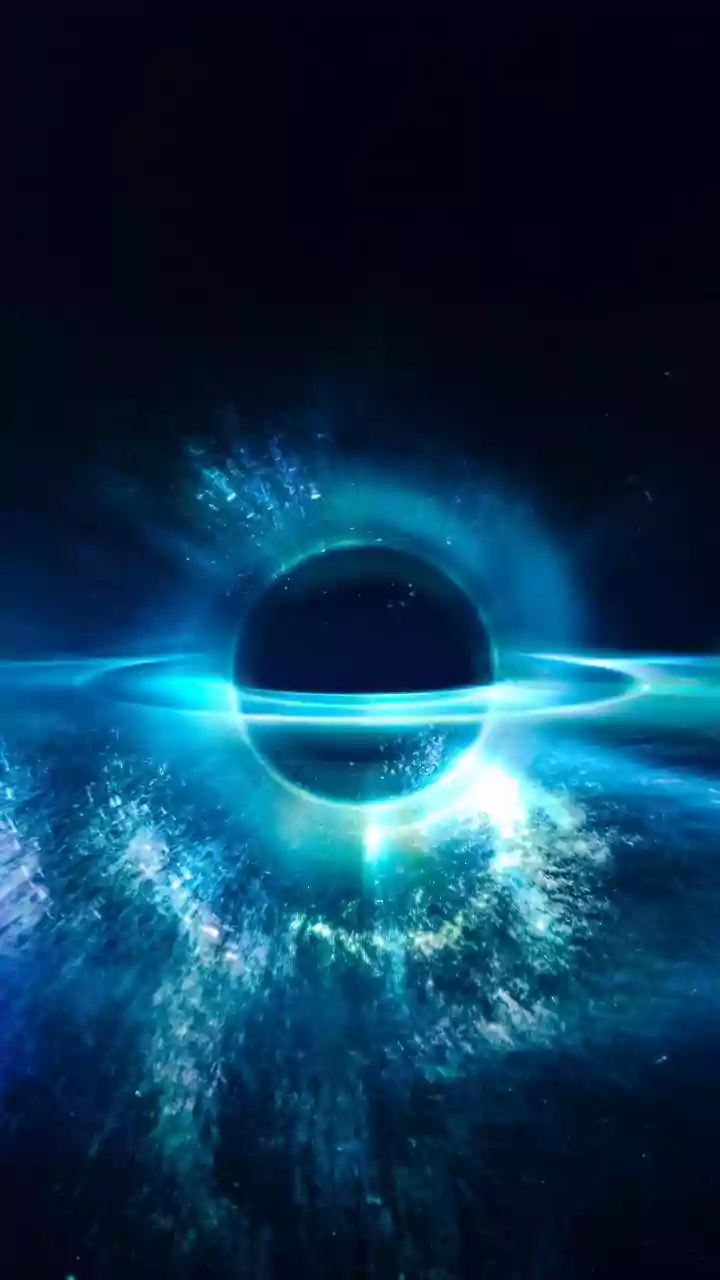
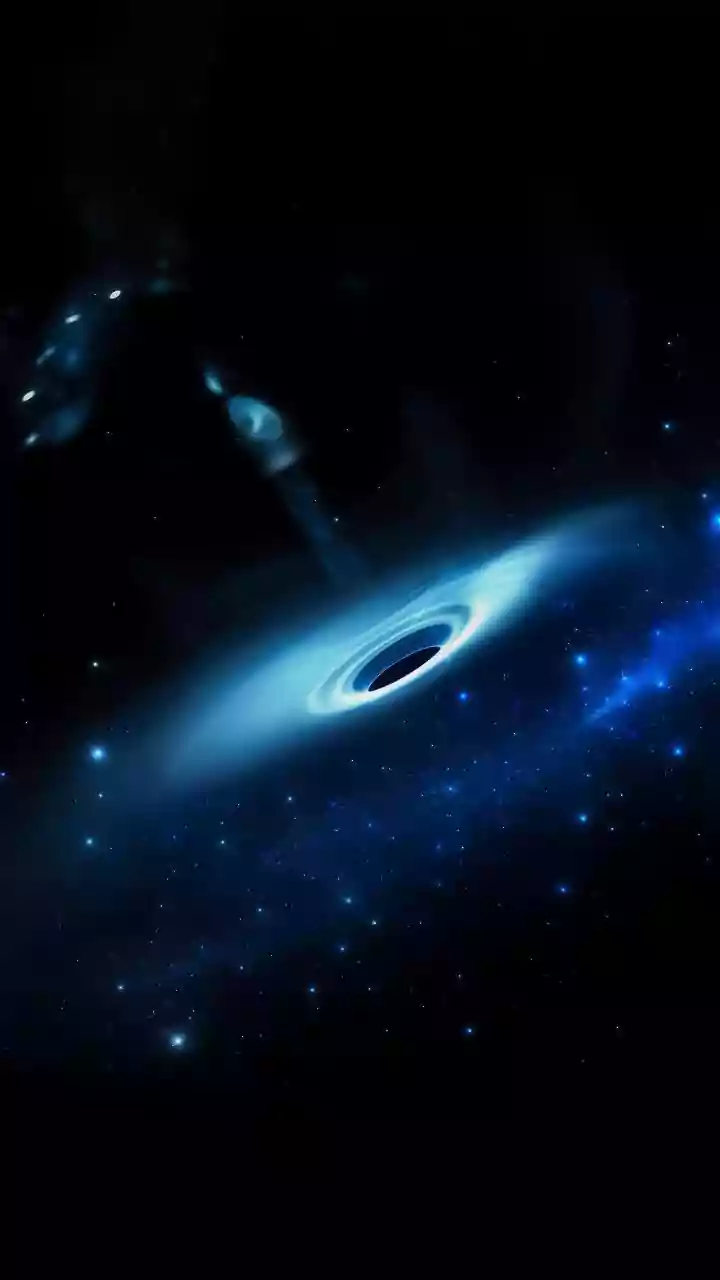
Imagine a cosmic beast slumbering for decades, only to roar to life with unimaginable force. That's essentially what happened in 2018 with a black hole system named MAXI J1820+070. Located about 10,000 light-years away, this system consists of a black hole,
about eight times the mass of our Sun, locked in a gravitational dance with a smaller companion star. For most of its life, it’s quiet. But in March 2018, it began a massive outburst, siphoning material from its companion star at a furious rate. This process created a swirling, superheated disc of gas and dust around the black hole, which lit up so brightly it was first spotted as a new 'star' in the sky. This awakening gave astronomers a rare opportunity to study the extreme physics at the edge of a black hole in real-time.
Firehoses of Plasma at Ludicrous Speed
As the black hole fed on the stolen material, not all of it fell past the point of no return. A significant portion was channelled by intense magnetic fields and blasted back into space in the form of two opposing jets of plasma. These aren't gentle streams; they are cosmic firehoses of matter travelling at incredible velocities. Through a series of detailed observations using powerful radio and X-ray telescopes like NASA's Chandra X-ray Observatory, scientists were able to clock the speed of this ejected material. The results were staggering. The matter was travelling at over 80% of the speed of light. To put that in perspective, these jets were so fast that if you could see them from Earth, they would appear to move faster than light itself—an optical illusion known as superluminal motion. This happens when an object moves towards you at such high relativistic speeds.
The Patient Art of Cosmic Cinematography
Tracking these jets was a monumental feat of coordination. The headline's 'ten years' refers not just to one specific study but to the decade of advancements in technology and observational techniques that made such a discovery possible. For MAXI J1820+070, astronomers used multiple observatories to capture a series of 'snapshots' over many months following the 2018 outburst. By comparing these images, taken by radio telescopes like the Very Large Array and the MeerKAT array, they created a movie of the jets expanding into interstellar space. This allowed them to measure not only the speed but also the sheer amount of material ejected—estimated to be equivalent to the mass of a thousand Halley's Comets, blasted out over just a few hours. It's a process akin to cosmic forensics, piecing together a dynamic event from static images taken millions of kilometres apart.
Why This Cosmic Violence Matters
Observing these jets does more than just satisfy our curiosity about the extreme nature of the cosmos. These powerful outflows are a crucial part of how galaxies evolve. When black holes eject matter with such force, they pump huge amounts of energy and material back into their surroundings. This 'feedback' can influence the birth of new stars, either by triggering their formation in clouds of gas or by blowing the necessary gas away, thereby preventing it. Studies of systems like MAXI J1820+070 and Cygnus X-1, the first confirmed black hole, provide a 'close-up' view of a process that happens on a much grander scale with supermassive black holes at the centres of galaxies. Understanding these smaller, stellar-mass black hole jets helps scientists calibrate their models for the galaxy-shaping behemoths across the universe.