


The Silent Threat Above Us
Our solar system is filled with remnants from its formation 4.6 billion years ago, known as asteroids. Most orbit harmlessly between Mars and Jupiter, but gravitational nudges can send them on paths that cross Earth's orbit. These are called Near-Earth
Objects (NEOs). While impacts from massive, dinosaur-extinction-level asteroids are exceedingly rare, smaller but still dangerous events are more common. An object just 30 to 50 metres wide can explode in the atmosphere with enough force to damage a city, as witnessed during the 2013 Chelyabinsk event in Russia. To protect humanity, the first step is knowing what is out there. The goal is to find these objects long before they pose a threat, giving us time to react.
A Global Network of Eyes
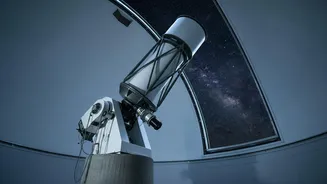
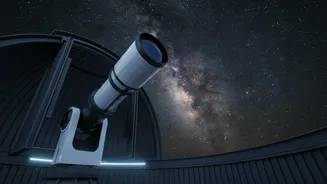
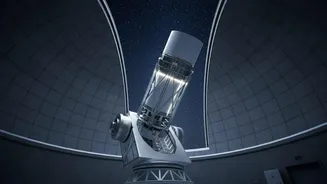
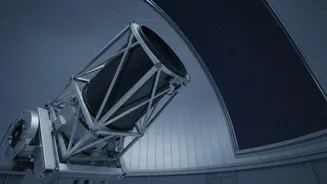
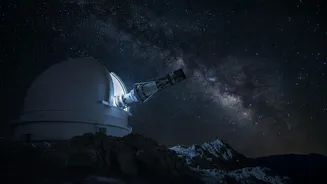
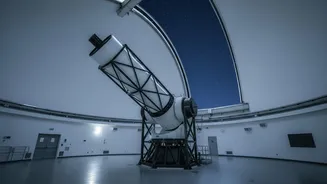
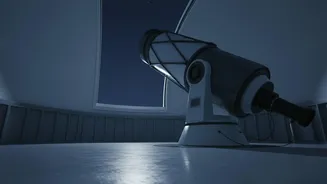
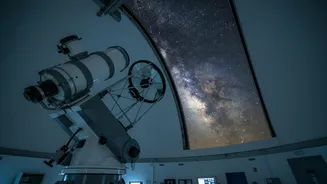
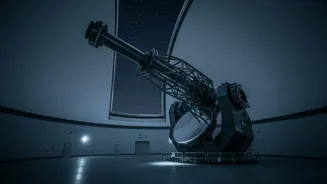
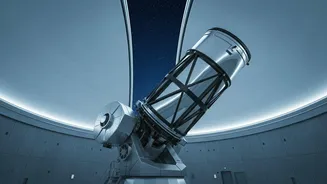
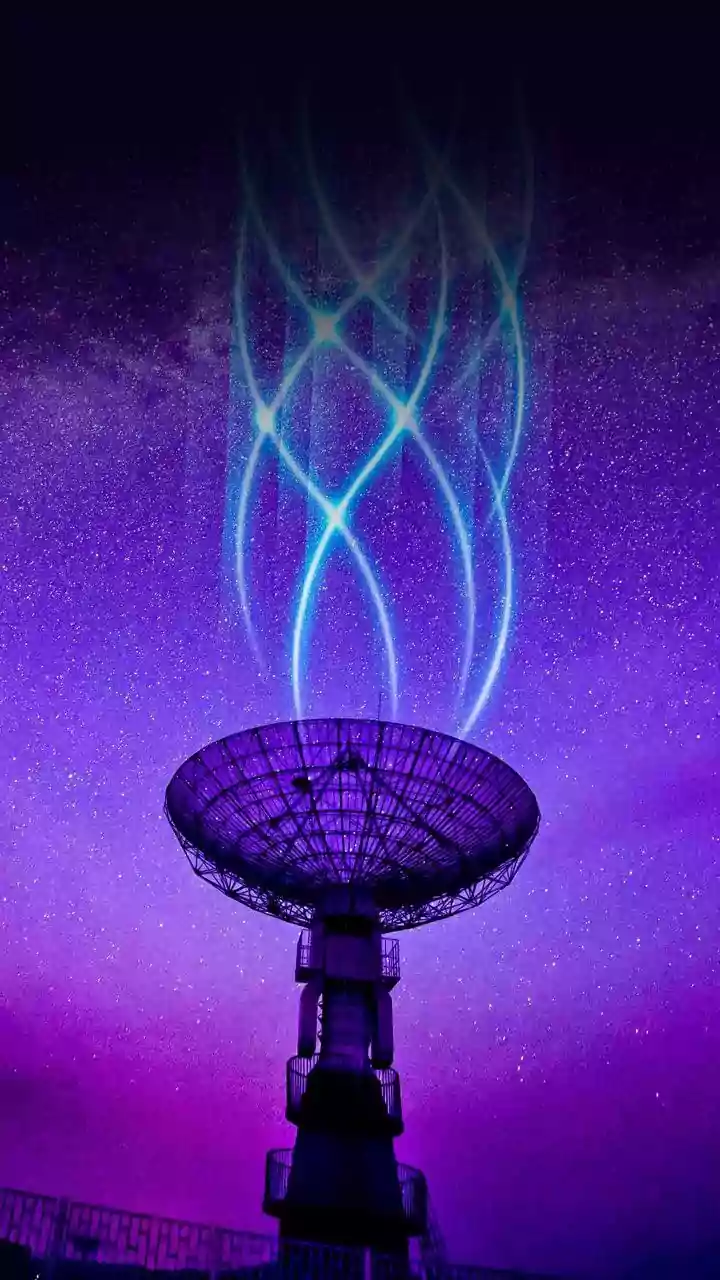
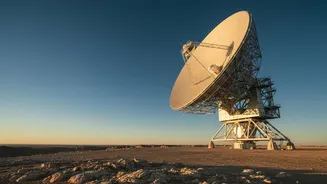
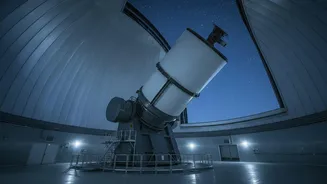
No single country can watch the entire sky. That is why a coordinated global infrastructure of observatories works together. Key players include ground-based telescopes like the Catalina Sky Survey in Arizona and the Pan-STARRS in Hawaii. These facilities repeatedly take images of the same patch of sky minutes apart. Against the fixed backdrop of stars, a moving asteroid appears as a shifting point of light, which computers can flag for further analysis. This information is sent to a central clearinghouse, the Minor Planet Center, to be catalogued. Upcoming assets like the Vera C. Rubin Observatory in Chile are expected to dramatically increase our detection capabilities, finding tens of thousands of new objects.
From Detection to Defence
Finding an asteroid is only the first part of the process. Once a new NEO is identified, astronomers calculate its orbit with high precision to determine if it is a Potentially Hazardous Asteroid (PHA). A PHA is an asteroid larger than about 140 metres that can come close to Earth. This designation doesn't mean it will hit us, but that it warrants close monitoring. This is where organisations like NASA's Planetary Defense Coordination Office (PDCO) step in. Established in 2016, the PDCO manages efforts to find, track, and characterise these objects. The ultimate goal of this surveillance is to provide years or even decades of warning, which is crucial for planning a response.
Uniting Nations to Protect Earth
Planetary defense is a global team sport. Recognizing that an asteroid impact is a worldwide threat, international bodies were formed to coordinate the response. The International Asteroid Warning Network (IAWN), endorsed by the United Nations, links institutions from around the globe to share observations and analysis. If a credible threat is identified, IAWN is responsible for notifying national governments and agencies. This ensures that information is accurate, validated, and disseminated effectively. This collaboration allows for continuous tracking as Earth rotates, with observatories in different hemispheres picking up where others leave off, creating a seamless, 24/7 watch.
Preparing for the Unthinkable
Scanning the sky isn't just an academic exercise; it informs real-world defence strategies. The data gathered helps scientists understand an asteroid's size, composition, and trajectory—all vital for planning a mitigation mission. NASA's successful Double Asteroid Redirection Test (DART) in 2022 proved that humanity can alter an asteroid's path. The mission slammed a spacecraft into the asteroid Dimorphos, successfully shortening its orbit. This test was a monumental proof-of-concept, showing that with enough warning time—the very thing the global monitoring network is designed to provide—we have the technology to protect ourselves from a potential collision.