





A New Kind of Satellite
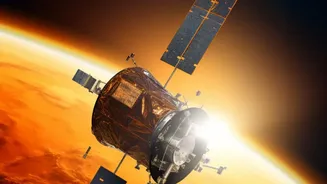
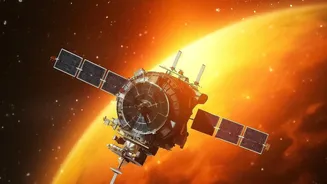
On October 1, 2026, Indian space startup TakeMe2Space is scheduled to launch its MOI-1A satellite aboard a SpaceX rocket. This isn't just another satellite; it's being called India's first orbital computing satellite. Weighing under 50 kilograms, this
compact but powerful spacecraft represents a major leap from the traditional role of satellites as simple data collectors. Developed by the Hyderabad-based startup, the mission's goal is to equip a satellite with the brains to think for itself, processing vast amounts of information directly in orbit rather than sending it all back to Earth. This mission follows a successful technology demonstration in late 2024 and overcomes the setback of a previous satellite lost due to a launch vehicle failure, showcasing the resilience of India's private space sector.
The AI Brain in the Sky
The core innovation behind the MOI-1A mission is onboard edge computing. Traditionally, Earth observation satellites capture massive volumes of raw data—terabytes of images and sensor readings—which they beam down to ground stations. This data must then be stored, processed, and analysed, a time-consuming and expensive process. MOI-1A flips this model on its head. It is equipped with advanced NVIDIA Orin NX processors, powerful chips designed specifically for AI and edge computing tasks. Instead of just collecting data, customers can upload their own AI models directly to the satellite. As the satellite orbits over a specific area of interest, it uses these models to analyse the imagery and data it collects in real-time.
From Raw Data to Actionable Insight
The practical benefit of this approach is enormous. By processing data in space, the satellite only needs to send back the finished analysis or the key results, not the entire raw dataset. This drastically reduces the amount of data that needs to be transmitted, freeing up precious bandwidth and cutting down the time it takes to get actionable information. For applications like disaster management, agriculture, or defence, speed is critical. Instead of waiting hours or days for a ground station to process an image of a flood or a wildfire, orbital computing can deliver an alert or an analysis in minutes. This shift from data downlink to onboard insight is what makes missions like MOI-1A a game-changer.
The Commercial Opportunity
This technological leap is not just a scientific experiment; it's a commercial venture with significant demand. TakeMe2Space has already signed up 23 customers for this mission. These clients come from a diverse range of industries, including agriculture, mining, insurance, supply chain management, and geographic information systems (GIS). For example, an insurance company could use an AI model to rapidly assess damage to properties after a natural disaster, or an agriculture firm could monitor crop health across vast farmlands without downloading petabytes of imagery. By offering 'compute in orbit' as a service, the startup is creating a new business model and demonstrating the commercial viability of advanced space technology developed in India.
India's Future in an Autonomous Cosmos
While this launch is driven by the private sector, it aligns perfectly with the broader vision of India's space program. The Indian Space Research Organisation (ISRO) has increasingly emphasized the role of AI in space, using it for critical operations like the Chandrayaan-3 lunar landing and exploring concepts for future data centres in orbit. The success of startups like TakeMe2Space signals a maturing ecosystem where private innovation complements national goals. Putting AI computing in orbit paves the way for more autonomous and efficient satellite constellations that can respond to needs on Earth in near real-time. It strengthens India's position as a key player in the global space economy, moving from a provider of launch services to a hub of high-tech space innovation.