



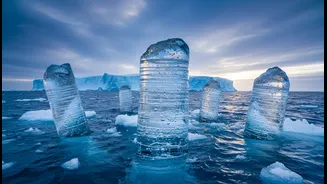


The Planet's Giant Mirror
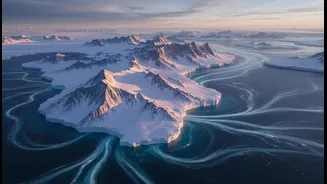
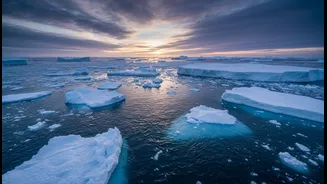
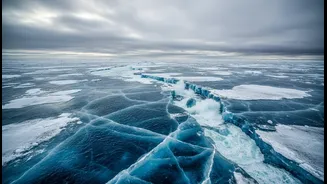
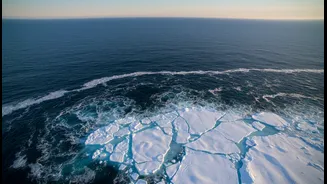
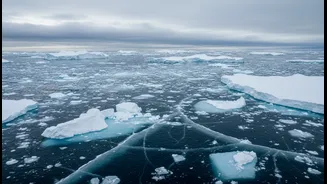
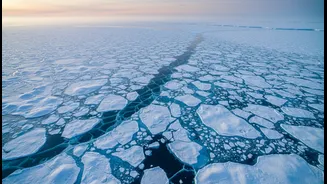
The most direct way Antarctic sea ice influences the global climate is by acting as a giant, reflective shield. The bright, white surface of the ice reflects a significant amount of the sun's energy back into space. This phenomenon, known as the albedo
effect, helps to cool the planet. When there is less sea ice, the darker ocean surface is exposed. Dark surfaces absorb more solar radiation, leading to warmer oceans and, in a feedback loop, more ice melt. In winter, the sea ice effectively doubles the size of the Antarctic continent, creating a massive area that reflects heat and keeps the polar region, and by extension the world, cooler than it would otherwise be.
Driving the Global Ocean Conveyor Belt
Antarctic sea ice is also the engine for the world's deep-ocean circulation. As seawater freezes, it expels salt, making the water around it much saltier and therefore denser. This super-dense, cold water sinks to the ocean floor, kicking off a global process called thermohaline circulation, often referred to as the ocean's 'conveyor belt'. This process forms Antarctic Bottom Water, which then travels slowly northward along the ocean floor, transporting heat, carbon, and oxygen around the planet. This circulation is fundamental to regulating the global climate system. Changes in the amount of sea ice being formed can slow down or alter this vital current, with long-term consequences for climate patterns worldwide.
Steering Winds and Storms
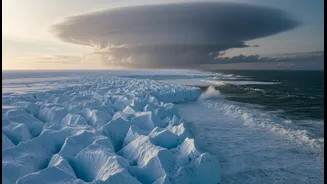
The extreme temperature difference between the frigid Antarctic continent and the warmer open ocean creates powerful atmospheric effects. This gradient helps to drive strong westerly winds that circle the continent, known as the Southern Annular Mode (SAM). The state of the sea ice influences the strength and position of these winds and the associated storm tracks. These atmospheric changes don't just stay in the Southern Hemisphere. Through complex, long-distance connections known as 'teleconnections', shifts in Antarctic weather patterns can influence the mid-latitudes and even the tropics. These ripples in the atmosphere can alter rainfall and temperature in places thousands of kilometres away.
A Distant Connection to the Indian Monsoon?
While the link between the Arctic and the Indian monsoon is more established, scientists are also investigating how Antarctica's climate influences weather in India. Some studies suggest a connection between Antarctic sea ice extent and the Indian Summer Monsoon Rainfall (ISMR). These teleconnections are complex, but the theory is that changes in atmospheric pressure and circulation driven by Antarctic sea ice can subtly influence the larger weather systems that determine the timing and intensity of the monsoon. One 2009 study noted that variations in Antarctic sea ice provided a strong signal ahead of the 2002 drought year in India. While research is ongoing, it highlights that our regional weather is part of an interconnected global system.
A System in Flux
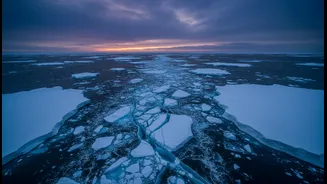
For decades, Antarctic sea ice extent was relatively stable, even showing a slight increasing trend. However, since 2016, this has changed dramatically, with sea ice levels plummeting to successive record lows. Scientists believe this rapid decline is driven by warming ocean waters rising from the depths and a weakening of the ocean's layered structure, which had previously trapped warmer water below the surface. This sudden loss of sea ice has profound implications, potentially shifting Antarctica from a buffer against global warming to an amplifier of it. The reduction in the planet's reflective shield and the potential disruption to ocean circulation are among the most significant concerns for future global climate stability.