



Prevention is the Best Defence
The most effective way to handle pests like aphids, spider mites, and whiteflies is to make your balcony an uninviting place for them from the start. A proactive routine is far easier than fighting an established infestation. Before adding a new plant
to your collection, always inspect it thoroughly for any signs of trouble, such as tiny bugs on the undersides of leaves or fine webbing. Reusing pots? Give them a good scrub with soap and hot water first. And always begin with fresh, sterile potting mix to avoid introducing soil-borne issues like fungus gnats.
Inspect Plants Weekly
Pests are easier to manage when caught early. Make it a habit to inspect your plants at least once a week. Look closely at the undersides of leaves, the junctions where leaves meet stems, and the tender new growth, as these are common hiding spots for pests like mealybugs and aphids. Early warning signs can be subtle: pale, stippled dots on leaves might indicate spider mites, while a sticky residue on leaves or the floor below could be 'honeydew' left by sap-sucking insects. If you spot a few intruders, you can often remove them by hand or with a strong jet of water before they multiply.
Smart Watering for Stronger Plants
How you water plays a huge role in pest prevention. Overwatering is one of the most common mistakes, creating damp conditions that attract fungus gnats and can lead to root rot, stressing the plant and making it more vulnerable to all pests. Always check the soil before watering; stick your finger about an inch deep, and if it feels dry, it's time to water. When you do water, do so thoroughly until it runs out of the drainage holes to encourage deep root growth. Watering in the morning is ideal, as it allows foliage to dry during the day, reducing the risk of fungal diseases that can thrive on damp leaves overnight.
Healthy Soil, Healthy Plants
A plant's immune system starts in the soil. Healthy, nutrient-rich soil helps plants build natural resistance to pests and diseases. Poorly structured or nutrient-deficient soil creates stressed, weaker plants, which are prime targets for pests. Using a quality potting mix is essential. Over time, as you water, nutrients are flushed out of the pot, so it's important to replenish them. Applying a balanced, water-soluble fertilizer every few weeks during the growing season can keep your plants vigorous and better equipped to fend for themselves. Just be careful not to over-fertilize with nitrogen, as this can produce lush, weak growth that attracts aphids.
Good Housekeeping Matters
A clean environment discourages pests. Regularly remove any yellowing or dead leaves, spent flowers, and fallen debris from the soil surface and around your pots. This waste material can provide a hiding place and breeding ground for pests and diseases. Also, ensure good air circulation by giving your plants enough space. Overcrowding can create pockets of still, humid air, which is an ideal environment for pests like spider mites and whiteflies to thrive.
Embrace Natural Allies
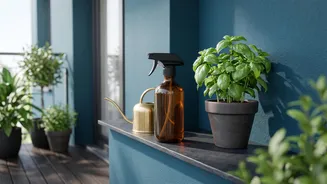
You can also use other plants to help protect your garden. This practice, known as companion planting, involves growing aromatic plants that naturally repel common pests. Herbs like basil, mint, and rosemary are excellent choices for a balcony. Basil can help deter whiteflies, while mint's strong scent repels ants and aphids. Flowering plants like marigolds are not only cheerful but also release a substance that can deter pests like aphids. At the same time, certain flowers attract beneficial insects like ladybugs, which are natural predators of aphids, helping you create a small, balanced ecosystem.