







What Are the Orionid Meteors?
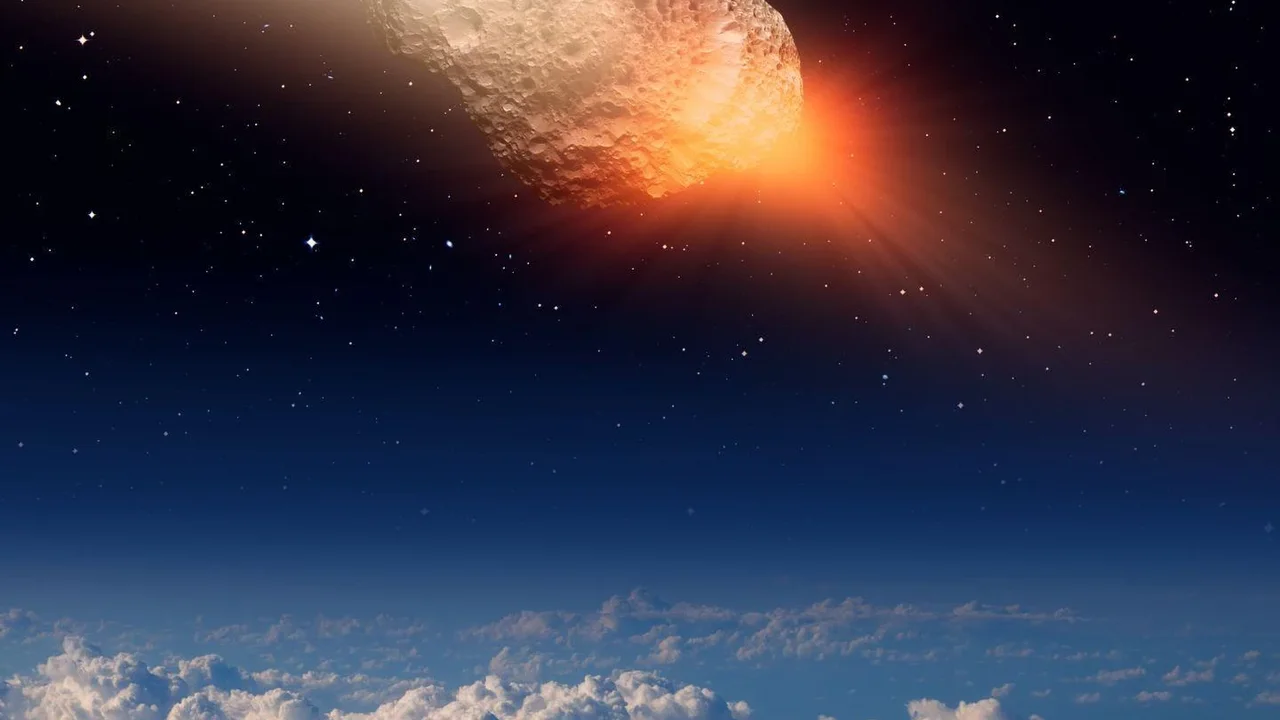
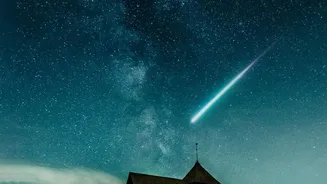
The Orionid meteor shower is one of two annual showers created by debris from Halley's Comet. As the famous comet orbits the Sun, it leaves behind a trail of ice and dust. When Earth's orbit crosses this path each October, these tiny particles, most no
bigger than a grain of sand, burn up in our atmosphere at tremendous speeds. This creates the fiery streaks we call meteors, or “shooting stars.” The Orionids are known for being particularly fast, entering the atmosphere at about 66 kilometers per second, and can sometimes leave behind glowing trails that linger for a few moments. They get their name because they appear to radiate from a point within the constellation Orion, the Hunter.
When and Where to Watch in 2026
The 2026 Orionid meteor shower will peak on the night of October 21-22. The best time for viewing will be in the hours between midnight and dawn. For 2026, viewing conditions will be a bit of a challenge but still promising. A bright, waxing gibbous moon will be in the sky during the evening and after midnight, which can wash out fainter meteors. However, the good news is that the moon will set a few hours before dawn on the peak mornings. This provides a dark window of opportunity, roughly from 3 a.m. until the sky starts to brighten with the sunrise, to catch the show. The key is to find a location with a clear view of the sky, far from the light pollution of cities and towns. A dark rural site is always best.
Setting Realistic Expectations
While some meteor showers can produce a storm of activity, the Orionids are typically more modest. Under perfect, dark-sky conditions without a moon, you might see between 15 and 25 meteors per hour. This is known as the Zenithal Hourly Rate (ZHR), an ideal number an observer would see with the radiant point directly overhead. In reality, your count will likely be lower. From a suburban area, you might only spot 5 to 10 meteors per hour. The moonlight in 2026 will further reduce these numbers until it sets. Remember that meteor watching is a game of patience. You might see a few meteors in quick succession, followed by a long lull with none at all. The goal is not to see a constant downpour, but to experience the magic of catching those brilliant, fleeting streaks of light across the night sky.
A Beginner’s Viewing Guide
The best part about meteor watching is that you don't need any special equipment. Your eyes are the best tool you have. You don't need binoculars or a telescope, as they restrict your field of view. To find the meteors, you don't need to stare directly at the constellation Orion. In fact, it's better to look at a wide patch of the sky around it. Lie on a blanket or recline in a lawn chair so you can look up comfortably without straining your neck. Give your eyes at least 20-30 minutes to fully adapt to the darkness; this will make a huge difference in how many meteors you can spot. Avoid looking at your phone, as the bright screen will ruin your night vision.
What to Bring for a Comfortable Night
October nights can be chilly, so dressing in warm layers is essential. Bring a comfortable blanket or a sleeping bag to lie on. A reclining chair can also save your neck from getting sore. Packing a flask of a warm beverage and some snacks can make the experience much more enjoyable, especially during the lulls in activity. If you need a flashlight, use one with a red light setting. Red light is much less disruptive to your night vision than white light. Finally, bring a bit of patience and a sense of wonder. The Orionids connect us to the greater solar system and the legacy of Halley's Comet, and that's a special experience in itself.