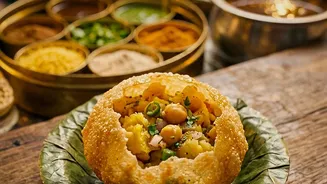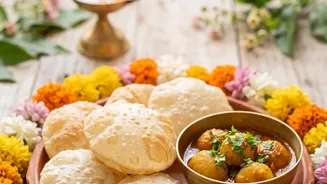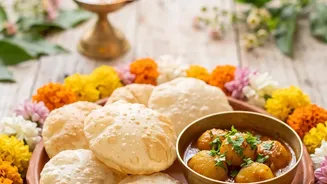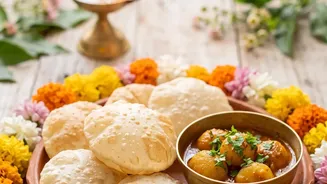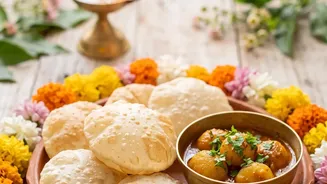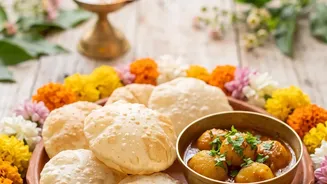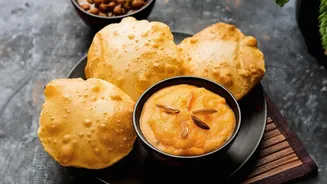





The rumble of the highway, the promise of a destination ahead, and the familiar, comforting aroma of freshly fried bread. For countless travellers in India, a road trip is incomplete without a stop for hot, puffy puri sabzi.
A Roadside Ritual
Travel across India's vast
network of highways, and you will notice a constant: the humble dhaba. These roadside eateries, originally started to cater to truck drivers, have become an essential part of the travel experience for everyone. And on the menu of almost every dhaba, from the chilly highways of the north to the bustling corridors of the west, you will find puri sabzi. It’s more than just a meal; it's a ritual, a universally understood comfort stop. The sight of a cook deftly sliding flattened discs of dough into a large wok of hot oil, only for them to puff up into golden orbs, is a quintessential highway scene. This dish’s consistent presence has cemented its status as the default breakfast and an all-day snack for those on the move.
The Logic of Fresh and Fast
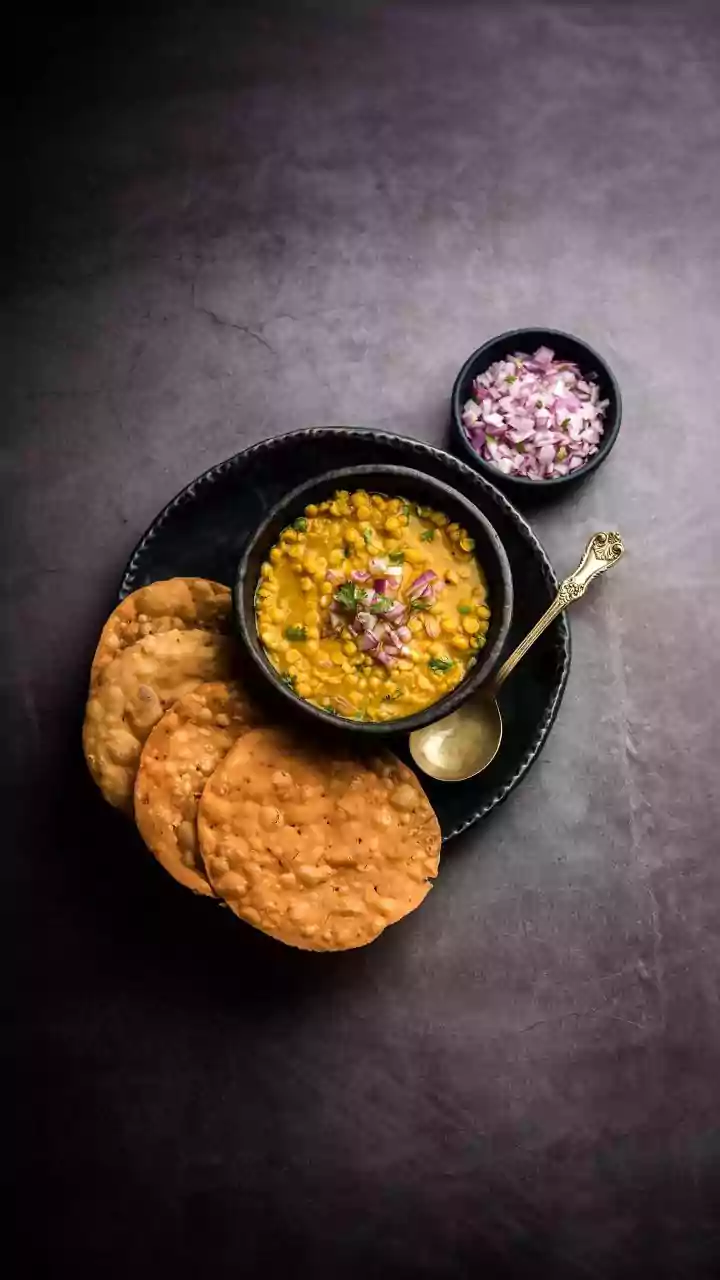
So, what makes this combination the king of highway food? A big part of its appeal lies in its practicality. In a setting where travellers are often wary of food hygiene, puri sabzi offers a sense of security. The puris are deep-fried at high temperatures right before being served, a process that many perceive as killing germs and ensuring freshness. Unlike pre-cooked rice dishes or rotis that can become dry or spoil, puris are made to order, arriving at the table hot and crisp. The accompanying sabzi, often a simple, dryish preparation of potatoes (aloo sabzi) seasoned with turmeric and other spices, is also quick to cook and holds up well without refrigeration, making it an efficient and safe choice for both the dhaba owner and the customer.
A Bite of Comfort and Nostalgia
Beyond the practical reasons, puri sabzi connects with travellers on a deeper, emotional level. It is, for many, a taste of home and childhood. This is the food of Sunday mornings, festive occasions, and the travel tiffins packed by mothers for long train journeys. That emotional connection transforms a simple meal into 'comfort food'. Psychologically, familiar foods can trigger positive memories and a sense of safety, which is especially welcome during a long and tiring journey. The combination of the soft, slightly chewy puri and the flavourful, spiced sabzi is a sensory experience that feels both celebratory and deeply familiar.
The Dhaba Experience
Eating puri sabzi is also about the unique atmosphere of the dhaba itself. Sitting on a simple charpoy or a basic table, with the sounds of the highway in the background, adds to the charm. It’s an unpretentious experience that focuses purely on the satisfaction of a hot, tasty meal. Dhabas offer a break from the confines of the car and a chance to stretch your legs in a rustic setting. This experience—the simplicity, the authenticity, the feeling of being connected to a larger journey shared by countless others—is something modern, air-conditioned food courts often cannot replicate. It turns a simple meal into a memorable part of the trip itself.
A Dish for Every Region
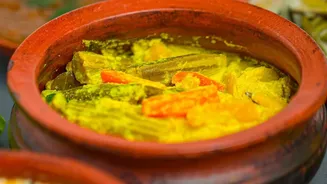
While the core concept of fried bread with a vegetable curry remains the same, puri sabzi subtly adapts to regional tastes. In North India, you're likely to get a spicy aloo sabzi, sometimes with a dash of tomato-based gravy. In Bengal, the puri might be a 'luchi' made from refined flour (maida), served with a drier potato dish or even a lentil curry (cholar dal). In parts of Gujarat, the sabzi might have a hint of sweetness. In Uttar Pradesh, you might find Bedmi puri, which is stuffed with spiced lentils. This versatility ensures that while the dish is always familiar, it also offers a little taste of the local culinary landscape, making it a consistently interesting choice for the cross-country traveller.