







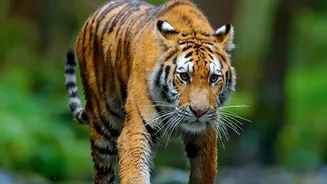
Why Relocate a Tiger?
Tiger translocation is a critical conservation strategy, not undertaken lightly. The primary reasons are twofold: managing populations and mitigating conflict. Some reserves, like Corbett, have healthy, dense tiger populations, leading young tigers to
seek new territories. Other reserves have suitable habitats but few or no tigers, often due to past poaching. Translocation helps repopulate these areas, like in Sariska and Panna, restoring ecological balance. Another urgent driver is human-wildlife conflict. When a tiger repeatedly ventures into populated areas or preys on livestock, relocation becomes a non-lethal solution to protect both human lives and the animal itself. These efforts, guided by the National Tiger Conservation Authority (NTCA), also aim to improve genetic diversity within isolated populations.
The High-Tech Hardware
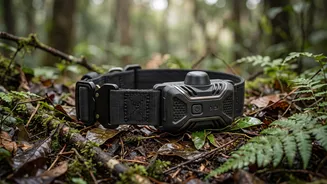
The satellite collar is far more than a simple tracker. It's a sophisticated data-gathering device designed for durability and animal safety. The collar itself is made of robust materials that can withstand the harsh conditions of the wild. Attached to it is a small, protected box containing a GPS unit, a satellite transmitter, and often a secondary VHF (Very High Frequency) transmitter for close-range tracking on the ground. The entire apparatus is carefully weighted, typically making up a very small fraction of the tiger’s body weight to ensure it doesn’t hinder movement or behaviour. The GPS unit receives signals from satellites to pinpoint the tiger's exact location, sometimes multiple times a day. This data is then transmitted via another satellite network directly to the computers of scientists and wildlife managers.
The Risky Business of Collaring
Fitting a collar on a several-hundred-kilogram predator is a high-stakes, precision operation. It involves a skilled team of veterinarians and forest officials. The first step is to safely immobilise the tiger using a tranquilliser dart. This is perhaps the most delicate part of the process; the dosage must be exact. Too much could endanger the animal, while too little could put the team at risk. Once the tiger is sedated, the team works quickly. The animal's vital signs, like temperature and breathing, are constantly monitored. The collar is fitted securely, ensuring it's not too tight or too loose. During this brief window, scientists also conduct a health check, recording weight, size, and other vital statistics before administering a reversal drug to wake the animal.
A Constant Stream of Data
Once active, the collar becomes a lifeline of information. Every few hours, it transmits a data point, or 'GPS fix', revealing the tiger's precise location. Over weeks and months, these points create a detailed map of the animal's life. Scientists at institutes like the Wildlife Institute of India (WII) can see the tiger's home range, how it uses its habitat, and its movement patterns. The data can reveal dispersal routes young tigers take, identify crucial wildlife corridors between protected areas, and even indicate behaviour. For example, a cluster of points in one area might signify a kill site, while long, directional movements could show the tiger exploring new territory. Some advanced collars also include accelerometers that measure activity levels, helping distinguish between resting, walking, and hunting.
From Data Points to Active Protection
The data collected is not just for academic study; it's a powerful tool for real-time conservation management. For a newly relocated tiger, constant monitoring is crucial to see if it is adapting to its new home. If a tiger begins to stray towards a village, wildlife managers receive an alert and can dispatch teams to guide the animal away, preventing potential conflict. This proactive approach is a game-changer for human-tiger coexistence. Furthermore, the movement data helps authorities identify areas vulnerable to poaching, allowing for smarter deployment of anti-poaching patrols. By understanding how tigers use their landscape, conservationists can make informed decisions about habitat management and advocate for the protection of corridors that are essential for long-term genetic health.