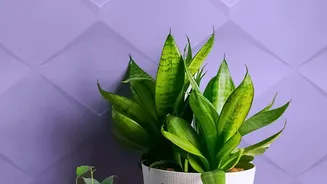






Meet the Snake Plant: The Survivor
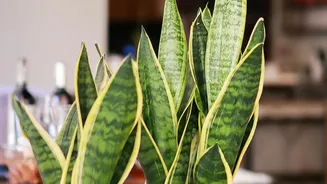
The Snake Plant, or Sansevieria trifasciata, is famous for its sharp, architectural leaves that grow straight up. Often called 'mother-in-law's tongue', it's a champion of survival, making it perfect for those who worry they lack a green thumb. Native
to Africa and Southern Asia, this plant is built to withstand tough conditions. There are many varieties, from the classic 'Laurentii' with its yellow edges to the cylindrical 'Spikey' type, but they all share one key trait: they are incredibly difficult to kill. Their root systems are designed to store water, meaning they can forgive you if you forget to water them for a couple of weeks.
Caring for Your Snake Plant
Caring for a snake plant is simple: less is more. They are extremely prone to root rot, so the biggest mistake you can make is overwatering. Allow the soil to dry out completely between waterings—this might mean watering only once every two to four weeks. They thrive in bright, indirect sunlight but are famous for their ability to tolerate very low light, making them ideal for office corners or rooms that don't get much sun. However, in low light, their growth will slow, and colourful variegation might fade. You almost never have to fertilise them, but a general houseplant feed once or twice during the main growing season is plenty.
Meet the Pothos: The Trailing Star
Pothos, also known as Devil's Ivy (Epipremnum aureum), is a vining plant beloved for its heart-shaped leaves and fast-growing nature. It's the plant you see spilling gracefully from hanging baskets or shelves in cafes and homes. Native to Southeast Asia, it’s highly adaptable and can grow several feet in a year under the right conditions. With varieties like the classic 'Golden Pothos' with yellow splashes or the 'Marble Queen' with white variegation, it adds a lush, tropical feel to any space. Its forgiving nature makes it another excellent choice for first-time plant owners.
Caring for Your Pothos Plant
Pothos is just as easygoing as the snake plant. It prefers bright, indirect light but does just fine in lower-light situations, though it may lose some of its variegation. Water it thoroughly when the top inch or two of soil feels dry. Drooping leaves are a clear sign that it's thirsty. Like the snake plant, it’s better to underwater than overwater. Pothos enjoys a bit of humidity, so it's a great choice for kitchens or bathrooms. One of its best features is how easy it is to propagate; simply snip off a piece of stem with a few leaves and place it in water. Within weeks, it will grow roots, giving you a new plant for free.
What About 'Clean Air'?
You've likely heard that these plants purify the air. This idea comes from a 1989 NASA study which found that certain plants, including Snake Plants and Pothos, could remove toxins like formaldehyde and benzene from small, sealed chambers. However, our homes are not sealed space stations. Subsequent research has shown that in a normal, ventilated room, you would need an enormous number of plants—hundreds, even thousands—to have a meaningful impact on air quality. A single open window provides far more air exchange. So, while these plants do absorb tiny amounts of pollutants, their main benefits are psychological and aesthetic—they reduce stress, boost your mood, and simply look beautiful.
A Note for Pet Owners
It is important to know that both Snake Plants and Pothos are toxic to cats and dogs if ingested. The plants contain compounds that can cause mouth irritation, drooling, vomiting, and stomach upset. While rarely fatal, the reaction can be very uncomfortable for your furry friends. If you have curious pets that like to chew on things, it's best to place these plants on high shelves or in rooms where your pets don't have access.