







From Monologue to Actionable Minutes
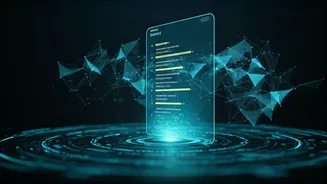
Imagine finishing a one-hour virtual meeting and, within seconds, receiving a perfect summary in your inbox. It lists key decisions, highlights action items, and assigns owners to each task. This isn't a futuristic dream; it's the new reality powered
by Artificial Intelligence integrated directly into the collaboration platforms we use every day. Tools like Microsoft’s Copilot for Teams, Zoom’s AI Companion, and Slack AI are transforming the very nature of meetings. They act as a hyper-efficient virtual assistant, listening in not just to transcribe, but to understand and synthesise. Their core function is to cut through the noise and extract the signal, turning hours of unstructured conversation into a concise, functional roadmap for your team.
How the AI Actually Does It
The process behind this magic is a sophisticated blend of technologies. First, the AI uses advanced speech-to-text algorithms to create a real-time transcript of the meeting. This is far more accurate than older transcription services, capable of distinguishing between speakers and handling a variety of accents. Next, it applies Natural Language Processing (NLP) to analyse the transcript. The AI isn't just reading words; it's understanding context, intent, and semantics. It looks for trigger phrases like "We need to…", "The next step is…", or "Priya will be responsible for…" to identify commitments and tasks. It can also detect key topics, questions that were asked, and decisions that were made. Finally, it uses generative AI to compile all this information into a structured, easy-to-read summary, complete with bullet points, deadlines, and assigned names.
The End of ‘Who Was Taking Notes?’
One of the biggest immediate benefits is the creation of a single, undisputed source of truth. The endless post-meeting debates about who agreed to what are over. With an AI-generated summary, everyone on the team, whether they attended the meeting or not, has access to the same set of outcomes. This dramatically improves accountability. When a task is clearly assigned to an individual in the official summary, there's little room for ambiguity. For managers, this is a game-changer. It frees them from having to police follow-ups and allows them to track project progress more effectively. It also democratises information, ensuring that even junior team members who may be hesitant to speak up have a clear understanding of their responsibilities.
Beyond Just Basic Summaries
The capabilities of these AI systems are evolving rapidly. They are moving beyond simple summarisation to offer more advanced analytical features. Some tools can analyse the sentiment of a meeting, highlighting moments of disagreement or strong consensus. Others can track speaking time to help ensure meetings are more inclusive and not dominated by one or two voices. The most advanced systems can even use the meeting discussion to generate other assets. For example, they can create a draft project plan, write a follow-up email to a client based on the points discussed, or even populate a list of pros and cons for a decision that was debated. This transforms the meeting from a simple discussion into a generative event that directly fuels the work that follows.
The Real-World Limitations and Risks
While impressive, this technology is not flawless. The accuracy of transcription and task assignment can still struggle with heavy accents, technical jargon, or rapid-fire conversation. This means a human review of the AI's output is still essential. Furthermore, there are significant privacy and data security concerns. Companies need clear policies on who can access meeting transcripts and how that data is stored and used. There’s also a cultural risk: the danger of over-reliance. If team members know an AI is taking notes, they may become less engaged, assuming the technology will do the thinking for them. The purpose of these tools is to augment human focus, not replace it. True collaboration still requires active listening and critical thinking from everyone involved.