


India's Next Giant Leap: Prospecting for Lunar Water
The Indian Space Research Organisation (ISRO) is building on the success of its Chandrayaan missions with a bold, long-term strategy focused on the Moon's most valuable resource. While the term 'mining' suggests immediate industrial activity, ISRO's current
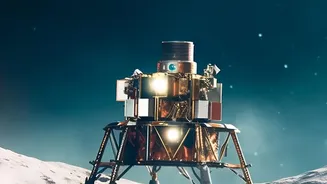
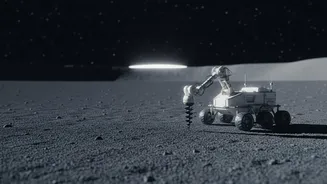
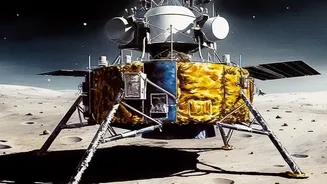
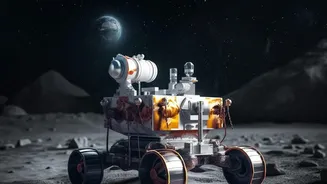
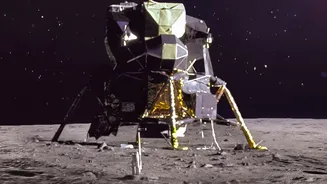
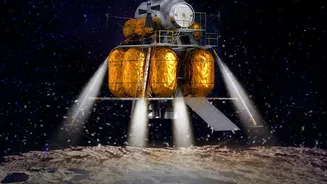
focus is on the critical preparatory stages: prospecting, exploration, and technology demonstration. A key upcoming mission is the Lunar Polar Exploration Mission (LUPEX), a joint project with the Japan Aerospace Exploration Agency (JAXA) planned for no earlier than 2028. This mission will send a sophisticated lander, developed by ISRO, and a rover, built by JAXA, to the Moon's south pole. The primary goal of LUPEX is to confirm the quantity and quality of water ice deposits and test the technologies needed for drilling and extraction from the lunar soil, or regolith. This mission is a crucial stepping stone, moving from detecting water to understanding how to access it.
Why Is Water on the Moon a Game-Changer?
The presence of water is about much more than quenching the thirst of future astronauts. Water (H2O) can be split into its component elements: hydrogen and oxygen. This has revolutionary implications. Oxygen can be used to create breathable air for lunar habitats, and both hydrogen and oxygen are the primary components of rocket propellant. Having access to lunar water means the Moon could one day become a refueling station for spacecraft. Instead of launching heavy tankers of water and fuel from Earth—a hugely expensive process due to our planet's strong gravity—missions could refuel on the Moon. This would dramatically lower the cost and increase the feasibility of long-duration human settlements, lunar industries, and even deep-space missions to Mars and beyond.
The Dark, Cold Frontier: Permanently Shadowed Regions
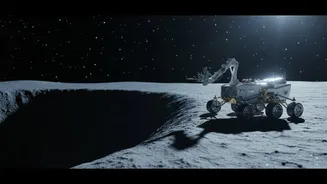
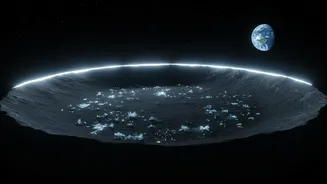
The key to finding lunar water lies in some of the most extreme environments in the solar system: Permanently Shadowed Regions (PSRs). These are craters near the Moon's poles where, due to the Moon's slight axial tilt, the crater floor has not seen direct sunlight for billions of years. Without sunlight, temperatures in these PSRs plummet to below -220 degrees Celsius. This extreme cold acts as a perfect trap, preserving water ice delivered by comets and asteroids or from ancient lunar volcanic activity. Recent studies, some involving ISRO scientists, suggest that the amount of ice trapped a few meters below the surface could be five to eight times greater than what's found on the surface. Data from ISRO's own Chandrayaan-2 orbiter has provided compelling evidence of this subsurface ice.
The Challenge of Exploring in Eternal Darkness
Operating in a PSR is an immense engineering challenge. The lack of sunlight means solar-powered rovers are not a viable option, forcing a reliance on other power sources like radioisotope power systems. The cryogenic temperatures are cold enough to make steel brittle and can freeze lubricants, requiring highly specialized equipment designed to withstand the extreme cold. Furthermore, these craters are dark, meaning rovers must navigate treacherous, rocky terrain without the aid of visible light, relying on technologies like lidar and advanced sensors to 'see' their surroundings. Communication can also be an issue, as direct line-of-sight to Earth may be blocked. Missions like LUPEX are being designed specifically to overcome these hurdles, developing rovers and landers capable of surviving and operating for extended periods in these hostile, but resource-rich, locations.