



The Age-Old Battle Against Blight
In the fertile lands of Punjab, agriculture is not just an industry; it is a way of life. However, this livelihood is under constant threat from an invisible enemy: crop disease. Pests, fungi, and blights can silently spread, turning a promising harvest
into a devastating loss. Traditionally, identifying these diseases required a trained eye, guesswork, or waiting for a visit from an agricultural extension officer. This delay could be the difference between saving a crop and losing an entire season's income. According to some estimates, Indian farmers face annual losses of thousands of crores due to pests and diseases. The incorrect or excessive use of pesticides, often a result of misdiagnosis, further inflates costs and harms the environment.
A Digital Doctor in the Palm of Your Hand
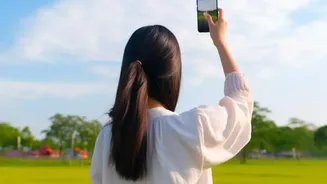
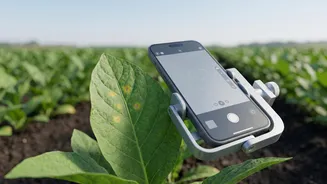
The solution comes not from a new chemical or seed, but from the technology many farmers already own: a smartphone. A new generation of mobile applications is turning these devices into powerful diagnostic tools. Using artificial intelligence, these apps act as a 'crop doctor' that can identify diseases with remarkable accuracy. One prime example making waves in Punjab is an application developed specifically for the region's farmers. It functions entirely offline, a crucial feature for remote fields where internet connectivity is often unreliable or non-existent. This approach bypasses the need for expensive data plans and ensures that expert-level advice is available anywhere, anytime. The camera on the smartphone effectively becomes the sensor, capturing the visual data the AI needs to make a diagnosis.
How AI Sees What the Eye Might Miss
The process is elegantly simple from the farmer's perspective. When a suspicious spot is found on a leaf or stem, the farmer opens the app and takes a picture. In the background, a powerful AI model, trained on thousands of images of both healthy and diseased plants, gets to work. This model is a highly compressed neural network, optimized to run directly on the phone's processor without draining the battery or causing it to overheat. Within seconds, it analyzes the image for tell-tale patterns—subtle discolorations, textures, or shapes indicative of specific ailments like wheat yellow rust or cotton leaf blight. The app then presents a diagnosis, often with a confidence score of over 90 percent.
From Diagnosis to Actionable Advice
Identifying the problem is only half the battle. The true power of these applications lies in providing immediate, actionable solutions. After diagnosing a disease, the app consults a built-in database populated with official agricultural advisory standards, often in partnership with esteemed institutions like the Punjab Agricultural University (PAU). It then provides a clear treatment plan, detailing the exact chemical formulas needed, correct dosages, and safety protocols for application. This guidance is often available in both English and local languages like Punjabi, breaking down literacy and language barriers. This removes the guesswork and empowers farmers to apply the right treatment at the right time, minimizing crop damage and reducing the overuse of unnecessary chemicals.
The Broader Impact on Indian Farming
This technology represents a monumental shift for smallholder farmers. By making expert knowledge accessible and affordable, it levels the playing field. The benefits extend beyond a single farm or harvest. Faster, more accurate diagnoses lead to higher yields and increased income, improving the economic stability of farming communities. Environmentally, targeted treatments mean less chemical runoff into soil and water systems. Furthermore, the data collected from thousands of farmers can be aggregated to create real-time maps of disease outbreaks, allowing authorities to issue regional alerts and manage pest spread on a larger scale. Similar AI-driven platforms and apps, like the widely-used Plantix, are being deployed across India, transforming agriculture from a practice based on tradition to one guided by data.