






Why Go Inflatable?
When you think of a space station, you probably picture rigid, metallic cylinders like those of the ISS. But the future of orbital habitats might be soft. Inflatable modules, made from layers of high-strength, flexible materials, offer two major advantages:
volume and cost. An inflatable habitat can be packed tightly into a rocket's payload fairing, taking up far less space than a pre-built rigid structure. Once in orbit, it expands to its full size, creating a much larger and more open interior for astronauts to live and work in. This efficient packaging helps reduce launch costs, one of the biggest expenses in space operations. Furthermore, the large, continuous volume can help relieve the feeling of claustrophobia for crew on long-duration missions, improving morale and habitability. These advanced fabrics, such as Vectran, are incredibly resilient—stronger than aluminum once pressurized—and are designed in multiple layers to protect against micrometeoroid impacts.
The New Commercial Players
Several companies are racing to build these orbital outposts, with NASA's support through its Commercial Low Earth Orbit Development (CLD) program. One of the leaders is Sierra Space, which is developing the Large Integrated Flexible Environment (LIFE) habitat. The LIFE module is a key component of the Orbital Reef station, a joint project with Blue Origin envisioned as a "mixed-use business park" in space for research, tourism, and manufacturing. Sierra Space has conducted multiple successful burst tests on its modules, proving they can withstand pressures far exceeding NASA's safety requirements. The company aims to launch a pathfinder version of LIFE as a standalone station as early as the end of 2026. Another major player, Axiom Space, is taking a phased approach. It plans to attach its first commercial module to the ISS in 2026, which will later detach to form the foundation of a free-flying Axiom Station. While its initial modules are rigid, Axiom is also working with partners to potentially add inflatable components, including a proposed entertainment and media studio module.
Science in a Weightless World
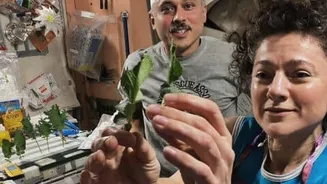
These new commercial stations are being built with a primary purpose in mind: to become bustling hubs for science and technology research in a microgravity environment. With the ISS's retirement approaching, these private platforms will ensure that critical research can continue and expand. The areas of study are vast and promising. They include pharmaceutical development, where the absence of gravity can lead to the growth of more perfect protein crystals for drug design. Other fields include stem cell research, advanced materials manufacturing, and plant growth studies. Companies like Vast, which plans to launch its Haven-1 station in early 2027, are already calling for proposals from scientists for experiments. Some designs even include plans for generating artificial gravity by rotating the station, which would open up entirely new avenues for research on human health in space. These platforms are designed to serve a broad range of customers, from NASA and other international space agencies to universities and private biotech firms, creating a vibrant economy in low-Earth orbit.
The Road Ahead
The transition from the government-run ISS to a fleet of commercial stations represents a fundamental shift in how humanity operates in space. The goal is to create a market where NASA is no longer a landlord but a tenant, purchasing services from multiple providers. This is expected to drive down costs, accelerate innovation, and open up access to space for a wider variety of users. While timelines in the aerospace industry are always ambitious, the first modules are expected to be in orbit within the next few years. Axiom's first module is targeting a 2026 launch to the ISS, while Vast's Haven-1 is aiming for an early 2027 launch. The full Orbital Reef station is targeting the late 2020s for operation. This commercial rush ensures that as one chapter of space exploration closes with the ISS, the next one—defined by private enterprise and groundbreaking science in expandable homes—is ready to begin.