
Beyond the Permanent Shadows
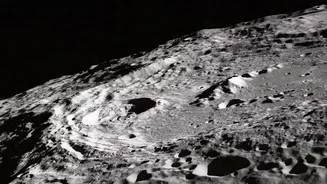
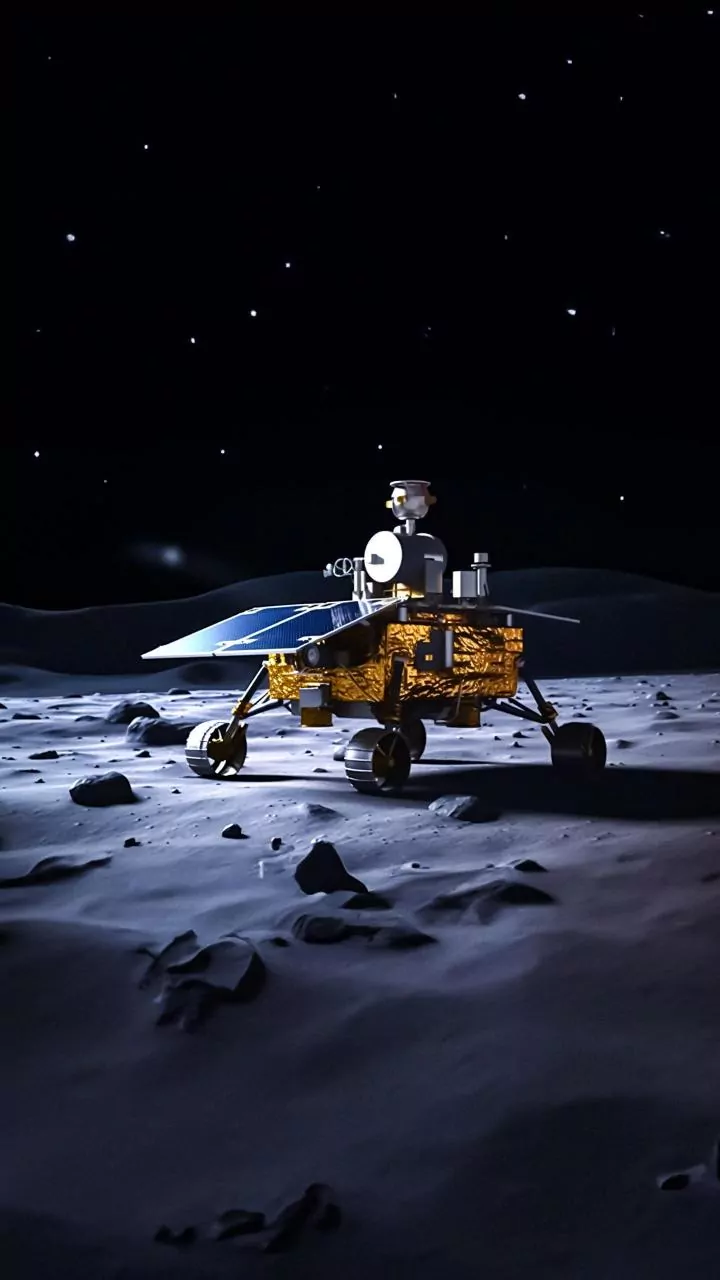
For decades, the search for water on the Moon focused on its poles. Here, in permanently shadowed regions (PSRs) that haven't seen sunlight in billions of years, temperatures plunge low enough to keep water ice frozen and stable. Missions confirmed these
icy reservoirs, but accessing them in treacherous, pitch-black craters posed a significant challenge. Now, new findings are rewriting the map. Advanced infrared instruments are revealing that water isn't just confined to these deep-freeze craters. It appears to be more widespread, potentially existing in small pockets and even on sunlit surfaces, fundamentally changing our perception of the Moon from a bone-dry desert to a world with a complex water cycle.
Seeing Water with Infrared Light
So how do you spot water from hundreds of thousands of kilometres away? The answer lies in infrared spectroscopy. Instruments like those on NASA’s recently retired SOFIA observatory and India's own Chandrayaan missions can detect the specific signature that water molecules (H2O) absorb and reflect when hit by sunlight. Earlier missions could not easily distinguish between H2O and its chemical cousin hydroxyl (OH). But modern, high-resolution infrared spectrometers can tell them apart, confirming the presence of true water molecules. These new scans can detect subtle variations, suggesting that water ice may be mixed in with the lunar soil (regolith) or even patchily distributed as frost in tiny, shadowed areas no bigger than a one-rupee coin.
A Patchy and Dynamic Frost
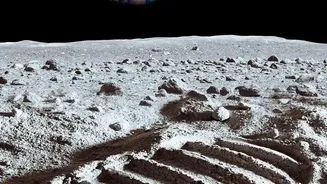
The latest details suggest lunar water is not a simple, static resource. Instead of vast, uniform sheets of ice, scientists now believe it exists in a much more complex and patchy distribution. Some studies suggest water molecules may migrate across the lunar surface, hopping from warmer to colder spots during the day. Other data points to water being trapped within volcanic glass beads, remnants of ancient eruptions, which could be scattered across large areas. This means future missions won't just be looking for giant craters full of ice; they might be able to 'mine' water from much more accessible locations by heating the soil to release the trapped molecules.
The Indian Connection: A Legacy of Discovery
India has been a central player in this story from the beginning. It was an instrument on India's Chandrayaan-1 orbiter, NASA's Moon Mineralogy Mapper (M3), that provided the first definitive, widespread evidence of water on the Moon in 2009. This groundbreaking discovery shifted the global focus of lunar exploration. The subsequent Chandrayaan-2 mission, with its advanced orbiter, continues to map the Moon's surface and exosphere, contributing vital data on water concentrations with its enhanced infrared spectrometer and radar. Recently, data from Chandrayaan-2's radar has also been used to find strong evidence of ice below the surface. These new global findings build directly on the foundation laid by ISRO's pioneering work, reinforcing India's key role in unveiling the Moon's secrets.
Fuel Stations on the Moon?
The implications of more widespread and accessible water are enormous. Water is not just for drinking. It can be split into hydrogen and oxygen—the primary components of rocket fuel. The ability to source propellant directly from the Moon, a concept known as In-Situ Resource Utilisation (ISRU), would be a game-changer for space exploration. It could dramatically lower the cost of missions by eliminating the need to launch heavy water and fuel from Earth. A future lunar base could serve as a refuelling stop for missions heading deeper into the solar system, to Mars and beyond. This new understanding of lunar water distribution makes that science-fiction vision a much more tangible reality.