





The High Risk of Contamination
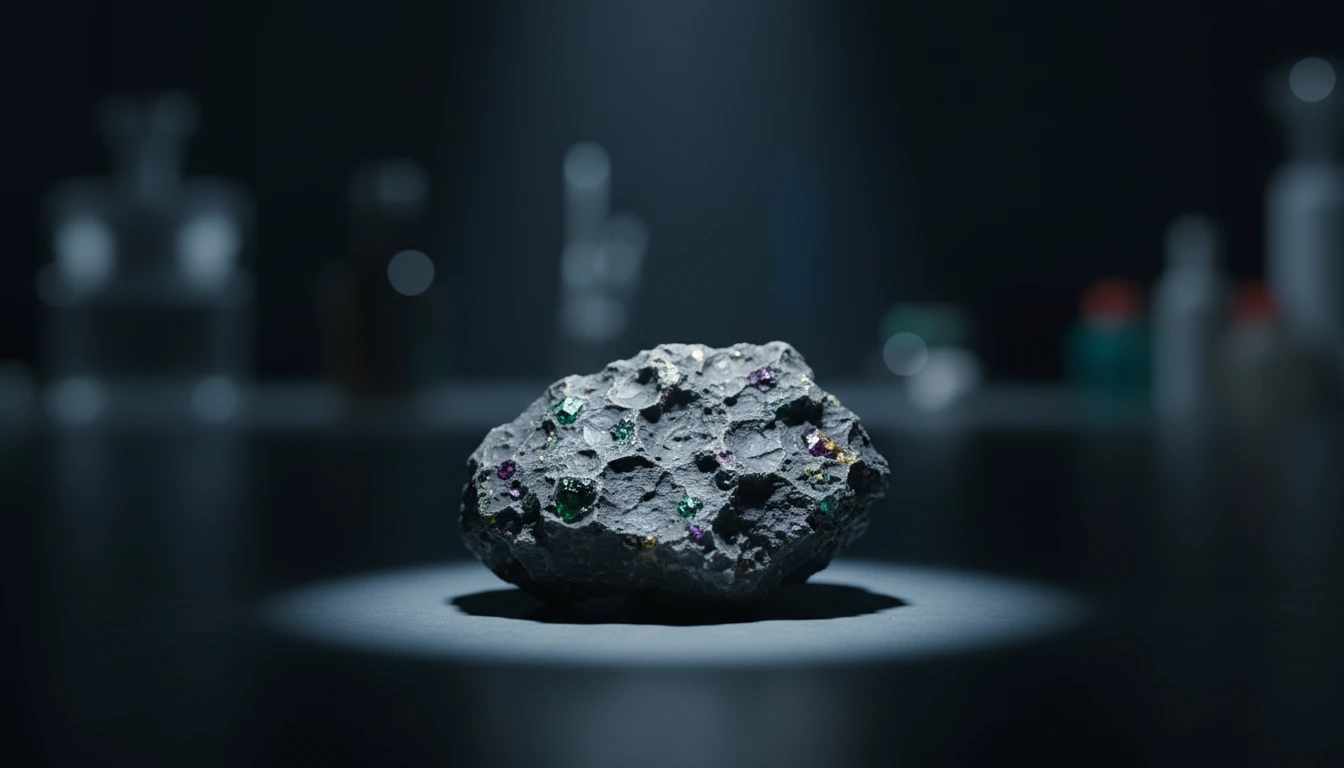
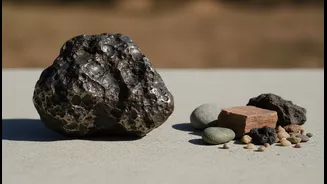
The single most important reason not to mix a suspected meteorite with terrestrial rocks is to prevent contamination. Meteorites are time capsules from the formation of our solar system. Some rare types, like carbonaceous chondrites, contain organic materials
that are of immense interest to scientists studying the building blocks of life. When a meteorite touches other rocks, soil, or even your bare hands, it can get contaminated. Oils, microbes, and chemicals from Earth can transfer to the meteorite's surface, promoting rust and permanently altering its composition. This contamination can mislead scientists during analysis, making it difficult to determine which materials are extraterrestrial and which are from Earth. Even labs at NASA struggle to keep space samples free from Earthly fungi and microbes, highlighting how sensitive these specimens are.
Preserving a Meteorite's Unique Identity
Beyond chemical contamination, mixing rocks can cause physical damage and compromise key identifying features. Many meteorites have a thin, dark 'fusion crust' formed when their surface melted during their fiery descent through the atmosphere. This delicate crust can be easily scratched, chipped, or dulled by harder terrestrial rocks jostling against it in a bag. Furthermore, most meteorites contain iron-nickel metal, which makes them magnetic. Placing a meteorite next to strongly magnetic Earth rocks, like magnetite, can interfere with its own subtle magnetic signature—a property scientists study to understand its history. Some experts even advise against using magnets for field tests on potentially rare finds, as a strong magnet can erase this valuable data.
How to Handle a Potential Space Rock
If you believe you've found a meteorite, proper handling is crucial. First, resist the urge to pick it up with your bare hands. Before touching it, document its location. Take photos of the rock where you found it, and if possible, record the GPS coordinates. When you are ready to collect it, use clean gloves, a fresh piece of aluminum foil, or clean tongs. NASA recommends using common household aluminum foil as an inexpensive and effective tool; you can simply wrap the specimen in it. Place the wrapped rock into a clean, new zip-lock bag by itself. Keeping it dry is also essential to prevent rusting, so you might consider adding a desiccant packet to the bag, ensuring it doesn't directly touch the rock.
Is It Really a Meteorite?
The truth is, most unusual rocks are not from space. However, there are a few field characteristics that can suggest a rock might be a meteorite. They are typically much denser and heavier for their size than Earth rocks. They are almost always at least slightly magnetic due to their iron content. A dark, thin fusion crust is a strong indicator, as are shallow, thumbprint-like depressions called regmaglypts. Conversely, things like vesicles (small holes) or visible crystals like quartz are tell-tale signs that a rock is terrestrial, not a meteorite. If you scratch the rock on unglazed ceramic (like the back of a tile) and it leaves a black or red streak, it's likely magnetite or hematite—not a meteorite.
Getting It Verified in India
If you've followed proper collection procedures and your find checks a few of the boxes, the next step is authentication by experts. In India, the Geological Survey of India (GSI) is the official custodian of all meteorite falls and finds within the country. The GSI maintains the National Meteorite Repository in Kolkata, which houses an impressive collection of both Indian and international meteorites, some of which have been crucial for scientific breakthroughs. For verification, you would contact a body like the GSI or a university geology department. They have the specialized equipment to analyze the rock's mineralogy and chemical composition to determine if it is a genuine piece of space history.