




The Season of Renewal
In Kerala, the final month of the Malayalam calendar, Karkidakam (mid-July to mid-August), is synonymous with the peak of the southwest monsoon. Historically, it was a challenging time of relentless rain, flooded fields, and widespread illness, earning
it the name 'Panja Masam' or the month of scarcity. Yet, it is also viewed through the lens of Ayurveda as a crucial period for rest and rejuvenation. The humidity and dampness are believed to weaken the digestive fire ('Agni') and make the body more susceptible to ailments. In response, Keralites developed Karkidaka Chikitsa, a holistic wellness regimen designed to cleanse the body, bolster immunity, and restore balance, with a special medicated porridge at its heart.
Healing in a Bowl: Oushadha Kanji
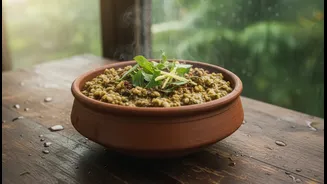
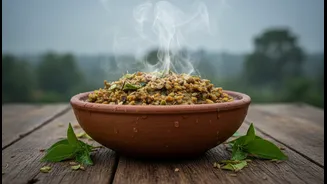
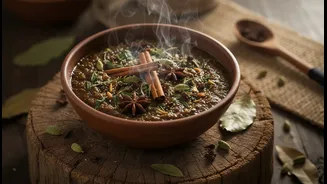
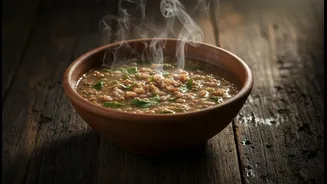
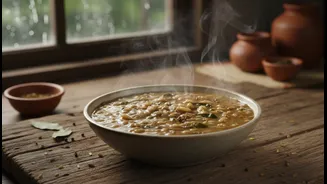
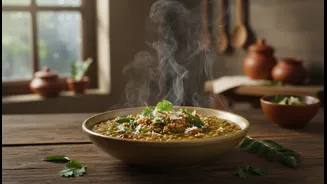
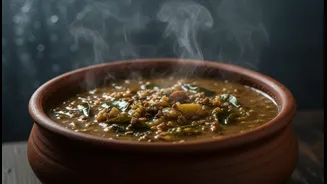
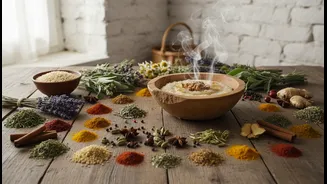
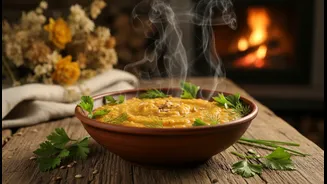
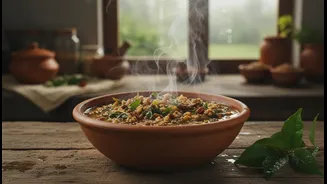
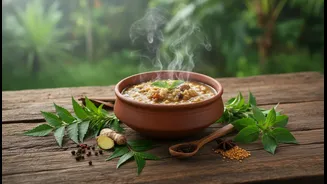
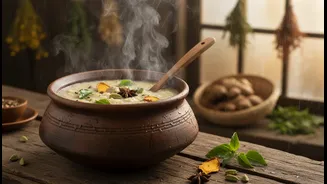
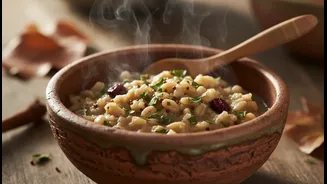
The star of this seasonal ritual is Karkidaka Kanji, also known as Oushadha Kanji or Marunnu Kanji, which translates to 'medicinal porridge'. This is not your average gruel. It's a carefully formulated meal that embodies the Ayurvedic principle of 'food as medicine'. The base is often Njavara (Navara) rice, a unique, short-grain medicinal variety native to Kerala, prized for being light on the gut and highly nourishing. This rice is cooked in coconut milk with a host of warming spices like fenugreek, cumin, and dry ginger to rekindle digestive strength. The porridge is further fortified with a decoction of potent herbs, sometimes including the 'Dashapushpam'—a group of ten sacred, medicinal flowers and herbs found locally. Consumed daily, often for seven, 14, or even 28 days, it’s a systematic approach to fortifying the body against the challenges of the season.
The Genius of Pantry Wisdom
Beyond its health benefits, Karkidaka Kanji is a masterclass in pantry wisdom. The recipe is a testament to using what is simple, local, and seasonally appropriate. At a time when fresh produce might be scarce due to heavy rains, the tradition relies on stored grains, dried spices, and backyard herbs. This approach is a powerful counter-narrative to the modern expectation of having all ingredients available year-round. It teaches resourcefulness and a deep connection to one's environment. The flexibility of the recipe, which can be adapted based on available herbs and individual needs, further highlights this intelligent, waste-conscious approach to cooking. It’s a quiet celebration of making the most of what you have, a philosophy that feels more relevant than ever.
A Pan-Indian Monsoon Tradition
While Karkidaka Kanji is specific to Kerala, the concept of a nourishing monsoon porridge is a pan-Indian phenomenon. Across the country, regional cuisines feature similar gruels designed to comfort and heal during the rains. In Maharashtra, the savoury and warming 'Pithla' made from gram flour serves a similar purpose, often eaten with millet-based 'Bhakri'. In Karnataka's coastal regions, steamed rice dumplings called 'Pundi Gatti' offer a light yet filling meal. South India is home to various millet porridges, or 'Koozh', which are often fermented to improve gut health. Even the ubiquitous Khichdi, in its many regional forms, is a go-to monsoon meal, prized for being easy to digest and deeply comforting. Each version is a unique expression of the same core idea: eating simple, warm, and easily digestible food when the body is most vulnerable.